
Contents: General description ⇊ Control ⇊
General description
1. The ignition timing control system is designed to optimize the combustion process.
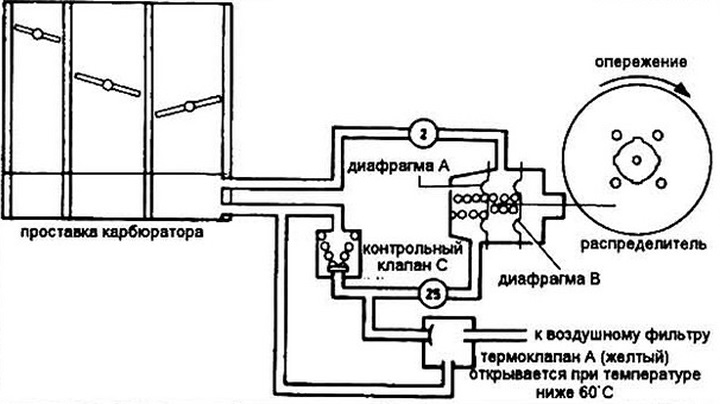
Fig. 12.1a Ignition timing control system (models with carburetor)
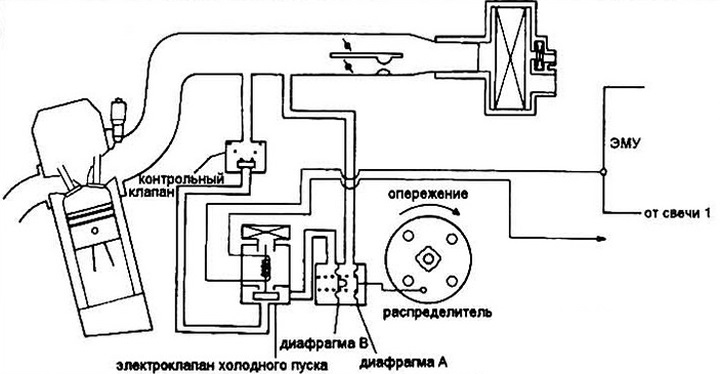
Fig. 12.1a Ignition timing control system (models with injection)
Control
2. Warm up the engine.
3. Connect the tachometer according to the manufacturer's instructions.
4. Disconnect the hose from the advance vacuum regulator diaphragm and connect it to a vacuum gauge. If there are two hoses on the distributor, connect the vacuum gauge to the inner hose (closest to the distributor).
5. Start the engine and check for vacuum at idle:
- a) if there is a vacuum, proceed to step 6.
- b) If there is no vacuum, check the hoses and connections for leaks or blockages.
6. Connect a hand vacuum pump to the timing advance diaphragm tube and a timing light according to the manufacturer's instructions. Start the engine and apply a vacuum of 20 mm Hg.
When vacuum is applied, the ignition timing should change.
- a) if the lead changes, the system is OK;
- b) if the advance does not change or you were unable to achieve a vacuum of 20 mm Hg - leaks in the diaphragm, replace it (Chapter 4);
- c) If the vacuum is sufficient but the advance does not change, stop the engine. Remove the distributor cap. Check the ease of rotation of the breaker disc (turn it left - right). If the breaker disc rotates easily, replace the diaphragm and check it.