
Brake system of the car Honda Civic 3 and 4

Brake Specifications
Total information Clearance between push rod and brake master cylinder (at 20 mmHg Art. vacuum in the amplifier) - 0.0-0.4 mm Disc brakes Minimum Pad Thickness - See Chapter 1 Minimum disc thickness - stamped on disc...
Total information Clearance between push rod and brake master cylinder (at 20 mmHg Art. vacuum in the amplifier) - 0.0-0.4 mm Disc brakes Minimum Pad Thickness - See Chapter 1 Minimum disc thickness - stamped on disc...

Brake pads — replacement
Attention: replacement of pads must be carried out simultaneously on both wheels of the same axle. Cleaning of brake parts is carried out only with denatured alcohol. Note: When servicing brakes, use only high quality...
Attention: replacement of pads must be carried out simultaneously on both wheels of the same axle. Cleaning of brake parts is carried out only with denatured alcohol. Note: When servicing brakes, use only high quality...

Disc brake caliper — removal, repair and installation
Attention: read the warnings Section 1 . Withdrawal 1. Loosen the wheel nuts, raise the vehicle, put it on stands and remove the wheel. 2. If you want to remove the rear brake caliper, remove the cotter pin from the pin...
Attention: read the warnings Section 1 . Withdrawal 1. Loosen the wheel nuts, raise the vehicle, put it on stands and remove the wheel. 2. If you want to remove the rear brake caliper, remove the cotter pin from the pin...

Brake disc — inspection, removal and installation
Inspection 1. Loosen the wheel nuts, raise the car on stands. Remove the wheels and install two nuts with 3mm washers to hold the disc in place. When inspecting the rear brake, release the parking brake. 2. Remove the...
Inspection 1. Loosen the wheel nuts, raise the car on stands. Remove the wheels and install two nuts with 3mm washers to hold the disc in place. When inspecting the rear brake, release the parking brake. 2. Remove the...

Drum brake pads — replacement
Attention: when replacing the pads, change the return and support springs - over time, under the influence of multiple heating / cooling cycles, they lose their original qualities. 1. Loosen the wheel nuts, raise the...
Attention: when replacing the pads, change the return and support springs - over time, under the influence of multiple heating / cooling cycles, they lose their original qualities. 1. Loosen the wheel nuts, raise the...

Wheel brake cylinder — removal, repair and installation
Note: Seal leaks are usually a prerequisite for repairing a wheel cylinder. We advise you to simply replace the cylinder. Withdrawal 1. Raise the rear of the vehicle and place it on stands. Block the front wheels from...
Note: Seal leaks are usually a prerequisite for repairing a wheel cylinder. We advise you to simply replace the cylinder. Withdrawal 1. Raise the rear of the vehicle and place it on stands. Block the front wheels from...

Master brake cylinder — removal, repair and installation
Withdrawal 1. The main brake cylinder is installed in the engine compartment on the brake booster housing. 2. Remove the brake fluid from the reservoir using a syringe. 3. Prepare rags and plugs for the pipes of the...
Withdrawal 1. The main brake cylinder is installed in the engine compartment on the brake booster housing. 2. Remove the brake fluid from the reservoir using a syringe. 3. Prepare rags and plugs for the pipes of the...

Brake force distributor — general information
1. The brake force distributor is mounted on the tunnel of the right pillar. It is designed to limit pressure on the rear brakes during emergency braking to prevent wheel lockup. Pic. 8.1 Assembling the brake force...
1. The brake force distributor is mounted on the tunnel of the right pillar. It is designed to limit pressure on the rear brakes during emergency braking to prevent wheel lockup. Pic. 8.1 Assembling the brake force...

Brake pipes and hoses — inspection and replacement
1. Inspect tubes and hoses every six months. Cracks, braid damage, fluid leaks and other damage must be repaired immediately 2. It is better to entrust the replacement of tubes to the service station personnel. 3. When...
1. Inspect tubes and hoses every six months. Cracks, braid damage, fluid leaks and other damage must be repaired immediately 2. It is better to entrust the replacement of tubes to the service station personnel. 3. When...
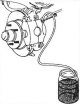
Bleeding the brake system
Caution: If brake fluid gets into your eyes, rinse immediately with water and seek medical attention. 1. Bleeding the system is necessary to remove air that got into the system during the dismantling and installation of...
Caution: If brake fluid gets into your eyes, rinse immediately with water and seek medical attention. 1. Bleeding the system is necessary to remove air that got into the system during the dismantling and installation of...

Brake booster — control, removal and installation
Work control 1. With the engine off, press the brake pedal several times, unload the booster. 2. Step on the pedal and start the engine. If the pedal moves down easily, the amplifier is working normally. 3. Let the...
Work control 1. With the engine off, press the brake pedal several times, unload the booster. 2. Step on the pedal and start the engine. If the pedal moves down easily, the amplifier is working normally. 3. Let the...

Parking brake — adjustment
1. See Chapter 11 to perform the initial trim removal operation around the parking brake lever. 2. Remove the parking brake equalizer cover. 3. Block the front wheels, raise the rear of the vehicle and place it on...
1. See Chapter 11 to perform the initial trim removal operation around the parking brake lever. 2. Remove the parking brake equalizer cover. 3. Block the front wheels, raise the rear of the vehicle and place it on...

Replacing the parking brake cable
1. Block the front wheels and loosen the rear wheel nuts. Raise the car and place it on stands. 2. On a vehicle with drum brakes, remove the drum ( see section 5 ). 3. Follow the directions section 12 , loosen the...
1. Block the front wheels and loosen the rear wheel nuts. Raise the car and place it on stands. 2. On a vehicle with drum brakes, remove the drum ( see section 5 ). 3. Follow the directions section 12 , loosen the...

Parking brake lever — removal and installation
1. Remove the center console ( see chapter 11 ). 2. Disconnect the brake cable ( see Section 13 ). 3. Disconnect the electrical connector for the parking brake indicator switch. Pic. 14.3 Removing the parking brake...
1. Remove the center console ( see chapter 11 ). 2. Disconnect the brake cable ( see Section 13 ). 3. Disconnect the electrical connector for the parking brake indicator switch. Pic. 14.3 Removing the parking brake...

Stoplight switch — control, replacement and adjustment
Control 1. The switch is located at the top of the brake pedal. Pic. 15.1 Typical installation diagram of the brake light switch 2. Disconnect the switch connector. 3. Check up conductivity between contacts by means of...
Control 1. The switch is located at the top of the brake pedal. Pic. 15.1 Typical installation diagram of the brake light switch 2. Disconnect the switch connector. 3. Check up conductivity between contacts by means of...
General information about the brake system
All vehicles covered in this manual are equipped with hydraulic power brakes. Front brakes are disc, rear are either disc or drum. All brakes are self-adjusting: pad wear on both the front and rear wheels is...
All vehicles covered in this manual are equipped with hydraulic power brakes. Front brakes are disc, rear are either disc or drum. All brakes are self-adjusting: pad wear on both the front and rear wheels is...
This section is available on: russian, bulgarian, belarusian, ukrainian, serbian, croatian, romanian, polish, slovak, hungarian
Link in different formats to this section
TEXTHTMLBB Code
- General information
- Technical data
- Governing bodies
- Driving and maintenance
- Power unit
- Gasoline engines (L13A)
- Gasoline engines (R18A)
- Diesel engines (N22A)
- Cooling and lubrication (L13A)
- Cooling and lubrication (R18A)
- Cooling and lubrication (N22A)
- Injection system (gasoline)
- Injection system (diesel)
- Toxicity reduction system
- Troubleshooting
- Transmission
- Clutch and drive shafts
- Mechanical gearbox
- Chassis and running gear
- Suspension and wheels
- Steering
- Brake system
- Body and interior
- Exterior (external elements)
- Doors, locks and windows
- Electrical equipment
- Equipment and devices
- Headlights and lighting
- Power devices
- Electrical circuits
- General information
- Introduction to guide
- User manual
- Maintenance
- Power unit
- Engine in car (Civic)
- Engine in car (Integra)
- Engine overhaul
- Cooling and heating
- Power and exhaust systems
- Engine electrical equipment
- Engine management systems
- Transmission
- Manual gearbox
- Automatic transmission (AT/CVT)
- Clutch and drive shafts
- Chassis and running gear
- Brake system
- Car suspension
- Steering
- Body and interior
- Exterior (external elements)
- Interior (internal elements)
- Doors, locks and windows
- Electrical equipment
- Equipment and devices
- Electrical circuits
- Power unit
- SOHC engines
- DOHC engines
- Engine overhaul
- Cooling and lubrication system
- Intake and exhaust system
- Fuel injection system (SOHC)
- Fuel injection system (DOHC)
- Carburetor
- Transmission
- Clutch
- Manual gearbox S4C
- Manual gearbox S40
- Automatic gearbox
- Drive shafts
- Chassis and running gear
- Car suspension
- Steering
- Brake system
- Body and interior
- Body elements
- Heater and air conditioner
- Electrical equipment
- Power devices
- Equipment and instruments
- Electrical circuits
- General information
- Maintenance
- Power unit
- Engine in a car
- Engine overhaul
- Cooling system
- Power and exhaust system
- Engine electrical equipment
- Emission control system
- Transmission
- Mechanical gearbox
- Automatic gearbox
- Clutch and drive shafts
- Four-wheel drive
- Chassis and running gear
- Brake system
- Car suspension
- Steering
- Body and interior
- Body elements
- Electrical equipment
- Equipment and devices
- Electrical circuits
HondaBook.ru © 2018–2024 • Mobile version • Sitemap: EN BG BY UA RS HR RO PL SK HU • Feedback • Driver Information • Search system • Bookmark
Accord 3 (1985-1989) • Accord 6 (1997-2002) • Civic 3 and 4 (1983-1991) • Civic 5 and 6 (1991-2000) • Civic 6 (1995-2000) • Civic 8 (2005-2011) • Fit 1 (2001-2008) • CR-V 1 (1995-2001) • HR-V 1 (1998-2006) • Avancier 1 (1999-2003) •
Accord 3 (1985-1989) • Accord 6 (1997-2002) • Civic 3 and 4 (1983-1991) • Civic 5 and 6 (1991-2000) • Civic 6 (1995-2000) • Civic 8 (2005-2011) • Fit 1 (2001-2008) • CR-V 1 (1995-2001) • HR-V 1 (1998-2006) • Avancier 1 (1999-2003) •