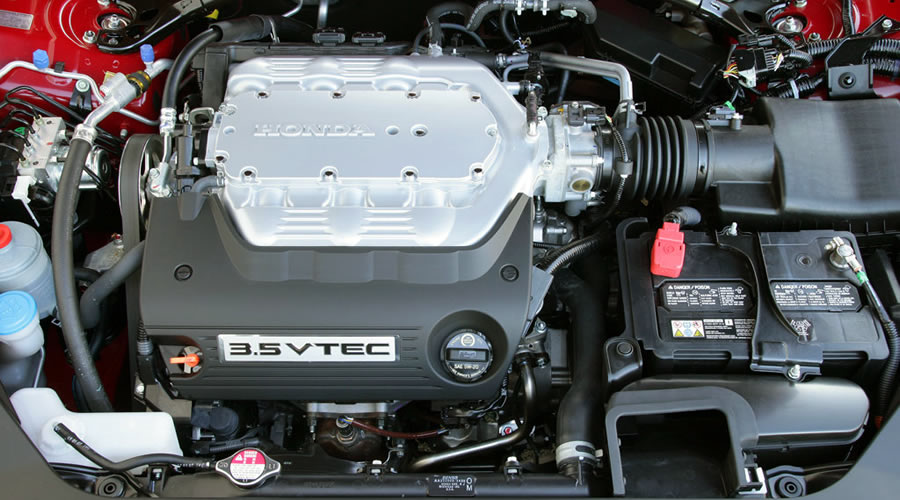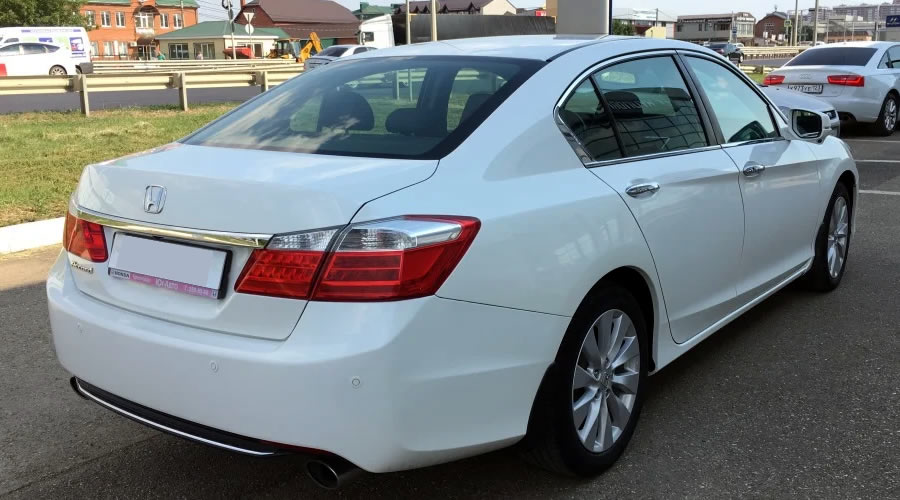
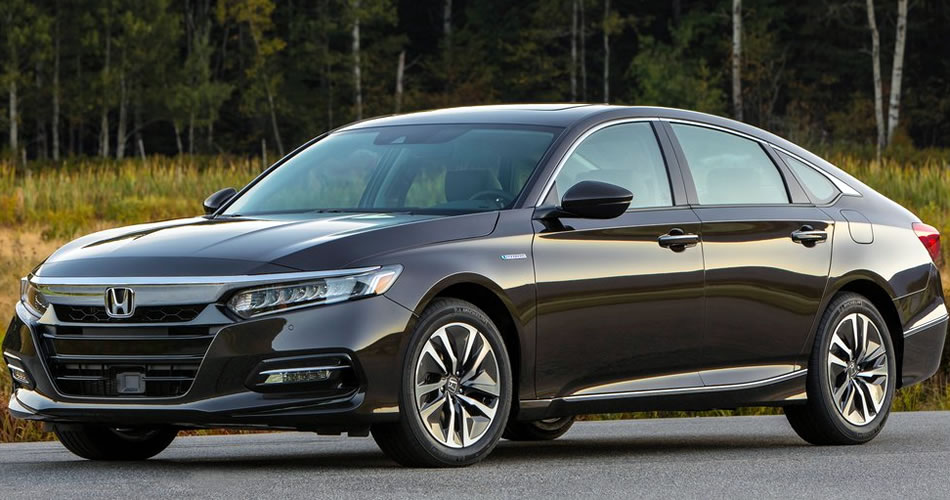
The engine is located transversely at the front with front-wheel drive. All-wheel drive cars were offered on the Japanese domestic market. The Accord's main competitors are the following cars from other companies: BMW 3, Audi A4, Citroen C5, Chevrolet Malibu, Ford Mondeo, Hyundai Sonata, Infiniti G, Lada Priora, Kia Optima, Mazda 6, Mitsubishi Galant, Nissan Bluebird, Opel Insignia, Peugeot 508, Renault Laguna, SEAT Altea, Skoda Superb, Subaru Legacy, Suzuki Kizashi, Toyota Camry, Volvo S40 and VW Passat.
First generation (SJ−SM, 1976−1981)
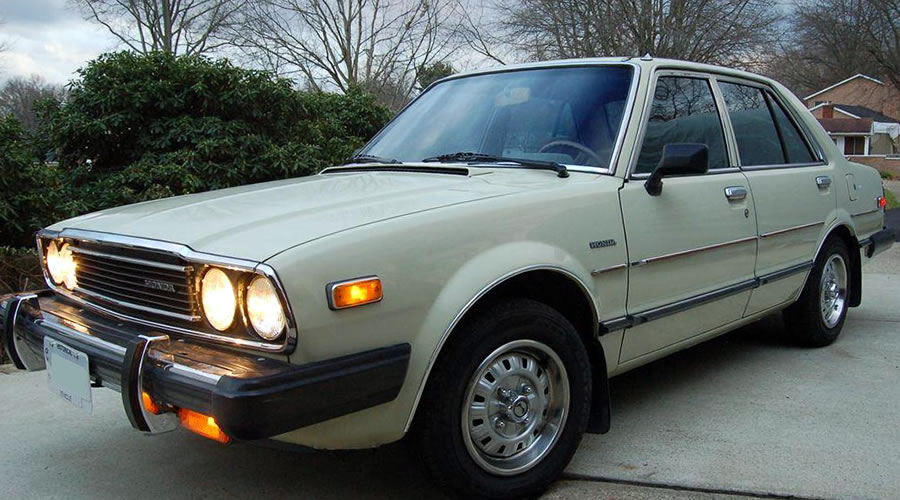
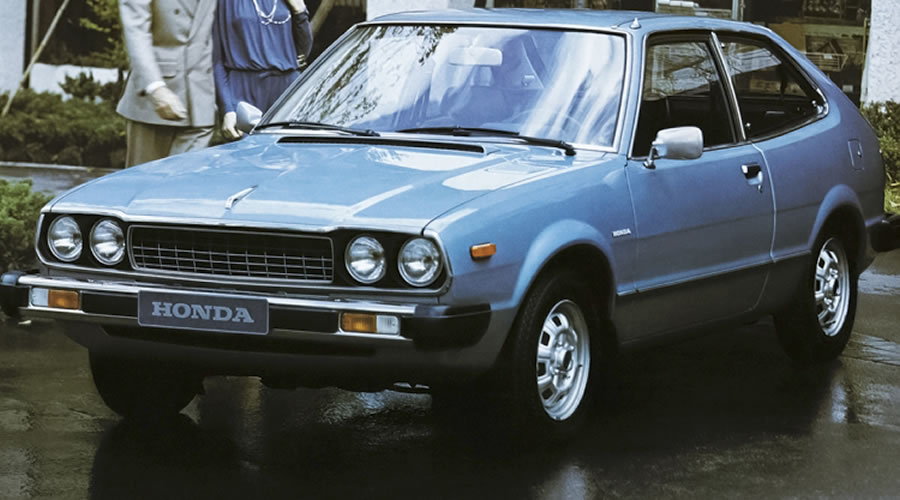
The Accord first appeared as a three-door hatchback on May 7, 1976. A year later, in October 1977, a four-door sedan appeared. The overall length of the car was 4450 mm, width 1620 mm, height 1360 mm, curb weight 945 kg and it belonged to the C-segment according to the European classification. It was one of the first Japanese sedans with such basic options as fabric seats, a tachometer, windshield wipers with frequency control and AM / FM radio. In 1978, air conditioning, power steering and a digital clock were added. The car was produced in Japan, assembly was also carried out in Indonesia and Malaysia.
The petrol engine line-up included four models with a capacity of 1.6 litres (1602 cm³, EL1, I4, 78 hp), 1.6 litres (1599 cm³, EF, I4, 81 hp), 1.6 litres (1601 cm³, EP, I4, 94 hp) and 1.8 litres (1751 cm³, EK1, I4, 96 hp). All four-cylinder in-line engines with Honda's CVCC technology, which reduces emissions and saves fuel. The gearbox was a 2- or 3-speed automatic, as well as a 5-speed manual.
The first generation Accord won many awards, including Car of the Year in 1976 from Motor Fan magazine, in 1977 from Australian Wheel magazine; also the American award "Car of the Year in the class under $5000" in 1977 from the magazines "Road Test" and "Car & Driver" and in 1978 from the magazine "Road & Track".
Second generation (SY/SZ/AC/AD, 1981−1985)
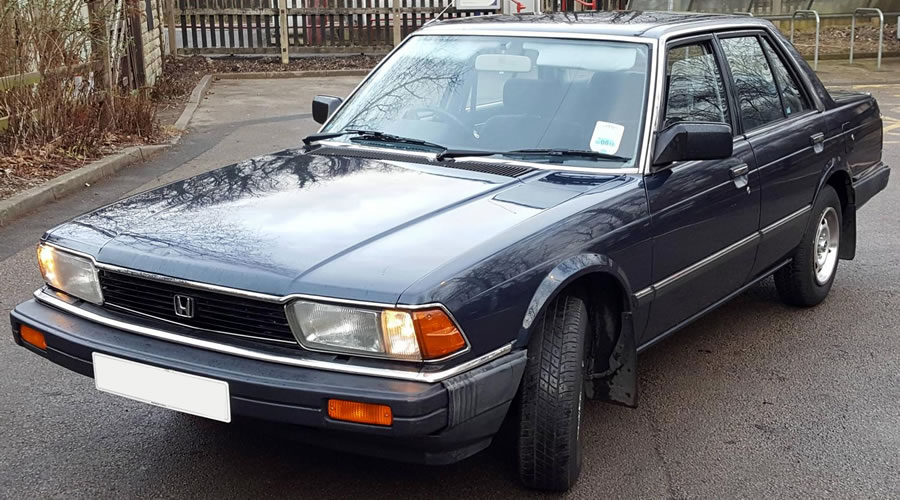
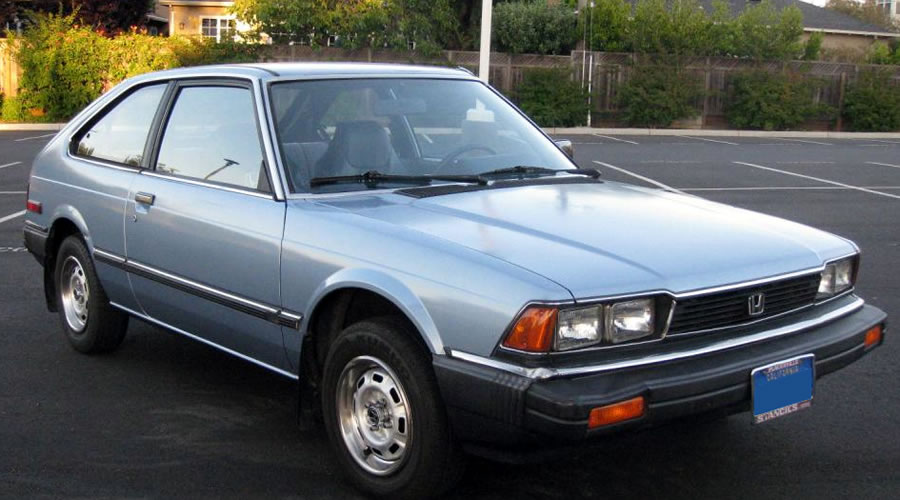
On September 22, 1981, the second generation of the Accord was introduced. The body was produced as a 3-door hatchback or 4-door sedan with a length of 4410 mm, a width of 1650 mm and a height of 1375 mm. In addition to Japan, the car began to be produced in the USA. The car also became the best-selling Japanese model in the USA. Based on the Accord, a premium sedan called the Honda Vigor began to be produced in the same year. The interior of the car was greatly modernized, velour trim and chrome elements appeared, and the first automatic navigation system, the Electro Gyro-Cator, appeared, which did not use GPS satellites, but worked from a gyroscope.
The mechanical part remained practically unchanged. The engines were carried over from previous generations with a volume of 1.6 liters (1602 cm³, EL1, I4, 78 hp) and 1.8 liters (1751 cm³, EK1, I4, 96 hp), and after the 1983 restyling, two 4-cylinder 12-valve engines with a volume of 1.8 liters (1829 cm³) appeared, one carburetor "ES2" with a capacity of 86 hp, the second injection "ES3" with a capacity of 101 hp. The gearbox was a 3-speed automatic or 5-speed manual. After the 1983 restyling, a new 4-speed automatic transmission appeared.
In June 1983, the model was updated. The appearance was slightly changed, and 12-valve power units appeared.
Third generation (CA1−CA6, 1985−1989)
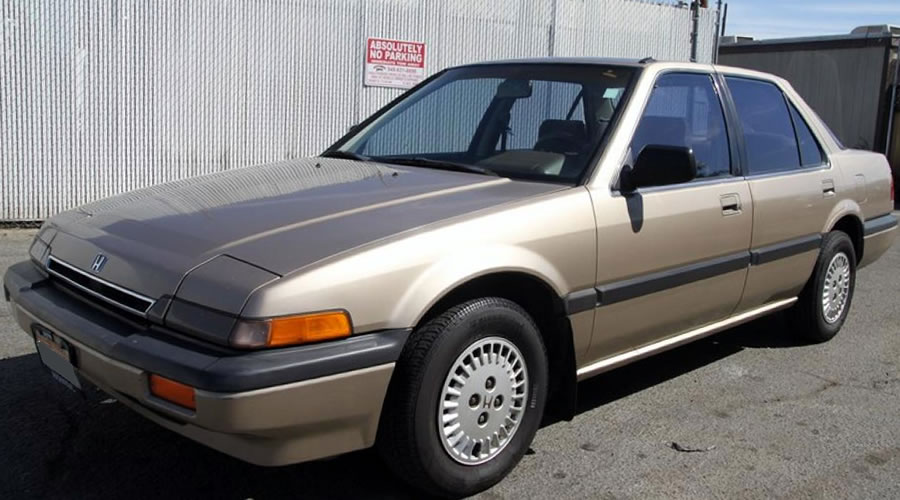
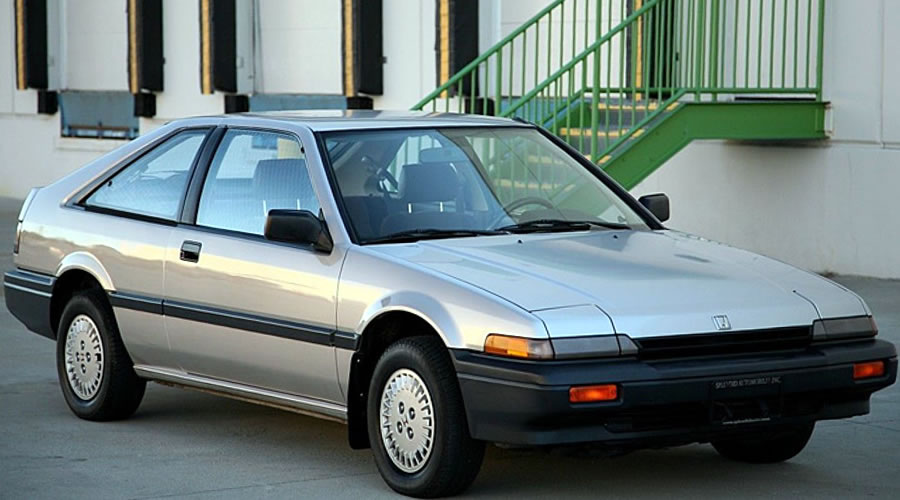
On June 4, 1985, the third generation Accord was presented in Japan. The design was developed by Toshi Oshika and was very different from the previous generation. The most noticeable difference is the hidden headlights, which are removed under the hood when not in use. Such headlights were only available in Japan, the USA, Canada, Australia, New Zealand, Taiwan and Arab countries. The body was a 4-door sedan, 2-door coupe, 3-door hatchback and station wagon (AeroDeck). The sedan was 4549-4564 mm long, 1712 mm wide and 1356 mm high. The hatchback was 4400 mm long, 1694 mm wide and 1336 mm high. The car was assembled in Japan, the USA, Canada, New Zealand, Thailand, Indonesia and Malaysia. In 1985, it received the "Car of the Year in Japan" award.
Double wishbone suspension was used for the first time. It is more expensive than MacPherson struts, but provides better stability and sharper handling. Brakes were either small discs with twin-piston calipers, large discs with single-piston calipers, or a front disc/rear drum system. ABS was available as an option on models with all-disc brakes. The base model had 13-inch steel wheels, while higher-end models had 14-inch alloy wheels.
The range of petrol engines was completely updated and included the following four-cylinder models: 1.6 litres (1598 cm³, A16A1, 88 hp), 1.8 litres (1829 cm³, A18A, 100 hp), 1.8 litres (1834 cm³, B18A, 115 hp), 2.0 litres (1955 cm³, A20A/A20A1/A20A2, 98-108 hp), 2.0 litres (1955 cm³, A20A3/A20A4, 110-122 hp) and 2.0 litres (1958 cm³, B20A/B20A2/B20A3, 133-145 hp). The transmission remained unchanged - 4-speed automatic and 5-speed manual.
Fourth generation (CB7−CB9, 1989−1993)
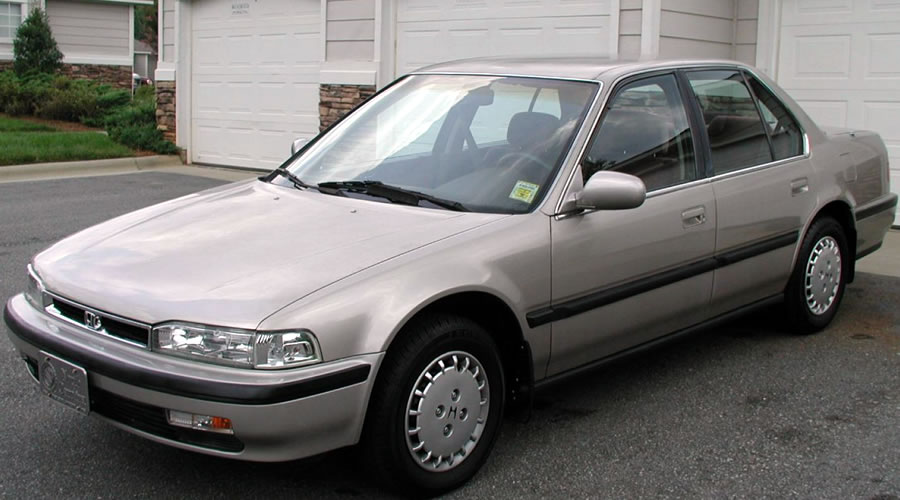
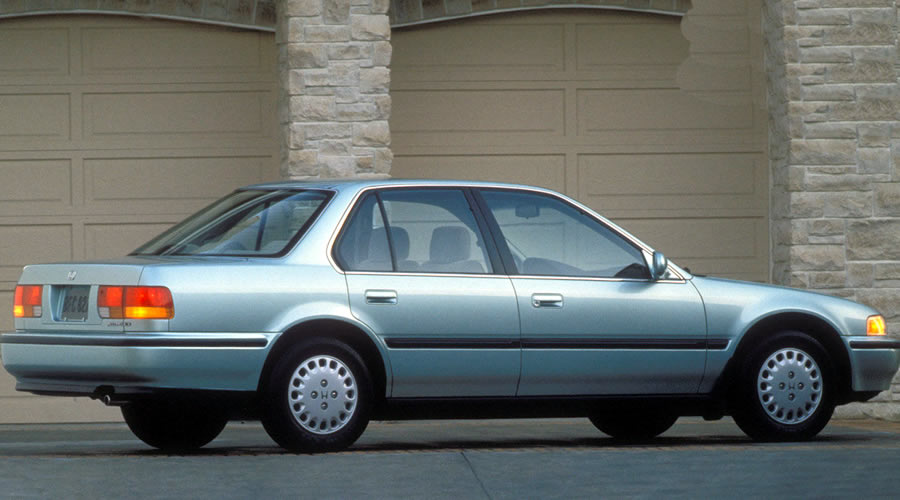
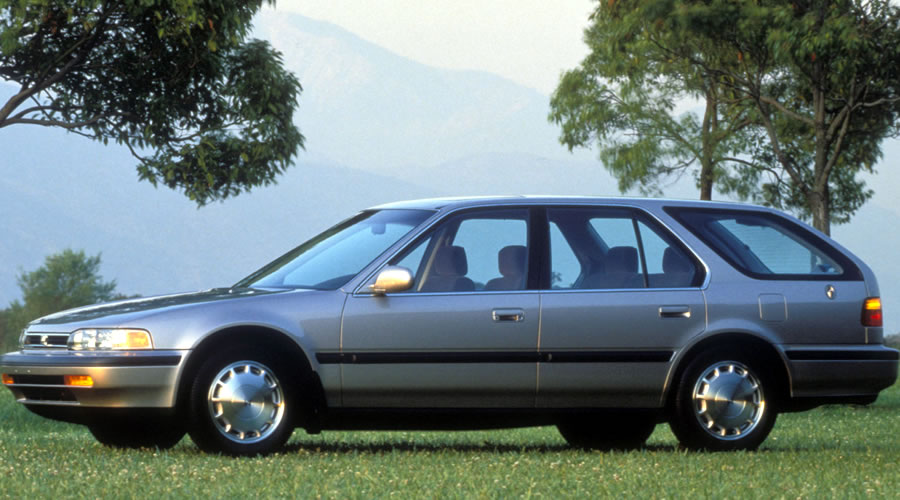
In 1989, the fourth generation Accord was introduced with the "CB" code as a 1990 model. The design of the car began to resemble the executive class "Honda Legend", which was sold in the United States under the name "Acura". They stopped using retractable headlights, and it was also one of the first cars in the United States equipped with optical reflectors with completely transparent lenses on the headlights. The body became significantly longer and moved into the "mid-size car" category (D-segment). The three-door hatchback was removed, leaving a 2-door coupe, 4-door sedan (length 4694-4704 mm, width 1704-1725 mm, height 1341-1389 mm) and a 5-door station wagon (length 4724-4745 mm, width 1714 mm, height 1326-1351 mm). The curb weight was 1237 kg.
The range of petrol engines was updated, replacing the carburetor ones with fully injector models (for cars in North America) with a volume of 1.8 liters (1842 cm³, F18A, I4, SOHC, 103 hp), 2.0 liters (1997 cm³, F20A, I4, SOHC/DOHC, 133 hp) and 2.2 liters (2156 cm³, F22A, I4, SOHC, 130-150 hp). In other markets, these same engines with carburetors of lower power also remained. The gearbox remained the same and it is a choice of a 5-speed manual or a completely new 4-speed automatic with electronic control. With an automatic gearbox, an electronically controlled rear engine suspension was used to reduce low-frequency noise and vibration.
Some new accessories were offered such as single-disc CD player or trunk-mounted 6-disc CD changer, stereo equalizer, fog lamps, security system, rear wing spoiler, trunk spoiler, luggage rack, center armrest, window visors, sunroof visor.
The 1992 models received a minor update. The front and rear received a more rounded look, a new grille, new headlights and parking lights, thin side moldings and updated wheel designs.
In 1993, Honda introduced the 10th Anniversary Edition sedan to commemorate the 10th year of the American Accord. The 10th Anniversary Edition was based on the Accord LX sedan, but was equipped with some features not available on the LX trim.
The 4th generation Accord spawned a sister model in 1989 called the Honda Ascot, which was mechanically identical to the Accord but featured a unique sedan body style. The Ascot was sold through the Honda Primo network in Japan, while the Accord was distributed through the Honda Clio network.
Fifth generation (CD3−CD9, 1993−1997)
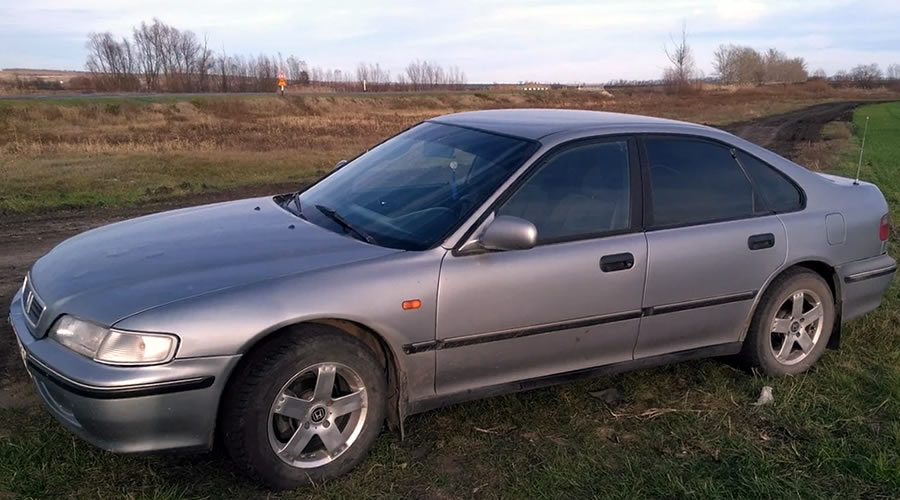
For the first time, Honda developed two different versions of the Accord, one for the European market and one for the North American and Japanese markets. This generation of the Accord was also sold in Japan as the Isuzu Aska, while some Isuzu products were sold there as Honda products.
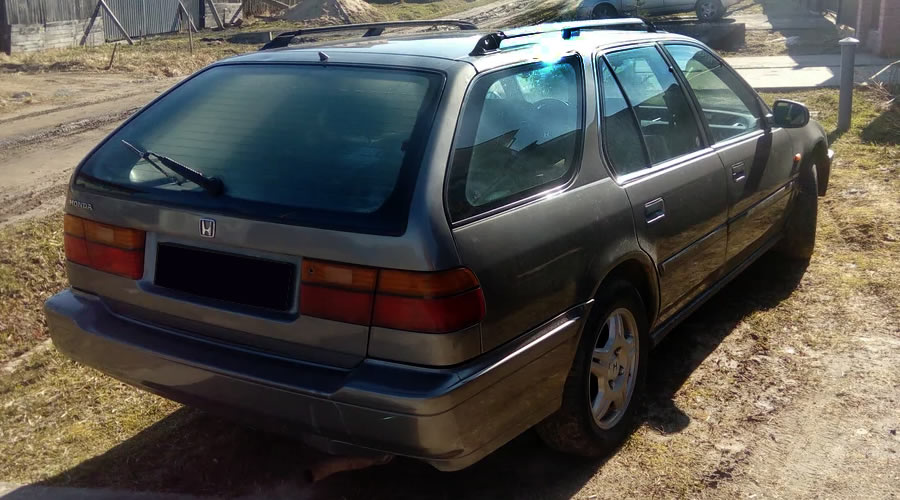
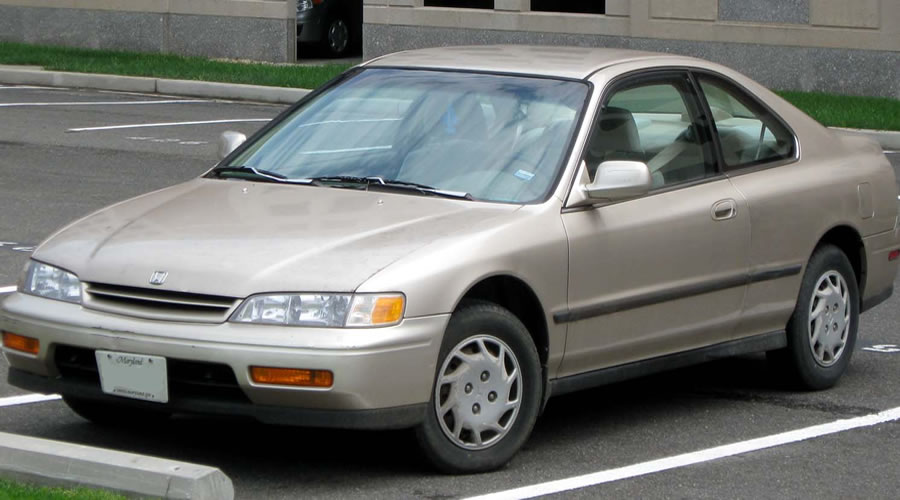
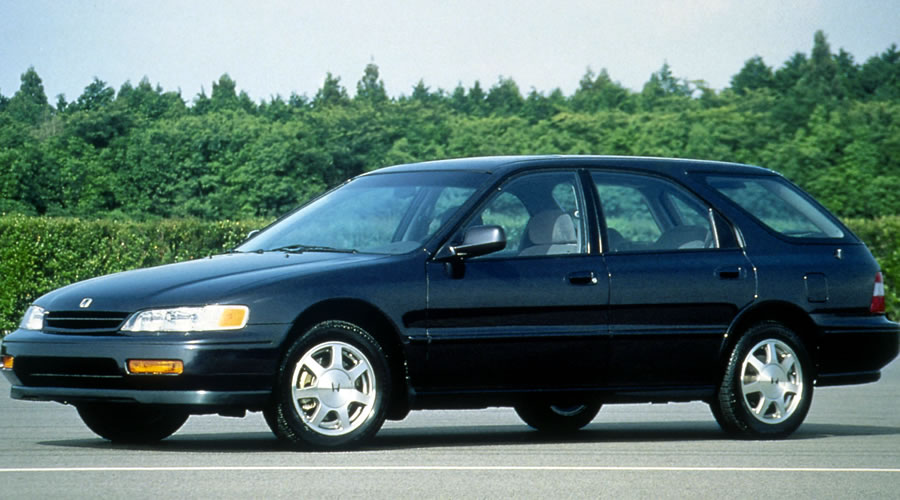
North American Model was released on September 9, 1993 and was based on the new "CD" chassis. The length and width of the car increased. The body was produced as a 4-door sedan, 2-door coupe (length 4674-4714 mm, width 1781 mm, height 1400 mm) and 5-door station wagon (length 4770-4785 mm, width 1781 mm, height 1420-1458 mm). The curb weight was 1295 kg. In the US, trim levels were "DX", "LX" and "EX", in Canada - "LX", "EX" and "EX-R".
The range of four-cylinder petrol engines consisted of the following models with a volume of 1.8 liters (1849 cm³, F18B, CD3, 103 hp), 2.0 liters (1997 cm³, F20B, CD4, 115 hp), 2.0 liters (1997 cm³, F20B3, CD9, 136 hp), and 2.2 liters (2156 cm³) - (F22A3, CD5, 150 hp), (F22B, CD5, CD7, 130 hp), (F22B1, CD5, CD7, 145 hp), (F22B2, CD5, CD7, 135 hp), (F22B5, CD5, CF2, 150 hp) and (H22A, CD6, CD8, CF2, 186 hp). Also installed V-shaped zero-cylinder engine with a volume of 2.7 liters (2675 cm³, C27A4, V6, CE6, 170 hp). Gearbox 4-speed automatic "Grade-Logic" or 5-speed manual.
A high-performance model, the Accord SiR, was produced for the domestic Japanese market from 1994 to 1997. The 1996 model year saw an exterior update that featured rounder bumpers, a slightly modified front panel, and new exterior lighting.
European model the fifth generation was introduced in 1993. In fact, it was a Japanese model "Honda Ascot Innova", based on the fourth generation (CB) "Accord". The body was only a four-door sedan with a length of 4675 mm, a width of 1715 mm, a height of 1380 mm and a curb weight of 1240-1375 kg. The coupe and station wagon were imported from the USA. In 1996, the European model received an update - new headlights, bumper, hood, radiator grille and slightly different taillights.
Petrol engines were four-cylinder in-line with a volume of 1.8 liters (1849 cm³, F18A3, 103 hp), 2.0 liters (1997 cm³, F20Z, 131 hp), 2.2 liters (2156 cm³, F22Z2, 130 hp) and 2.3 liters (2259 cm³, H23A3, 160 hp). There was also one diesel with a volume of 2.0 liters (1994 cm³, Rover 20T2N, I4) with a capacity of 84 hp.
Sixth generation (1997−2002)
The sixth generation was divided into three separate models, intended for the Japanese, North American and European markets. There were also two high-performance models for the domestic European and Japanese markets, called the "Type R" and "Euro R" respectively. In Japan, there were also high-performance models called the "SiR", "SiR-T" and "Wagon SiR".
Japanese models (CF3, CF4, CF5 and CL2, CL3)
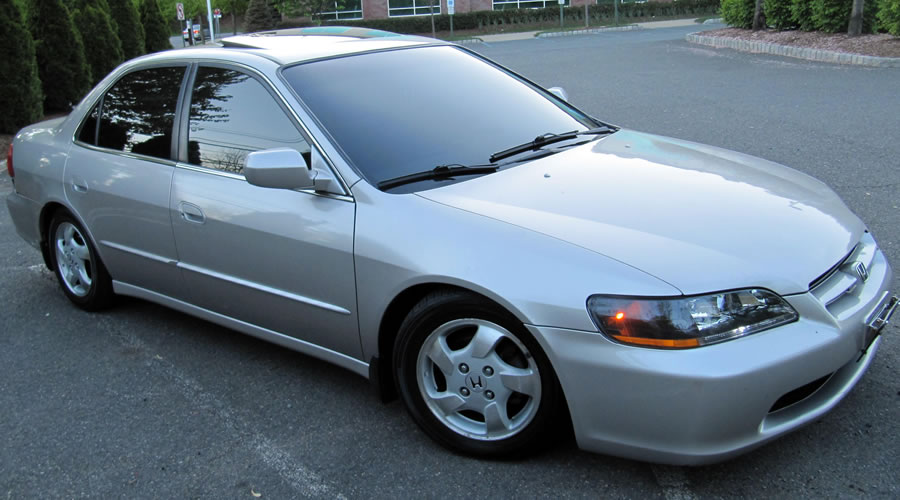
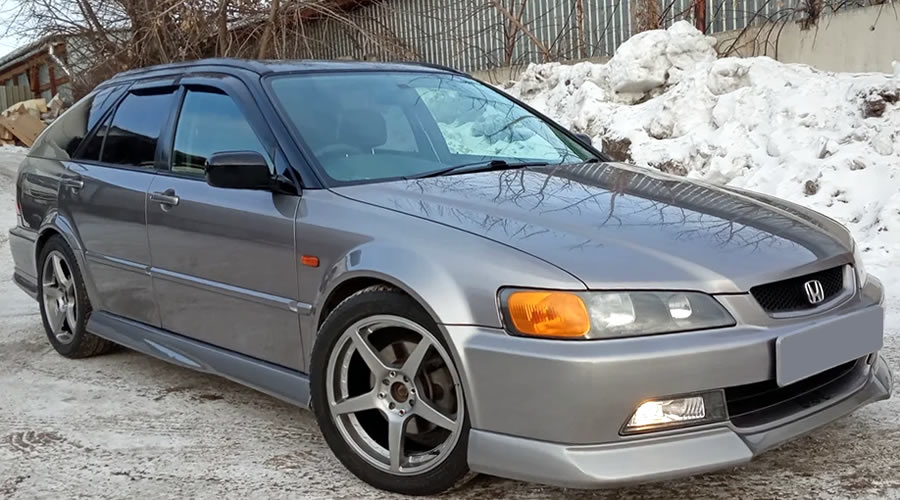
The sixth generation Japanese models were introduced on September 4, 1997. The cars became narrower than the previous generation, returning to the favorable tax rate as a compact car, with the exception of the Euro R and the station wagon, which were classified as a mid-size car. The almost identical Honda Torneo replaced the previous Honda Ascot and Honda Rafaga. This was the last generation to be developed under the Isuzu Aska brand. The car body was a 4-door sedan (length 4635 mm, width 1695 mm, height 1420 mm, weight 1230 mm) and a 5-door station wagon (length 4635 mm, width 1720 mm, height 1440 mm, weight 1330 kg). Production was carried out in Japan.
The engine was located transversely in the front, front or full all-wheel drive. Only petrol four-cylinder engines of the following characteristics and volumes were installed - 1.8 liters (1849 cm³, F18B, 138 hp), 2.0 liters (1997 cm³, F20B, SOHC, 148 hp), 2.0 liters (1997 cm³, F20B, DOHC, 197 hp) and 2.2 liters (2157 cm³, H22A, 220 hp). The gearbox was a 4-speed automatic "S-Matic" or a 5-speed manual.
America, Australia, New Zealand (CG1−CG6)
Production of the sixth generation of the American version of the Accord began in August 1997, and sales started in September. The car is based on the same platform as the Japanese models "Honda Inspire" and "Acura TL". The body was initially produced only as a four-door sedan (chassis CG1 / 5/6) with a length of 4796-4811 mm, a width of 1786 and a height of 1445-1455 mm. A year later, in September 1998, they began to produce a two-door coupe body (chassis CG2 / 3/4) with a length of 4745 mm, a width of 1786 mm and a height of 1394-1405 mm. The curb weight of the car was 1451 kg. Starting with this generation, cabin air filters (pollen filters) were installed as standard equipment and are located behind the glove compartment in the cabin. Assembly took place in the USA, Indonesia, China, Mexico, Malaysia, New Zealand, Taiwan, the Philippines, Thailand and Japan.
There were five petrol engine models to choose from with the following characteristics: 2.0 litre (1997 cm³, F20B5, I4, 147 hp), 2.3 litre (2254 cm³, F23A1, I4, 150 hp), 2.3 litre (2254 cm³, F23A4, I4, 148 hp), 2.3 litre (2254 cm³, F23A5, I4, 135 hp) and 3.0 litre (2997 cm³, J30A1, V6, 200 hp). The gearbox was a 4-speed automatic or a 5-speed manual.
The sedan was offered in five trim levels called "DX", "LX", "LX-V6", "EX" and "EX-V6", and the coupe in the same trim levels, but there was no entry-level "DX".
In September 2000, the Accord sedan for the US market received a minor facelift, which affected the front fascia, rear bumper, new taillights and wheel design, which refreshed the car's appearance.
European models (CG7, CG8, CG9, CH5−CH8)
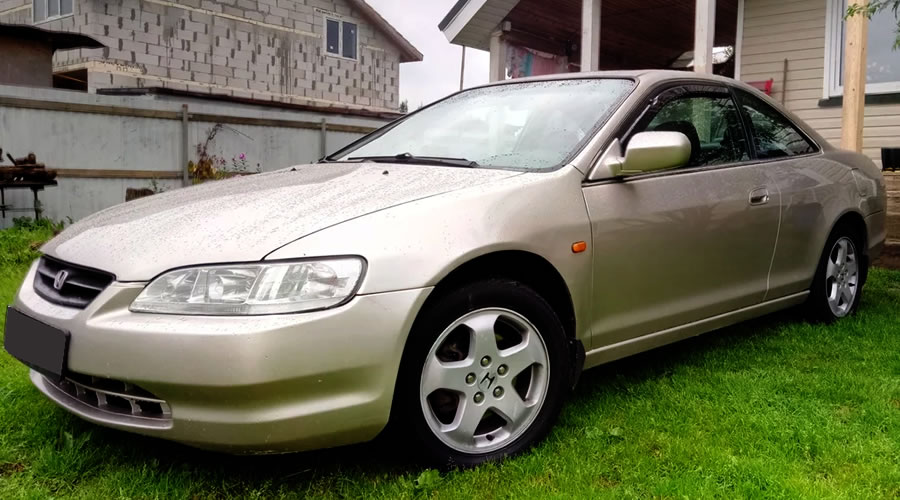
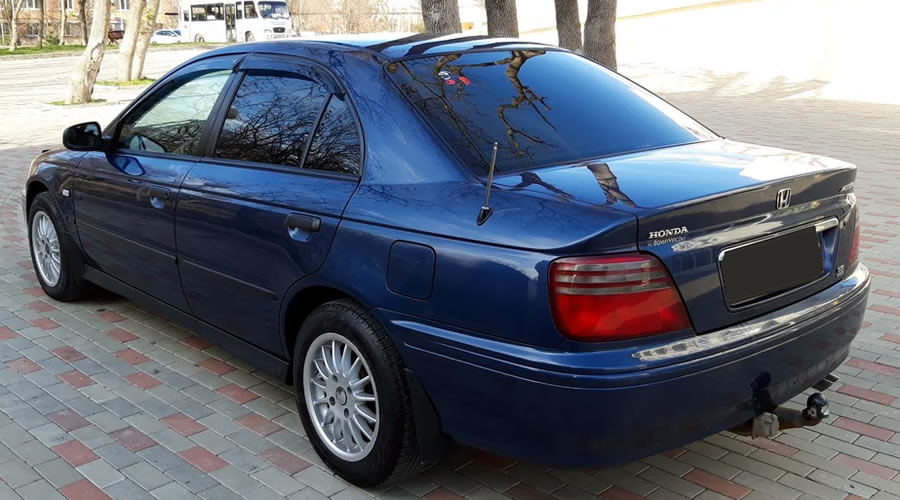
The European Accords differed in design from the Japanese and American ones and were shorter in length. The body was produced as a four-door sedan (chassis code CG7, CG8 and CG9), and also as a five-door hatchback (chassis code CH5-CH8). The overall dimensions of the car were 4595 mm long, 1750 mm wide, 1405 mm high. The curb weight was 1235 kg.
The car was equipped with a wide range of four-cylinder petrol engines with the following characteristics: 1.6 liters (1590 cm³, D16B6, 113 hp), 1.8 liters (1849 cm³, F18A3, 118 hp), 2.0 liters (1997 cm³, F20Z, 131 hp), 2.2 liters (2156 cm³, F22Z2, 150 hp), 2.3 liters (2254 cm³, F23Z5, 154 hp), 2.2 liters (2157 cm³, H22A7, 212 hp) and 2.3 liters (2259 cm³, H23A3, 158 hp). One 2.0-liter diesel engine (1994 cm³, Rover 20T2N, I4, 105 hp) was also installed.
There were three trim levels. The base 'S' model came with ABS, alarm, immobiliser and air conditioning. The 'SE' added metallic paint, cruise control, climate control and satellite navigation. The 'ES' version had all of these features (except satellite navigation) plus walnut and leather trim and heated front seats. This model was renamed the 'SE Executive' in late 1999.

The 2001 model received a minor facelift, affecting the front grille, alloy wheels, bumpers, taillights and headlights.
Seventh generation (2002−2008)
The seventh generation was launched in 2002 and consists of two separate lines - one for the Japanese and European markets, and one for North America. However, both lines were sold in many other markets.
Japan and Europe (CL7, CL9 and CM2, CM3)
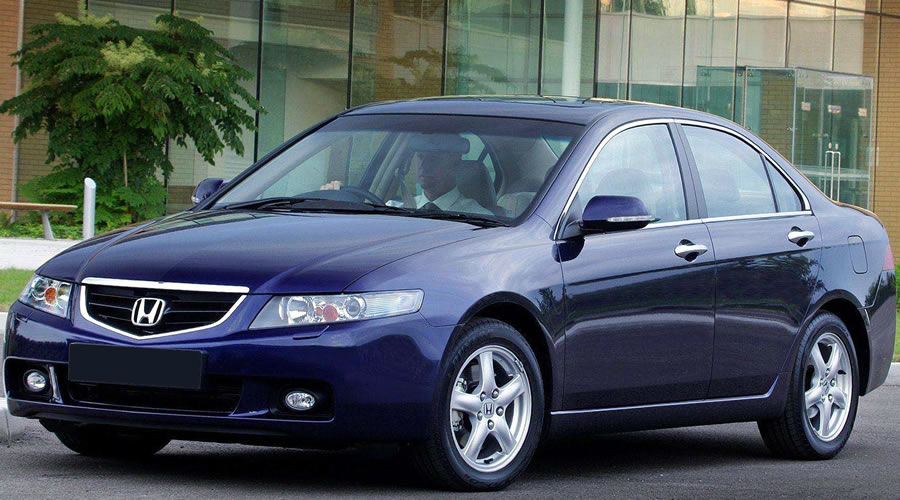
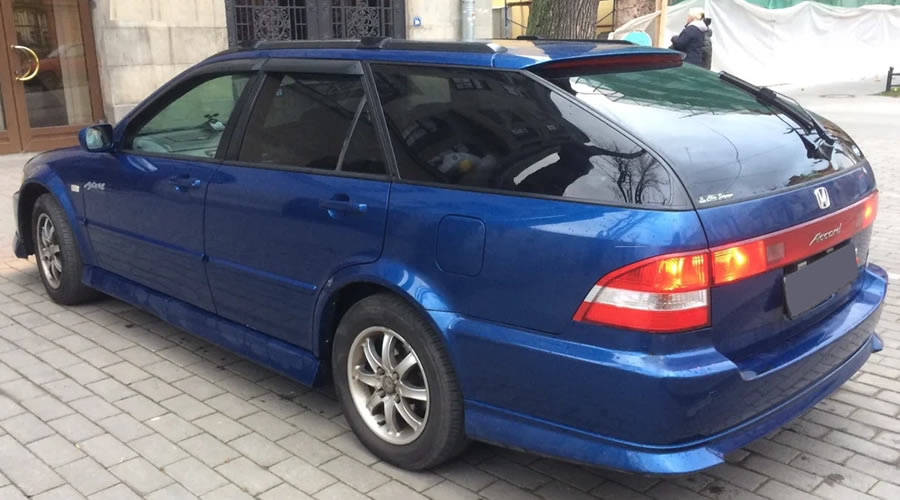
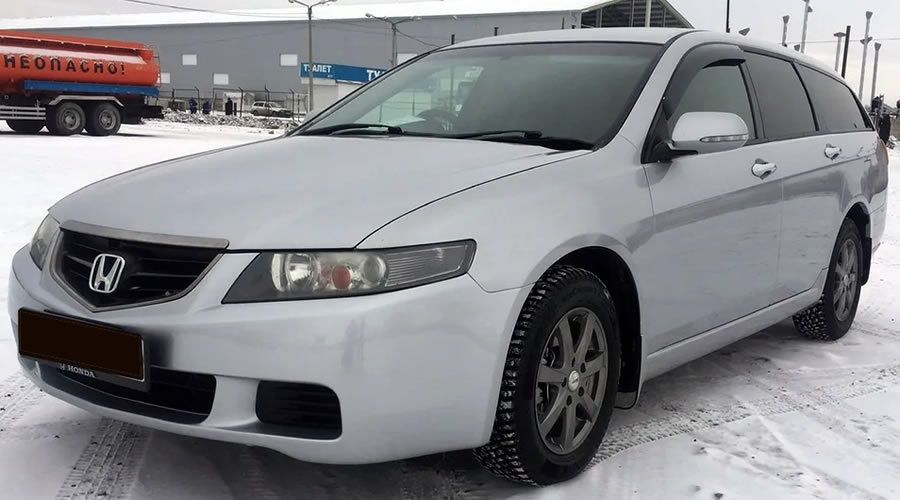
This generation of the European and Japanese Accord, previously separate models, were combined into one line, designed to increase competitiveness in the European market. The body of the seventh generation was presented as a 4-door sedan (chassis CL7 and CL9; length 4665 mm, width 1760 mm, height 1445 mm), as well as a 5-door station wagon (chassis CM2 and CM3; 4750 mm, width 1760 mm, height 1495 mm). The car was also exported to the United States and Canada, where it was sold as the "Acura TSX". In the Japanese market, the "Accord" was combined with the "Torneo" line to compete with the "Mazda Atenza" and the Subaru Legacy. A version of the larger North American Accord was sold in Japan as the Honda Inspire to compete in the entry-level luxury sedan class.
Petrol four-cylinder engines were presented as follows: three models with a volume of 2.0 liters (1998 cm³, K20A4/K20A6/K20Z2, i-VTEC, 158/155/153 hp), as well as three models with a volume of 2.4 liters (2354 cm³, K24A3/K24A4/K24A8, 197/160/166 hp). The first Honda diesel engine with a volume of 2.2 liters (2204 cm³, i-CTDi, 140 hp) was also presented. The gearbox was a 5-speed automatic, as well as a 5- or 6-speed manual. The drive was on the front wheels, the engine was located transversely at the front.

In the Japanese market there was a high-performance model called the "Accord Euro R" (chassis code LA-CL7) with a 2.0 liter (1998 cc) engine producing 220 hp and a 6-speed manual transmission.
North America (CM4−CM9)
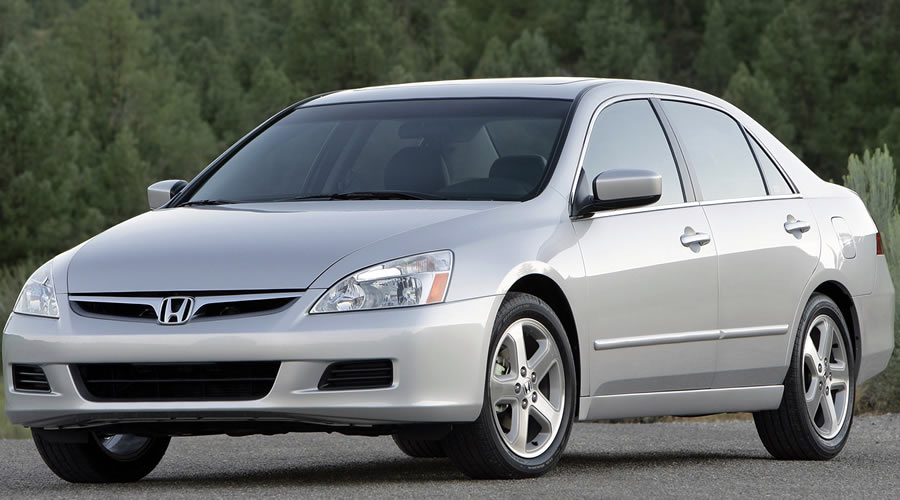
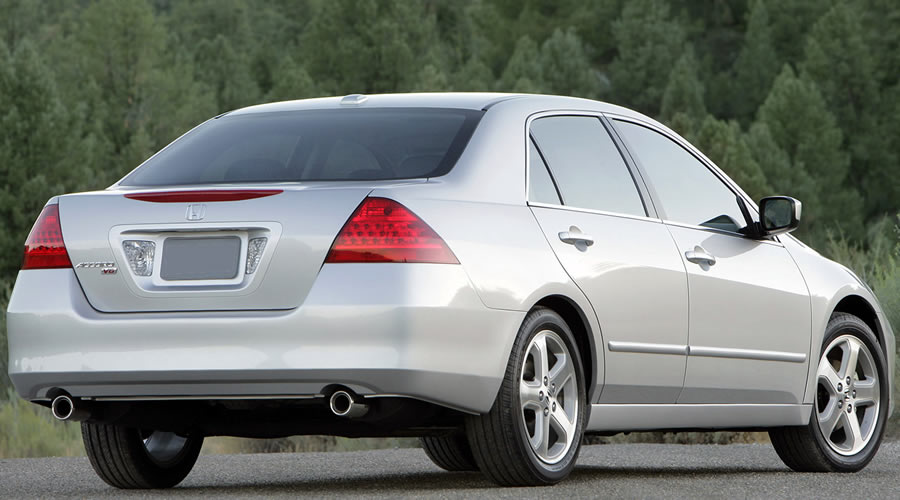
The seventh generation of the North American market was produced in a 4-door sedan body (chassis CM4, CM5, CM6; length 4813-4854 mm, width 1816-1819 mm, height 1450-1455 mm) and 2-door coupe (chassis CM7 and CM8; length 4765-4770 mm, width 1811-1819 mm, height 1415-1417 mm). It is clear that the dimensions are quite significantly larger than those of the Japanese model. It was sold in some countries of Latin America, Asia, the Middle East, Australia and New Zealand, as well as with some modifications in South Korea since 2004. The model range included all the same trim levels as the previous generation - "DX", "LX", "EX", "LX-V6" and "EX-V6". As an option, it was possible to order the "Honda" navigation system with GPS.
There were three modifications of four-cylinder petrol engines with a volume of 2.0 liters (1998 cm³, K20A6, 155 hp), 2.4 liters (2354 cm³, K24A4, 160 hp) and 2.4 liters (2354 cm³, K24A8, 166 hp), and there were also two models of six-cylinder V-shaped engines with a volume of 3.0 liters (2997 cm³, J30A4 / J30A5, 242 / 244 hp). Gearbox 5- or 6-speed manual, as well as 5-speed automatic.
Honda offered the Accord Hybrid in the United States from 2005 to 2007. The engine was a 3.0-liter (2997 cc, JNA1, V6, 253 hp) gasoline six-cylinder paired with a 144-volt electric motor producing 16 hp. The engine had the ability to shut off three of the six cylinders under certain conditions for better fuel economy (VCM technology).
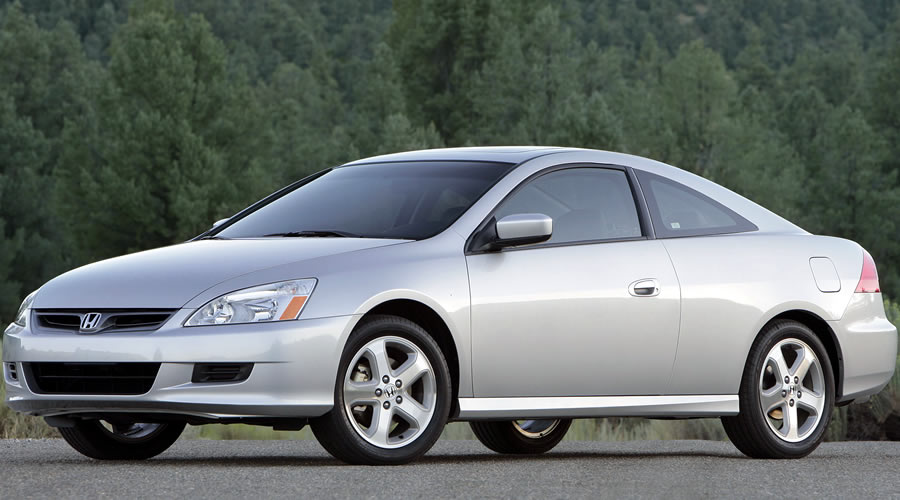
For 2005, the Accord received several updates, including standard side curtain airbags and front seat-mounted side airbags for a total of six airbags, red taillights for the sedan (the coupe's taillights were unchanged), more chrome on the grille, and new wheel designs. Daytime running lights and heated side mirrors were also added. Vehicle Stability Assist (VSA), traction control, and brake assist were made available on V6 models. The interior was also slightly updated, with a new steering wheel cover, multi-colored gauges, and a different style shift knob for automatic models. The GPS navigation system was upgraded to the fourth generation with a faster processor and more memory.
The Insurance Institute for Highway Safety (IIHS) found that 2003-2004 Accords had the lowest fatality rates in the midsize family sedan class.
Eighth generation (2007−2012)
This generation was also divided into two branches, one was called "Accord" in Japan and Europe and "Spirior" in China, and the second branch was called "Accord" in North America and China and "Inspire" in Japan.
Japan and Europe (CU1, CU2)
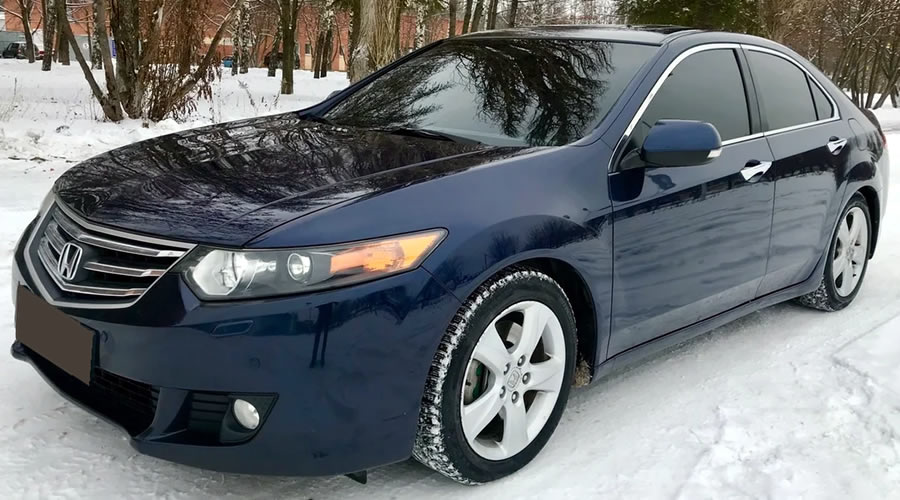
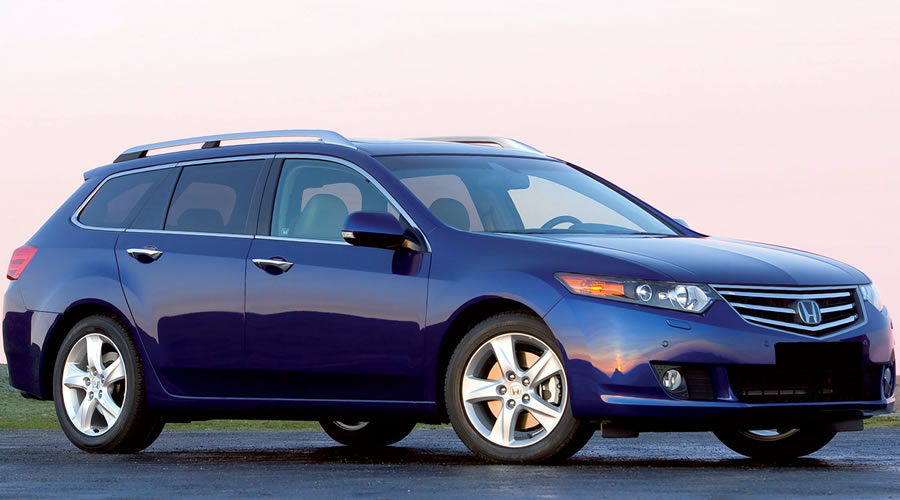
In March 2008, the eighth-generation Accord was unveiled at the Geneva International Motor Show. In mid-2008, the car went on sale as a 2009 model. The body was presented as a 4-door sedan and a 5-door station wagon. The length of the car was 4726-4740 mm, the width was 1840 mm and the height was 1440 mm, i.e. it became longer and wider than its predecessor. A concept car of the station wagon was unveiled in 2007 at the Frankfurt Motor Show. There was also a high-performance model called the "Accord Type S".
There were three models of four-cylinder petrol engines: 2.0 litres (1997 cm³, R20A3, 154 hp), 2.4 litres (2354 cm³, K24Z2, 177 hp) and 2.4 litres (2354 cm³, K24Z3, 198 hp). There were two four-cylinder turbodiesels, both 2.2 litres (2199 cm³), one "N₂2B" with 148 hp, the second "N₂2B2" with 178 hp. The gearbox was 5- or 6-speed manual, as well as 5-speed automatic.
In Australia, the European version of this model won the prestigious Car of the Year award for 2008. It also won South African Car of the Year in 2009. In March 2012, Wheels Australia magazine compared 11 mid-size sedans and the Accord Euro came out on top.
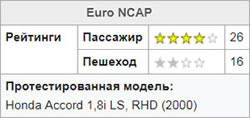
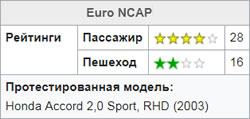
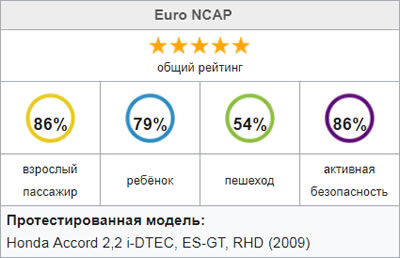
The European committee Euro NCAP carried out crash tests on the 2008 and 2009 model year vehicles, the results of which are shown in the tables below.
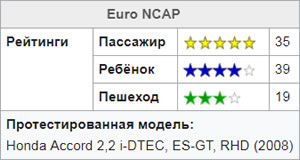
![]() | ![]() |
North America (CP1, CP2, CP3 and CS1, CS2)
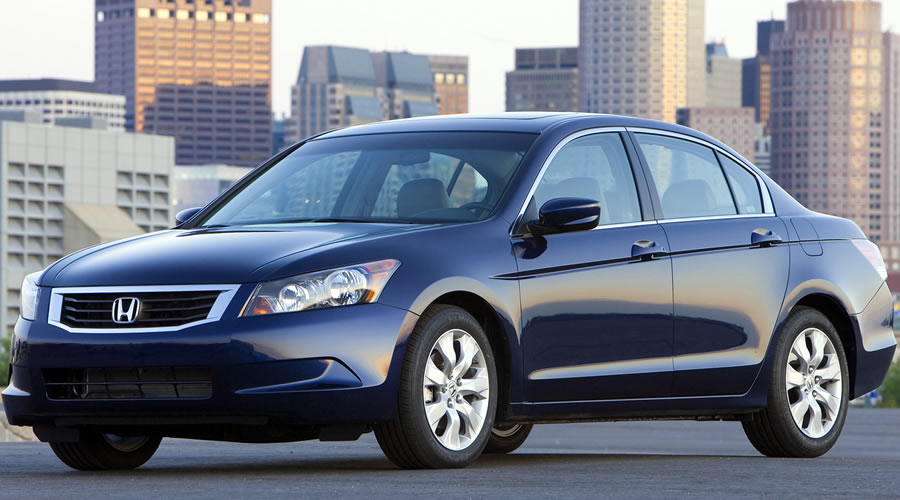
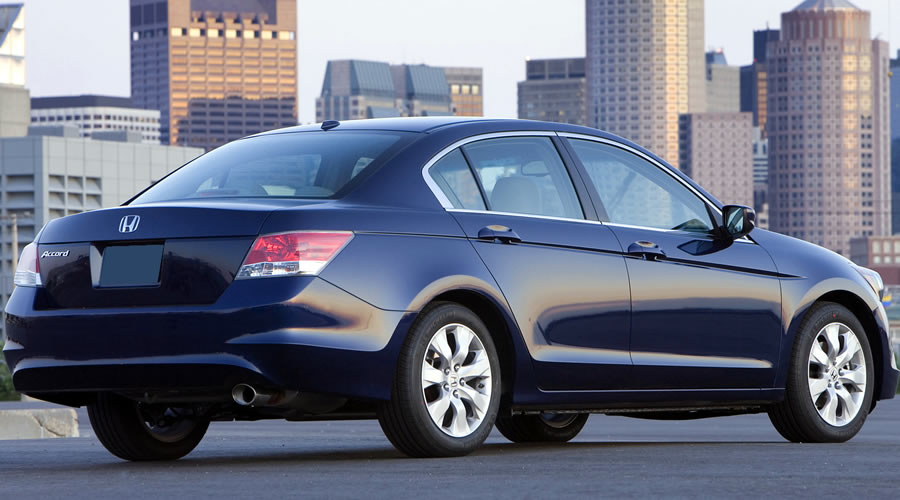
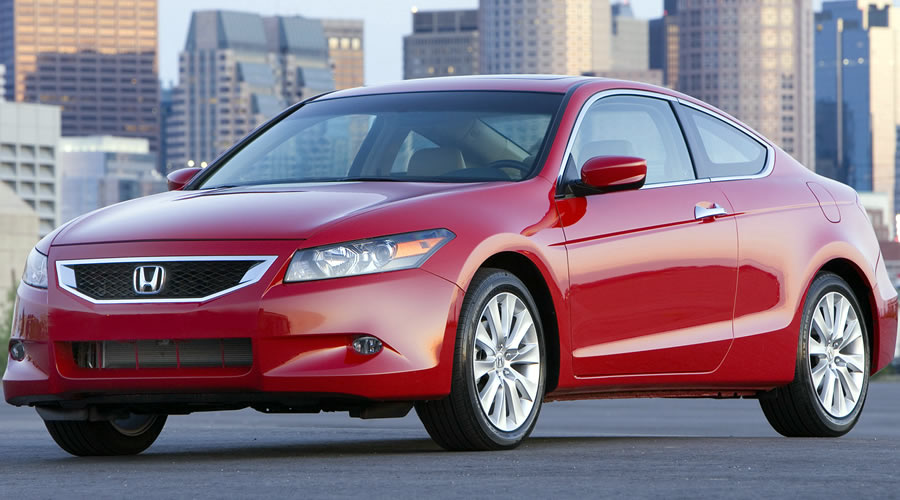
The concept car was unveiled at the 2007 North American International Auto Show in Detroit. Production of the car began on August 21, 2007, with sales beginning in September as a 2008 model. The Accord is also sold in parts of Asia, and as the "Honda Inspire" in Japan. The body style was offered as a 4-door sedan (chassis code CP1, CP2, CP3; length 4950 mm, width 1847 mm, height 1476 mm) and a 2-door coupe (chassis code CS1, CS2; the length is 4849 mm, the width is 1849 mm, the height is 1433 mm). The length and width have grown from the previous generation, as a result of which the interior space has also been increased. The trim levels of the sedans were called "SE", "EX", "EX-L", "EX-L Navi", "EX-L V6", and "EX-L V6 Navi", and the coupe - "EX", "EX-L", "EX-L Navi" and "EX-L V6 Navi". The basic equipment includes anti-lock brakes with power steering and electronic brake-force distribution, electronic stability control, front and rear disc brakes, air conditioning, keyless entry, power windows, power locks and cruise control.
The petrol four-cylinder engines are available in three models: 2.0 litres (1997 cm³, R20A3, 148 hp), 2.4 litres (2354 cm³, K24Z2, 177 hp) and 2.4 litres (2354 cm³, K24Z3, 190 hp). The high-performance six-cylinder engines are available in two versions, both with a capacity of 3.5 litres (3471 cm³, J35Z2/J35Z3) and a power of 268/271 hp. The diesel engine is the N₂2A2 model with a capacity of 2.2 litres (2204 cm³) and a power of 140 hp. The gearboxes are the same as those in the European models.
A mid-life refresh was given to the model in 2011, giving the car new front fascias and updated taillights. A rearview camera is now standard on the sedan when equipped with a navigation system.
The Accord comes with a wide range of safety features, including dual-stage front airbags, side airbags, side curtain airbags, and seatbelts with pretensioners and load limiters. The Insurance Institute for Highway Safety (IIHS) found that the car has the lowest fatality rate in the sedan class. The IIHS also conducted crash tests, the results of which are shown below:
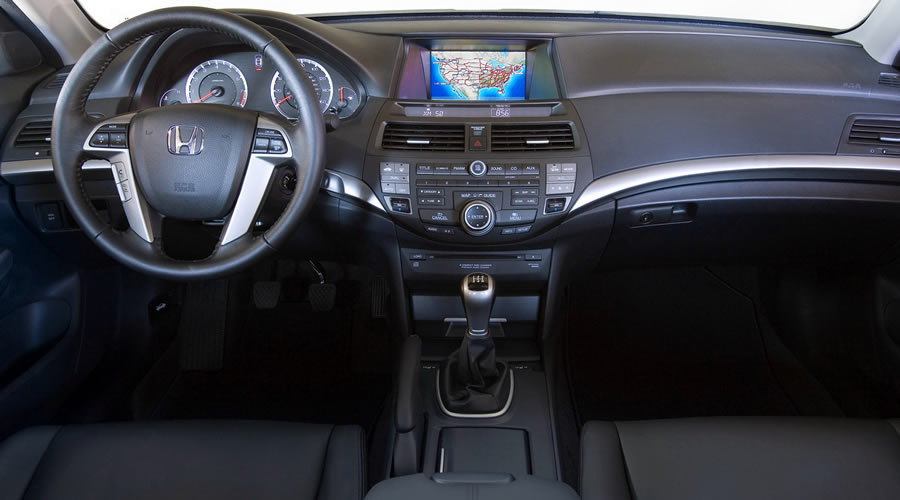
- Frontal Test with Partial Overlap - Good
- Side Kick - Good
- Roof Strength (2008-2011 Models) - Acceptable
- Roof Strength (2012 Models) - Good
A total of 14 tests were conducted, of which 13 were given a "Good" rating.
The National Highway Traffic Safety Administration (NHTSA) tested the 2009 and 2011 model year sedans, and the results are shown below.
2009 Sedan:
- Front Impact (Driver) - 5 out of 5 stars
- Frontal Impact (Passenger) - 5 out of 5 stars
- Side Impact (Driver) - 5 out of 5 stars
- Side Impact (Passenger) - 5 out of 5 stars
- Side Impact (Rear Passenger) - 3 out of 5 stars
- Car Flip - 5 out of 5 stars
2011 Sedan:
- Overall rating: 5 out of 5 stars
- Front Impact (Driver) - 5 out of 5 stars
- Frontal Impact (Passenger) - 5 out of 5 stars
- Side Impact (Driver) - 4 out of 5 stars
- Side Impact (Passenger) - 5 out of 5 stars
- Car Flip - 5 out of 5 stars
Ninth generation (2012−2017)
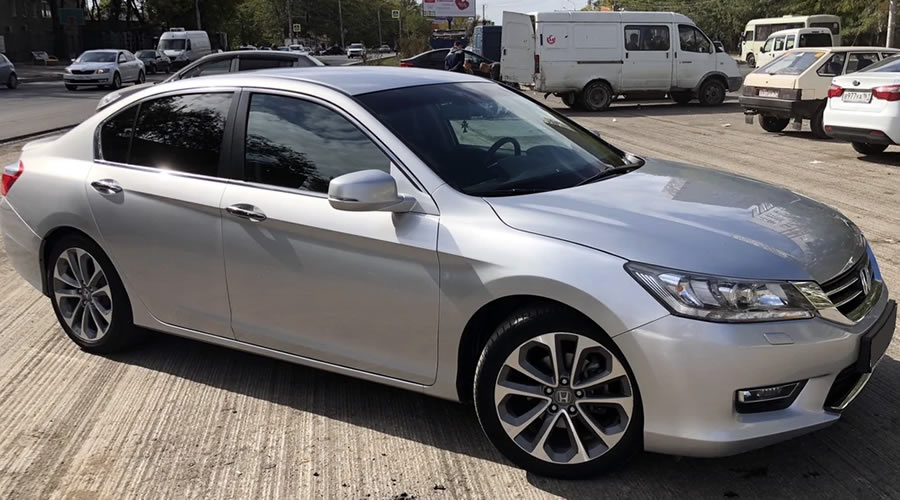
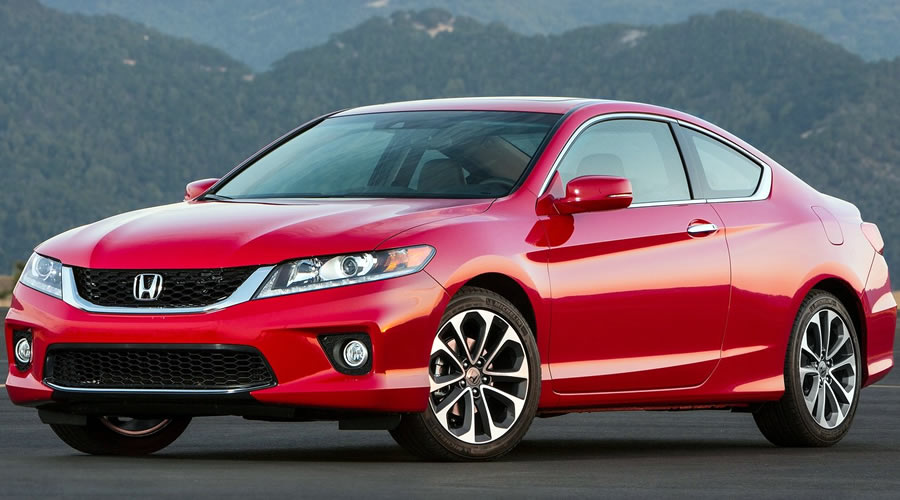
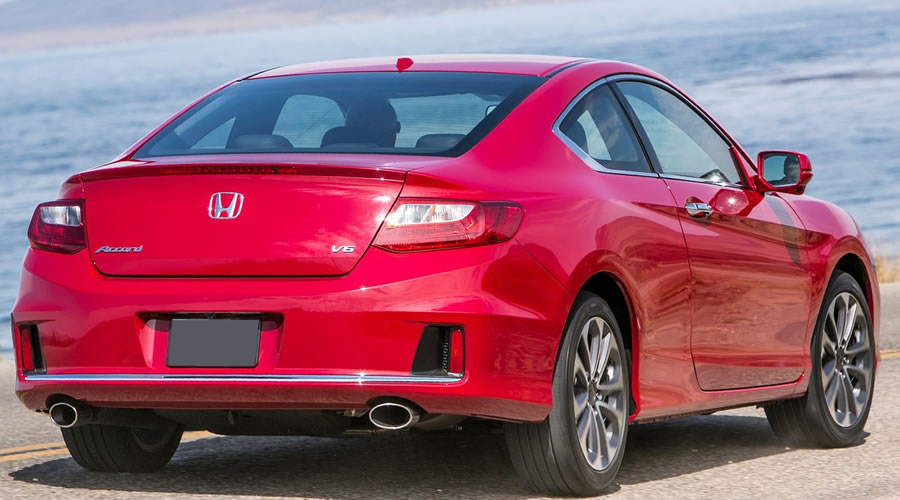
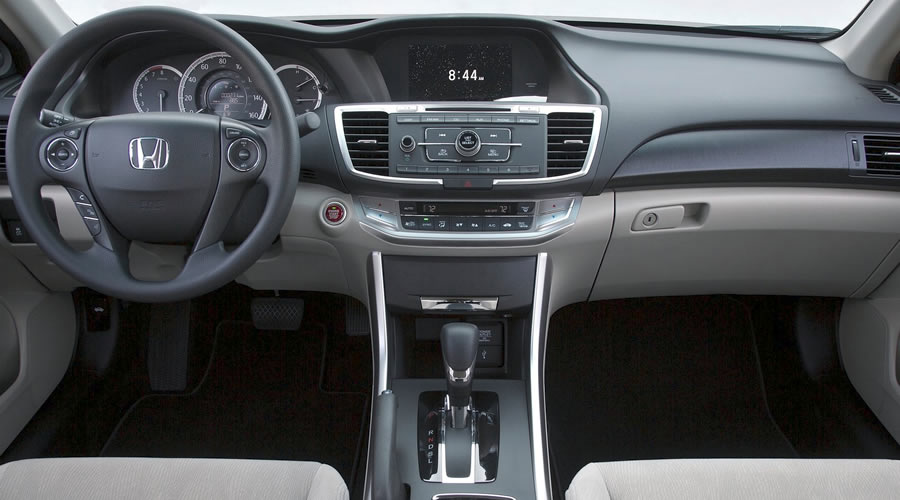
The ninth-generation Accord was no longer divided into several branches for different markets; the car became global for the entire world. The concept with a coupe body was presented in January 2012 at the North American International Auto Show in Detroit. Production versions of the cars were presented in September 2012 and at the same time sales began as a 2013 model. In June 2013, a Japanese-made hybrid was presented on the Japanese market, replacing the Honda Inspire there. The body was produced as a 4-door sedan (length 4862 mm, width 1849 mm, height 1466 mm) and a 2-door coupe (length 4806 mm, width 1849 mm, height 1435 mm). The engine is located transversely in front, the drive is only on the front wheels.
The base trim level comes with a standard 8-inch 480 x 320 LCD screen, a rearview camera, Honda's i-MID system, which includes Bluetooth hands-free calling with text messaging and audio streaming, a USB port, dual-zone automatic climate control, and alloy wheels. The navigation system adds a 6-inch touchscreen, while the 8-inch screen is installed with a higher resolution (800 x 480). An additional rearview camera and a blind-spot camera behind the front passenger are available as options. New safety features include a forward collision warning system, a lane departure warning system, and a blind-spot monitor. Some models offer Smart Key, LED daytime running lights, headlights and taillights, and adaptive cruise control.
Two four-cylinder petrol engines with a capacity of 2.0 liters (1997 cm³, R20A3, 148 hp) and 2.4 liters (2356 cm³, K24W, 185 hp) were offered. There were also two high-performance six-cylinder petrol engines with a capacity of 3.0 liters (2997 cm³, J30A5, 244 hp) and 3.5 liters (3471 cm³, J35Y, 278 hp). The gearbox was a 6-speed manual, 5- or 6-speed automatic, as well as a continuously variable CVT.
The production version of the Plug-In Hybrid was unveiled at the 2012 Los Angeles Auto Show, with sales in the US beginning in January 2013. It was powered by a 2.0-litre four-cylinder petrol engine (i-VTEC, 137 hp), which works together with a 6.7 kWh lithium-ion battery and a 124 kW electric motor, giving a total system output of 196 hp.
The Accord has been tested for safety by the Insurance Institute for Highway Safety (IIHS) and the National Highway Traffic Safety Administration (NHTSA).
IIHS Sedan Test Results:
- Frontal Test with Partial Overlap - Good
- Frontal Low Overlap Test - Good
- Side Kick - Good
- Roof Strength - Good
IIHS coupe test results:
- Frontal Test with Partial Overlap - Good
- Small Overlap Frontal Test (2013-2014 Models) - Acceptable
- Small Overlap Frontal Test (2015 and later models) - Good
- Side Kick - Good
- Roof Strength - Good
2013 NHTSA Sedan Test Results:
- Overall rating: 5 out of 5 stars
- Front Impact (Driver) - 4 out of 5 stars
- Frontal Impact (Passenger) - 4 out of 5 stars
- Side Impact (Driver) - 5 out of 5 stars
- Side Impact (Passenger) - 5 out of 5 stars
- Car Flip - 5 out of 5 stars
2013 NHTSA coupe test results:
- Overall rating: 5 out of 5 stars
- Front Impact (Driver) - 5 out of 5 stars
- Frontal Impact (Passenger) - 5 out of 5 stars
- Side Impact (Driver) - 5 out of 5 stars
- Side Impact (Passenger) - 5 out of 5 stars
- Car Flip - 5 out of 5 stars
Tenth generation (2017−present)
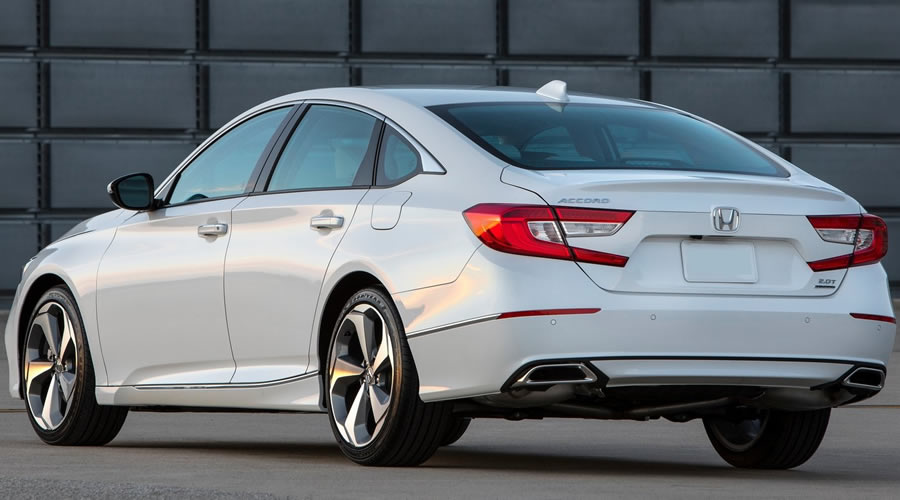
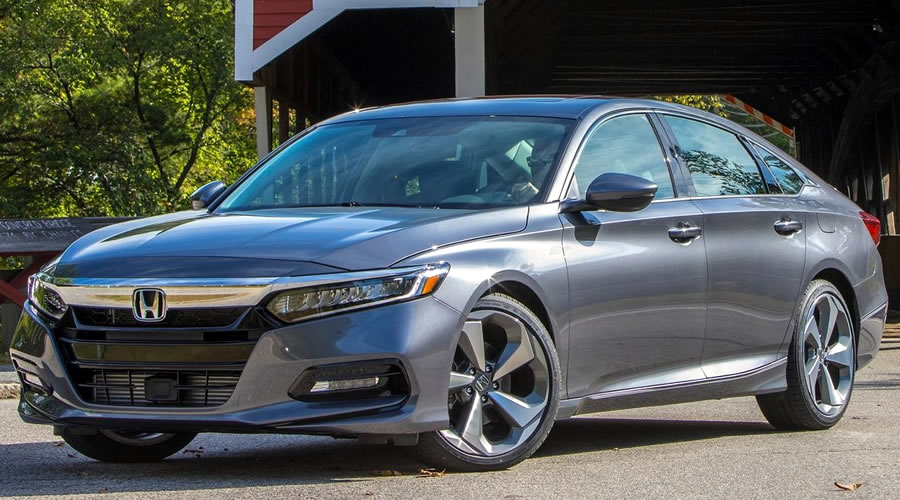
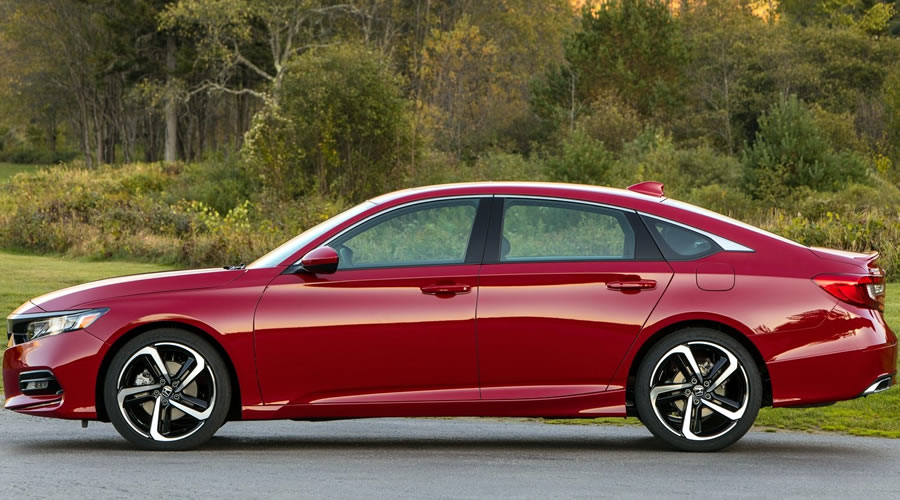
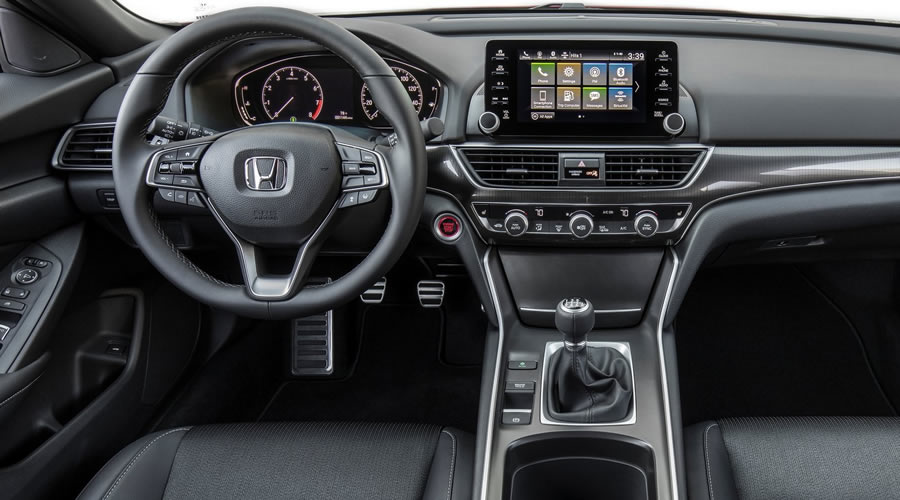
The tenth generation was introduced in July 2017, and sales began in October in the US and Canada as a 2018 model. The body is presented as a 4-door sedan with a length of 4882 mm, a width of 1862 mm, a height of 1451 mm and a curb weight of 1420-1555 kg. All cars are equipped with "Honda Sensing" - a lane keeping system, adaptive cruise control, road sign recognition, a blind spot monitor and automatic high beams.
The engines are represented by two petrol four-cylinder turbocharged models with a volume of 1.5 liters (1498 cm³, L15BE, 192 hp) and 2.0 liters (1996 cm³, K20C4, 252 hp). The gearbox is a 6-speed manual, 10-speed automatic and also a continuously variable transmission CVT.
Also presented is a hybrid with a 2-liter gasoline engine (1993 cm³) with a capacity of 212 hp, which works together with two electric motors.