


Elements of body, interior and door of car Honda Civic 3 and 4

General information about the car body
The car body is load-bearing. Individual body elements that are particularly vulnerable to accidents can be removed and repaired or replaced with new ones (moldings, bumpers, hood, trunk lid (or the back door), glass).
The car body is load-bearing. Individual body elements that are particularly vulnerable to accidents can be removed and repaired or replaced with new ones (moldings, bumpers, hood, trunk lid (or the back door), glass).
Body — maintenance
1. The condition of your car's body largely determines its resale value. Body repair is a more labor-intensive operation than repairing individual components. 2. We recommend washing the body with a steam washer once a...
1. The condition of your car's body largely determines its resale value. Body repair is a more labor-intensive operation than repairing individual components. 2. We recommend washing the body with a steam washer once a...
Decorative overlays — maintenance
Wash the pads as often as you would the car. Do not use caustic soda or gasoline-based solvents. Wipe vinyl and rubber trims with a special protective liquid. The same applies to all rubber components of cars (hoses,...
Wash the pads as often as you would the car. Do not use caustic soda or gasoline-based solvents. Wipe vinyl and rubber trims with a special protective liquid. The same applies to all rubber components of cars (hoses,...
Interior Upholstery and Carpets — Maintenance
1. Every three months (more often if necessary) remove the mats and wash the interior of the car. Vacuum the upholstery. 2. Leather upholstery requires special care. Remove stains with a solution of mild soap and warm...
1. Every three months (more often if necessary) remove the mats and wash the interior of the car. Vacuum the upholstery. 2. Leather upholstery requires special care. Remove stains with a solution of mild soap and warm...
Body — minor damage repair
Repair of minor scratches 1. If the scratch has not exposed the paint to the metal, rub the area around it with an eraser and rinse with water. 2. Using a small brush, paint over the scratch until the paint level...
Repair of minor scratches 1. If the scratch has not exposed the paint to the metal, rub the area around it with an eraser and rinse with water. 2. Using a small brush, paint over the scratch until the paint level...
Body — major damage repair
1. Major damage must be repaired by qualified personnel. 2. For any major damage, check the wheel alignment and relative position of the posts. 3. Large damaged parts (hood, fenders, etc.) better to replace.
1. Major damage must be repaired by qualified personnel. 2. For any major damage, check the wheel alignment and relative position of the posts. 3. Large damaged parts (hood, fenders, etc.) better to replace.
Hinges and locks — maintenance
Every three months, hinges and locks of doors, hood, trunk lid (or the back door) must be lubricated. Lubricate door locks with graphite grease, other components with liquid grease.
Every three months, hinges and locks of doors, hood, trunk lid (or the back door) must be lubricated. Lubricate door locks with graphite grease, other components with liquid grease.

Bumpers — removal and installation
1. Remove the bumper cover (if it is installed). 2. Disconnect all wires that will interfere with the removal of the bumper. 3. Provide additional support for the bumper or call an assistant 4. Remove the mounting bolts...
1. Remove the bumper cover (if it is installed). 2. Disconnect all wires that will interfere with the removal of the bumper. 3. Provide additional support for the bumper or call an assistant 4. Remove the mounting bolts...
Hood — removal, installation and adjustment
Note: It is better to carry out this work together. Removal and installation 1. Cover the wings with a blanket. 2. Mark the relative positions of the hood, brackets and mounting bolts. 3. Disconnect the wires and tubes...
Note: It is better to carry out this work together. Removal and installation 1. Cover the wings with a blanket. 2. Mark the relative positions of the hood, brackets and mounting bolts. 3. Disconnect the wires and tubes...
Hood Latch and Cable — Removal and Installation
1. The hood latch position can be adjusted within the oval bolt holes. When adjusted correctly, the latch operates smoothly and closes the hood tightly. 2. The latch cable is not adjustable, but can be replaced after...
1. The hood latch position can be adjusted within the oval bolt holes. When adjusted correctly, the latch operates smoothly and closes the hood tightly. 2. The latch cable is not adjustable, but can be replaced after...
Doors — removal, installation and adjustment
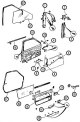
Removal 1. Remove the door trim panel ( see Section 12 ). Disconnect all wires and push them through the hole so that they do not interfere with dismantling. 2. Open the door and place a jack under it or use an...
Removal 1. Remove the door trim panel ( see Section 12 ). Disconnect all wires and push them through the hole so that they do not interfere with dismantling. 2. Open the door and place a jack under it or use an...

Inner door trim — removal and installation
1. Disconnect the cable from the negative battery terminal. 2. Remove all door trim mounting screws and armrest mounting screws. 3. Remove the screws under the door release handle and panel. On manual window regulator...
1. Disconnect the cable from the negative battery terminal. 2. Remove all door trim mounting screws and armrest mounting screws. 3. Remove the screws under the door release handle and panel. On manual window regulator...

Door Latch, Lock and Handles — Removal and Installation
Internal door opening handle 1. Remove the door panel and plastic protection, see Section 12 . 2. Loosen the mounting screws, disconnect the latch rod and remove the door handle. Fig. 13.2a Screws for fastening the...
Internal door opening handle 1. Remove the door panel and plastic protection, see Section 12 . 2. Loosen the mounting screws, disconnect the latch rod and remove the door handle. Fig. 13.2a Screws for fastening the...

Glass windows doors — removal, installation and adjustment
Removal and installation 1. Remove the door panel and plastic protection, see Section 12 . 2. Remove the inner door handle, see Section 13 . 3. Lower the glass so that the rear mounting bolt can be unscrewed through the...
Removal and installation 1. Remove the door panel and plastic protection, see Section 12 . 2. Remove the inner door handle, see Section 13 . 3. Lower the glass so that the rear mounting bolt can be unscrewed through the...

Window lifter unit — removal, installation and adjustment
1. Remove the door panel and plastic protection ( Section 13 ) 2. Remove the inner door handle ( Section 13 ). 3. Remove the door glass ( Section 14 ). 4. Loosen the front stop bolt. Remove the mounting bolt and unscrew...
1. Remove the door panel and plastic protection ( Section 13 ) 2. Remove the inner door handle ( Section 13 ). 3. Remove the door glass ( Section 14 ). 4. Loosen the front stop bolt. Remove the mounting bolt and unscrew...

External mirror — removal and installation
1. Press the button and push the protective cover. On some later models, you need to remove the decorative trim from the door to access the mirror mount, see Section 12 . Fig. 16.1 Mounting the external mirror 2. Loosen...
1. Press the button and push the protective cover. On some later models, you need to remove the decorative trim from the door to access the mirror mount, see Section 12 . Fig. 16.1 Mounting the external mirror 2. Loosen...
Rear door — removal, installation and adjustment
Removal and installation 1. Open the back door. 2. Disconnect all rods and wires that will interfere with dismantling the rear door. 3. Mark the position of the door hinge flanges. 4. While an assistant holds the door,...
Removal and installation 1. Open the back door. 2. Disconnect all rods and wires that will interfere with dismantling the rear door. 3. Mark the position of the door hinge flanges. 4. While an assistant holds the door,...
Instrument cluster faceplate — removal and installation
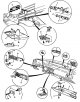
1. Disconnect the cable from the negative battery terminal. 2. Remove the steering wheel, see Chapter 10 . 3. Remove the mounting screws under the steering column. 4. Remove the glove compartment and tray (if...
1. Disconnect the cable from the negative battery terminal. 2. Remove the steering wheel, see Chapter 10 . 3. Remove the mounting screws under the steering column. 4. Remove the glove compartment and tray (if...

Center console — removal and installation
1. Disconnect the cable from the negative battery terminal. 2. Remove the gear shift lever. 3. If the vehicle is equipped with a front console, remove the mounting screws and lift the console box. 4. Use a screwdriver...
1. Disconnect the cable from the negative battery terminal. 2. Remove the gear shift lever. 3. If the vehicle is equipped with a front console, remove the mounting screws and lift the console box. 4. Use a screwdriver...
Seat belts — control
1. Inspect belts, brackets, lock plates and guides. No wear or damage is allowed. 2. Check the "fasten seat belt" reminder signal when the ignition is turned on. Sound accompaniment may be applied. 3. Inertia type seat...
1. Inspect belts, brackets, lock plates and guides. No wear or damage is allowed. 2. Check the "fasten seat belt" reminder signal when the ignition is turned on. Sound accompaniment may be applied. 3. Inertia type seat...

Body dimensions — Civic (1984 to 1988)
Engine bay 3 door model Windshield Side door Back door 4 door model Front door Windshield Back door Rear window and trunk
Engine bay 3 door model Windshield Side door Back door 4 door model Front door Windshield Back door Rear window and trunk

Body dimensions — Civic (1988 to 1991)
Engine bay 3 door model Windshield Side door Back door 4 door model Windshield Front door Back door Rear window and trunk
Engine bay 3 door model Windshield Side door Back door 4 door model Windshield Front door Back door Rear window and trunk


Body dimensions — Shuttle (1984 to 1988)
Engine bay Windshield Front door Back door Luggage compartment door
Engine bay Windshield Front door Back door Luggage compartment door

Body dimensions — Shuttle (1988 to 1991)
Engine bay Windshield Front door Back door Luggage compartment door
Engine bay Windshield Front door Back door Luggage compartment door
This section is available on: russian, bulgarian, belarusian, ukrainian, serbian, croatian, romanian, polish, slovak, hungarian
Link in different formats to this section
TEXTHTMLBB Code
- General information
- Technical data
- Governing bodies
- Driving and maintenance
- Power unit
- Gasoline engines (L13A)
- Gasoline engines (R18A)
- Diesel engines (N22A)
- Cooling and lubrication (L13A)
- Cooling and lubrication (R18A)
- Cooling and lubrication (N22A)
- Injection system (gasoline)
- Injection system (diesel)
- Toxicity reduction system
- Troubleshooting
- Transmission
- Clutch and drive shafts
- Mechanical gearbox
- Chassis and running gear
- Suspension and wheels
- Steering
- Brake system
- Body and interior
- Exterior (external elements)
- Doors, locks and windows
- Electrical equipment
- Equipment and devices
- Headlights and lighting
- Power devices
- Electrical circuits
- General information
- User manual
- Maintenance
- Power unit
- Engines D15B and D17A
- K20A Engines
- Overhaul engine
- Cooling system
- Lubrication system
- Fuel injection system
- Toxicity reduction system
- Engine electrical equipment
- Transmission
- Clutch
- Manual gearbox
- Automatic gearbox
- Variator (CVT)
- Drive shafts
- Chassis and running gear
- Car suspension
- Steering
- Brake system
- Body and interior
- Exterior (external elements)
- Interior (internal elements)
- Doors, locks and windows
- Heater and air conditioner
- Manual air conditioner
- Automatic air conditioner
- Security system
- Electrical equipment
- Equipment and devices
- Headlights and lighting
- Windscreen wipers
- Audio system
- Electrical diagrams
- General information
- Introduction to guide
- User manual
- Maintenance
- Power unit
- Engine in car (Civic)
- Engine in car (Integra)
- Engine overhaul
- Cooling and heating
- Power and exhaust systems
- Engine electrical equipment
- Engine management systems
- Transmission
- Manual gearbox
- Automatic transmission (AT/CVT)
- Clutch and drive shafts
- Chassis and running gear
- Brake system
- Car suspension
- Steering
- Body and interior
- Exterior (external elements)
- Interior (internal elements)
- Doors, locks and windows
- Electrical equipment
- Equipment and devices
- Electrical circuits
- Power unit
- SOHC engines
- DOHC engines
- Engine overhaul
- Cooling and lubrication system
- Intake and exhaust system
- Fuel injection system (SOHC)
- Fuel injection system (DOHC)
- Carburetor
- Transmission
- Clutch
- Manual gearbox S4C
- Manual gearbox S40
- Automatic gearbox
- Drive shafts
- Chassis and running gear
- Car suspension
- Steering
- Brake system
- Body and interior
- Body elements
- Heater and air conditioner
- Electrical equipment
- Power devices
- Equipment and instruments
- Electrical circuits
- General information
- Maintenance
- Power unit
- Engine in a car
- Engine overhaul
- Cooling system
- Power and exhaust system
- Engine electrical equipment
- Emission control system
- Transmission
- Mechanical gearbox
- Automatic gearbox
- Clutch and drive shafts
- Four-wheel drive
- Chassis and running gear
- Brake system
- Car suspension
- Steering
- Body and interior
- Body elements
- Electrical equipment
- Equipment and devices
- Electrical circuits