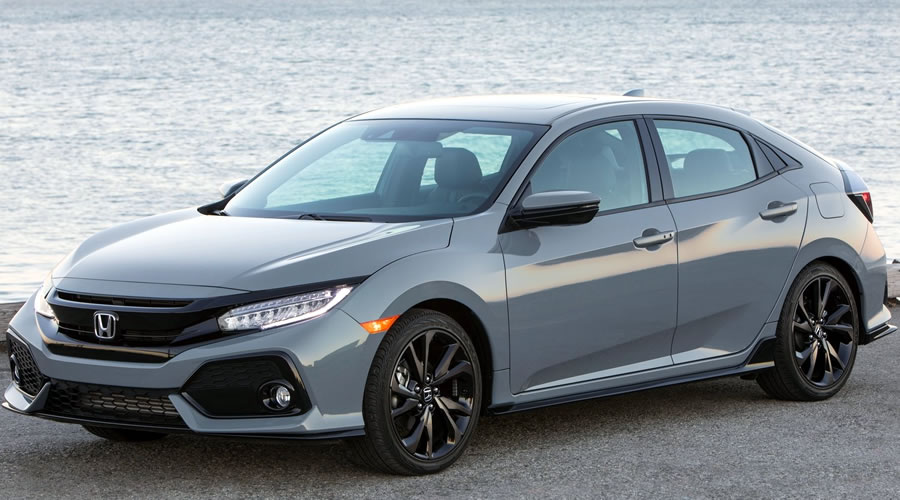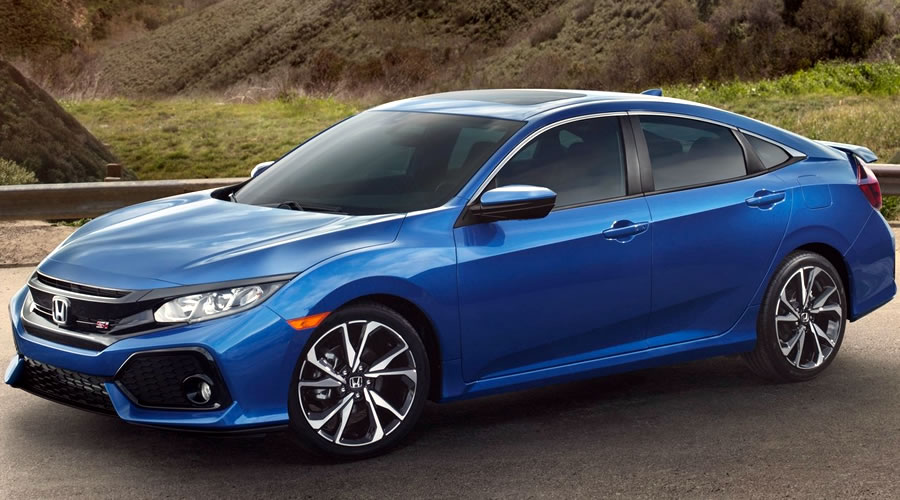
Main competitors "Honda Civic" are the following cars of other manufacturers - Chevrolet Lacetti, Chery Bonus, Citroen C4, Fiat Bravo, Ford Focus, Hyundai Elantra, Kia Cee'd, Lada Vesta, Mazda 3, Mitsubishi Lancer, Nissan Almera, Opel Astra, Peugeot 308, Renault Fluence, Renault Megane, Seat Leon, Skoda Octavia, Subaru Impreza, Suzuki SX4, Toyota Auris, Toyota Corolla and Volkswagen Golf.
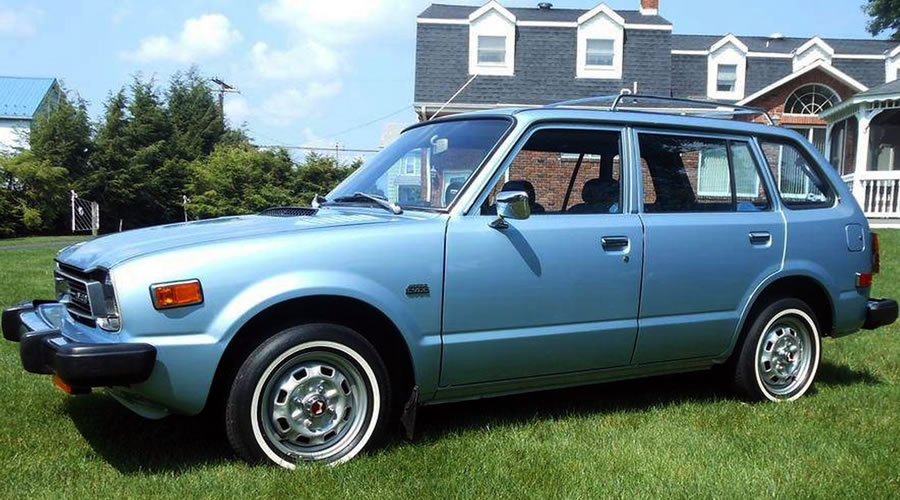
First generation (SB1/SG/SH/SE/VB, 1972−1979)
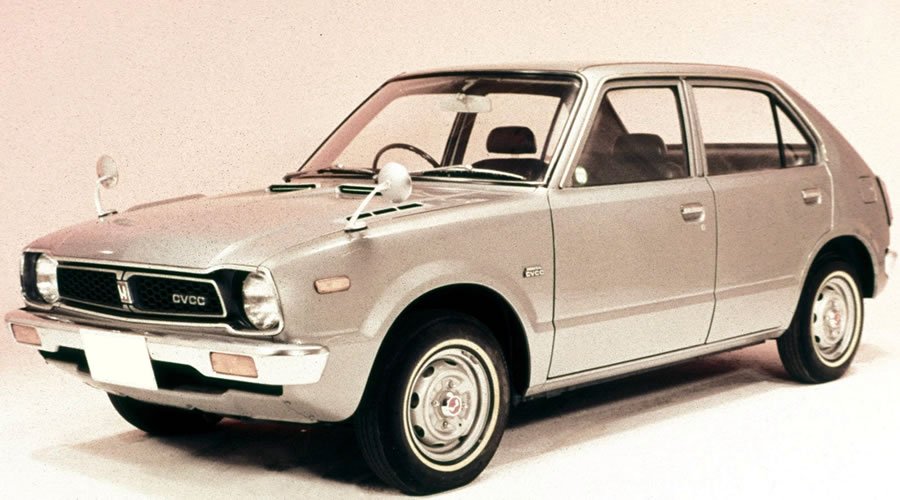
The first generation was launched in July 1972. The Civic replaced the small front-wheel drive car "Honda N600", which was produced from 1967 to 1972. The body shapes were very different - 2- and 4-door sedan, 3- and 5-door hatchback, and 5-door station wagon. The length of the car was 3551 mm until 1973, and from 1974 it increased to 3731 mm, width 1505 mm, height 1327 mm and curb weight of 680 kg. The length of the station wagon was 4064 mm. The oil crisis of 1973 greatly affected the increase in demand for these compact and economical cars. The first three years of operation revealed that when using salt on the roads in winter, the body rusted through, because of this Honda had to repair about 1 million cars for free. Assembly was carried out in Japan, New Zealand, Indonesia and Malaysia.
The engines installed were four-cylinder petrol engines with a capacity of 1.2 liters (1169 cm³, EB1, 50 hp), 1.2 liters (1238 cm³, EB2/EB3, 63 hp), 1.3 liters (1335 cm³, EJ, CVCC, 67 hp), 1.5 liters (1488 cm³, EU, 64 hp) and 1.5 liters (1488 cm³, ED CVCC, 52 hp). The "CVCC" technology is a Honda trademark and means engines with reduced emissions of harmful substances into the atmosphere. The gearbox was installed 4- or 5-speed manual, as well as 2-speed automatic "Hondamatic".
In 1978, cosmetic updates were made, affecting the radiator grille, external optics, and side air vents.
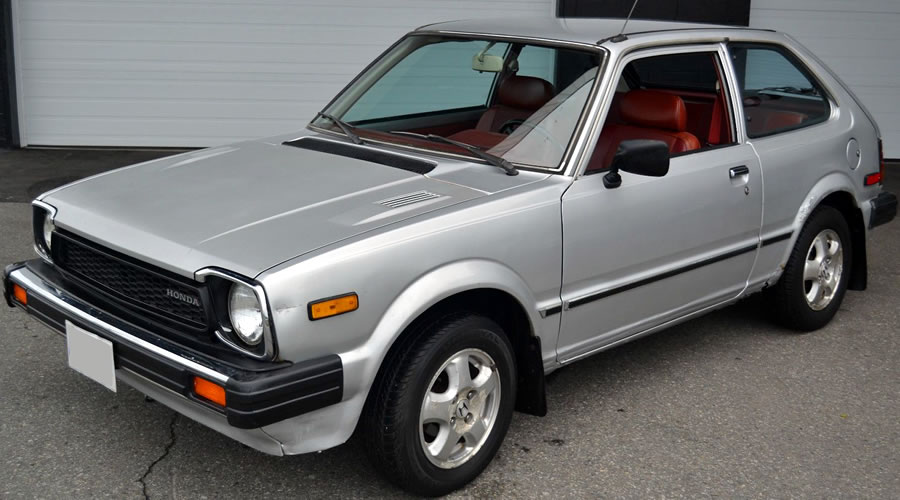
Second generation (SL/SS/SR/ST/VC/WD, 1979−1983)
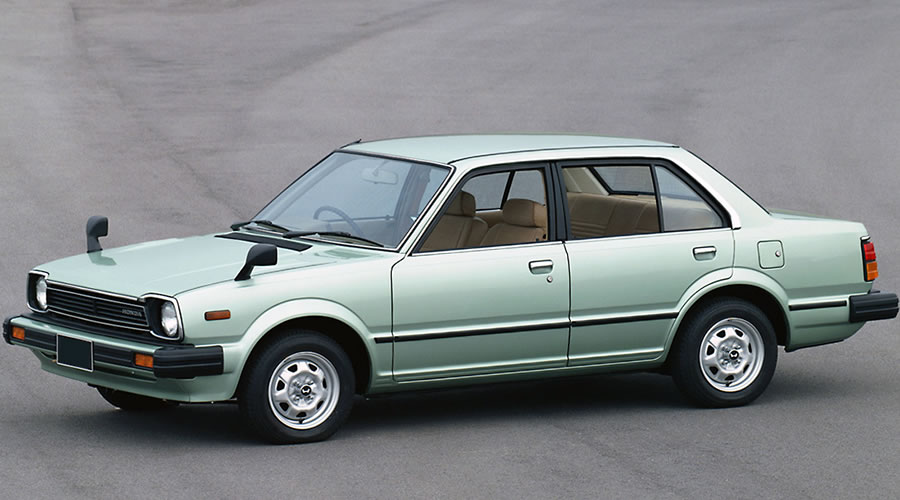
In June 1979, the second generation of the "Civic" was introduced. The car became slightly larger with more powerful engines. The design became similar to its older brother "Accord". The body style was a 3- and 5-door hatchback (length 3760-3870 mm), 5-door station wagon (length 3830 mm) and a 4-door sedan (length 4090 mm). The remaining dimensions were the same for all body types and were 1580 mm wide, 1350 mm high and 720-780 mm unladen weight. The sedan was sold in Japan under the name "Honda Ballade", and was based on the hatchback "Honda Quint". Assembly plants were located in Japan, South Africa, New Zealand, Indonesia and Malaysia.
The engines installed were four-cylinder petrol engines with a capacity of 1.3 liters (1335 cm³, EN1/EN4, 60/71 hp), 1.3 liters (1335 cm³, EJ, CVCC, 67 hp) and 1.5 liters (1488 cm³, EM, CVCC, 79 hp). The manual gearbox was 4- or 5-speed. The automatic was 2-speed, and since 1981 it was replaced by a 3-speed "Hondamatic".
A minor update was made in late 1980. In early 1982, another update was made, which brought larger plastic bumpers, a new grille and rectangular headlights. In 1983, a sporty version called the "Civic S" appeared, with a stiffer suspension.
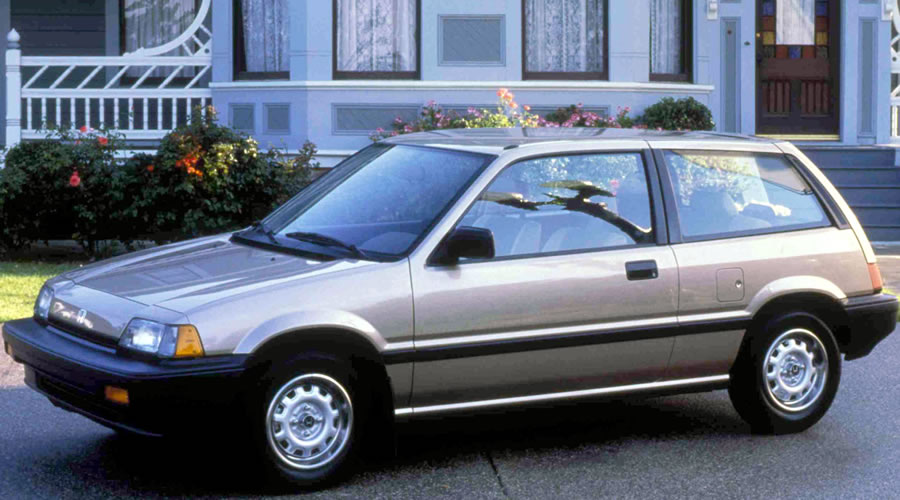
Third generation (AG/AH/AJ/AK/AT/AU, 1983−1987)
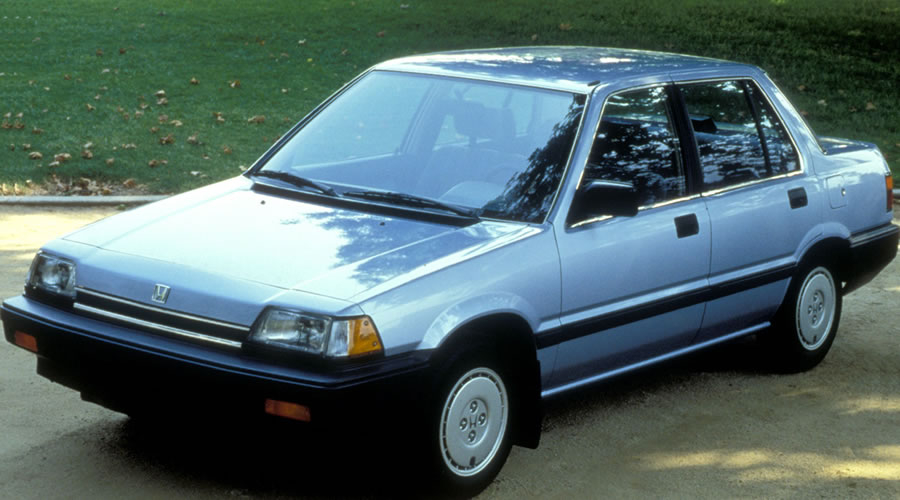
In September 1983, the third generation was introduced as a 1984 model. When it was introduced in 1983, it won the "Car of the Year in Japan" award. The dimensions of the car increased slightly again. The body had the following shapes - 3-door hatchback (length 3810 mm, width 1626 mm, height 1346 mm), 3-door coupe, 5-door station wagon and 4-door sedan (length 4166 mm, width 1626 mm, height 1397 mm.). A two-seater car was also produced on the basis of the Civic "Honda CR-X". There was a sporty model "Civic Si" mostly in hatchback form with a more powerful engine. All cars were front-wheel drive, and in 1985 a station wagon with all-wheel drive appeared. Production facilities were located in Japan, Indonesia, Canada, Malaysia, New Zealand, Taiwan and South Africa.
Engines were still installed only petrol four-cylinder with the following characteristics - 1.2 liters (1187 cm³, ZA1/ZA2, 55/60 hp), 1.3 liters (1342 cm³, EV/EV1, 60/70 hp), 1.5 liters (1488 cm³, EW1/EW2/EW3/EW4/EW5, 58-108 hp) and 1.6 liters (1590 cm³, ZC1, 120 hp). Manual transmission 4 or 5 speed, automatic transmission "Hondamatic" 3 or 4 steps.
In 1986, the car received a facelift that brought hidden headlights, revised taillights, new wheel cover designs and other minor cosmetic changes.
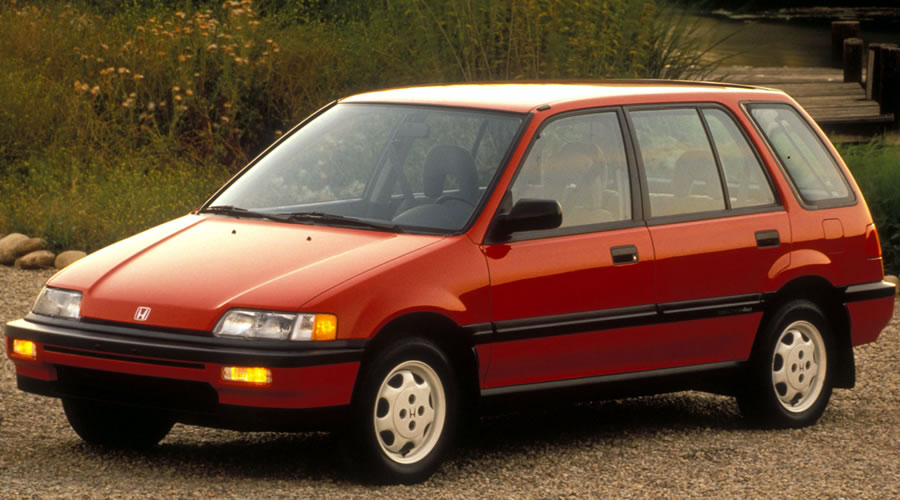
Fourth generation (EC/ED/EE/EF, 1987−1991)
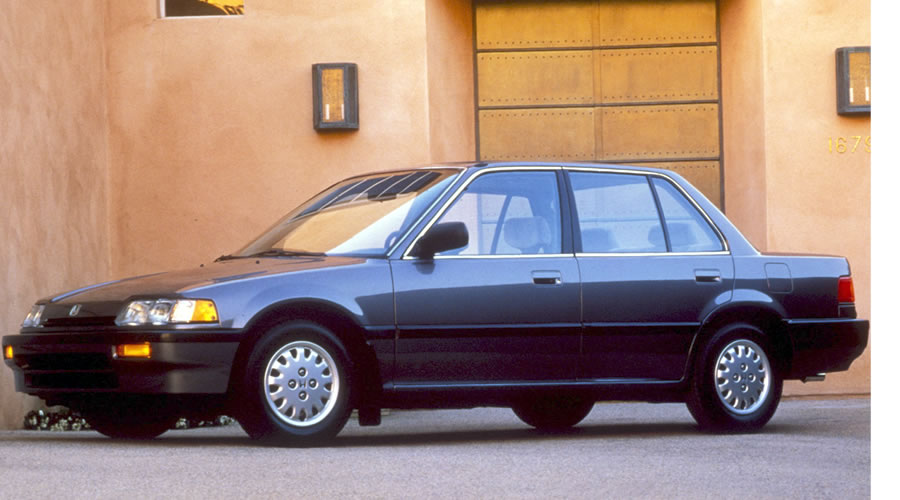
In September 1987, the updated car was presented as a 1988 model. The external dimensions grew again. The suspension was completely redesigned, with a double wishbone at the front and an independent multi-link at the rear. The body was made as a 3-door hatchback (length 3965 mm, width 1666 mm, height 1331 mm), 3-door coupe (CRX), 4-door sedan (length 4229 mm, width 1674 mm, height 1359 mm) and a 5-door station wagon (Shuttle, length 4107 mm, width 1679 mm, height 1425 mm). The station wagon was available with front-wheel drive and all-wheel drive. It continued to be produced until 1996, when it was replaced by a commercial van "Honda Partner". Assembly was carried out in the same countries as the previous generation, plus England and the USA were added. The car's trim levels were as follows: "STD", "DX", "LX", "EX" and "SI". In South Africa, the Civic was sold under the brand "Honda Ballade".
The range of petrol four-cylinder engines expanded significantly and included the following models: 1.3 litre (1343 cm³, D13B, 74 hp), 1.4 liters (1396 cm³, D14A, 88 hp), 1.5 liters (1493 cm³, D15B1/D15B2, 70/92 hp), 1.6 liters (1590 cm³, D16A6/D16A9, 108/125 hp) and 1.6 liters (1590 cm³, ZC, 125 hp). In 1989, the Civic SiR sports hatchback with a 1.6-liter engine appeared (1595 cm³, B16A, DOHC, VTEC) with a capacity of 158 hp. All engines were fuel-injected. The gearbox was 4- or 5-speed manual, as well as 4-speed automatic.
At the end of 1989, the car underwent a minor update with new bumpers and taillights.
Fifth generation (EG/EH/EJ, 1991−1995)
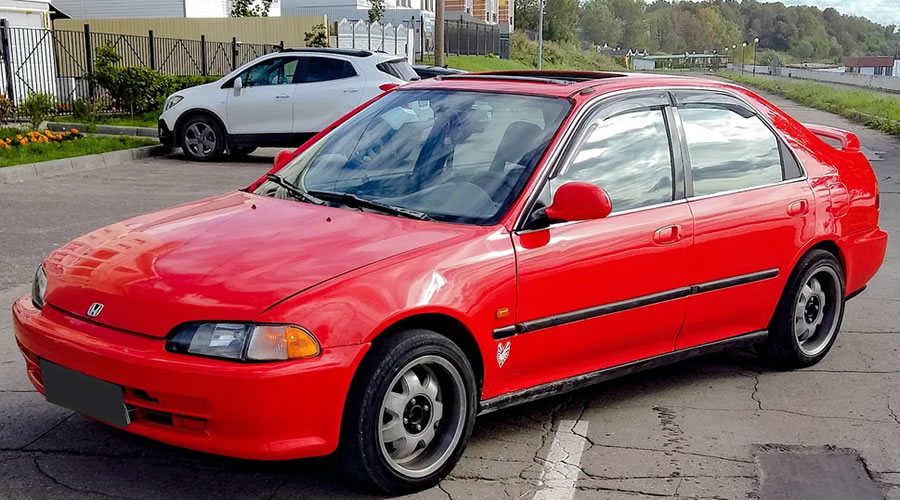
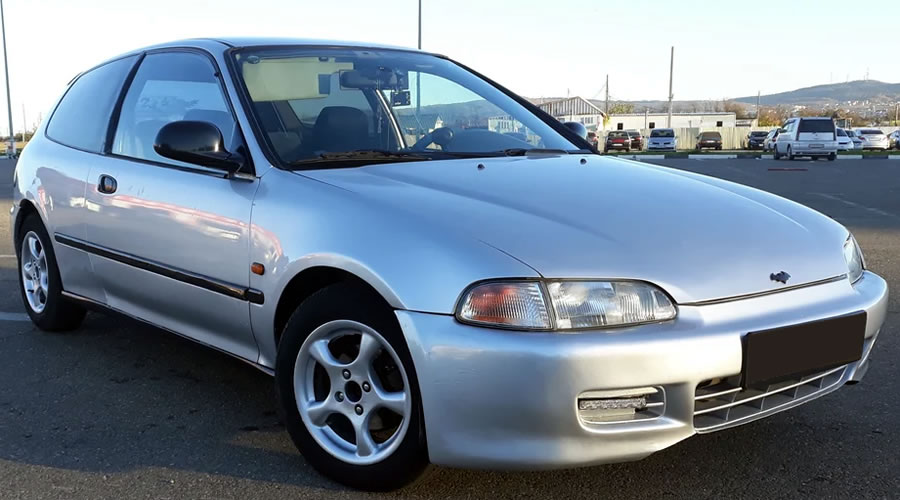
In September 1991, the fifth generation of the Honda Civic was introduced and again the external dimensions of the car increased. The body shapes became more rounded and streamlined. The hood was slightly raised, which allowed for increased suspension travel. Again, immediately after its release, it was awarded the "Car of the Year in Japan" award. The body styles were produced in the form of a 2-door coupe (EJ1/EJ2; length 4389 mm, width 1699 mm, height 1293 mm), 3-door hatchback (EG3/EG6, EH2/EH3; length 4069 mm, width 1699 mm, height 1288 mm) and a 4-door sedan (EG8/EG9, EH9; 4394 mm, width 1699 mm, height 1313 mm). The trim and equipment options were as follows - "DX", "EX", "CX", "VX", "LX" and "SI". The car was assembled in the same countries as the previous generation.
The engines installed were traditionally four-cylinder petrol engines with the following volume characteristics: 1.3 liters (1343 cm³, D13B2, 74 hp), 1.5 liters (1493 cm³, D15B2/D15B7/D15B8, 90/102/70 hp), 1.5 liters (1493 cm³, D15Z1/D15Z3, 90 hp), 1.6 liters (1590 cm³, D16A8/D16A9, 120/125 hp), 1.6 liters (1590 cm³, D16Z6/D16Z9, 125/130 hp), 1.6 liters (1595 cm³, B16A1/B16A2, 150/160 hp) and 1.8 liters (1834 cm³, B18B3, 143 hp). The gearbox was a 4-speed automatic "S24A" or a 5-speed manual "S20 A000" or "S20 B000".
Sixth generation (EJ/EK/EM, 1995−2000)
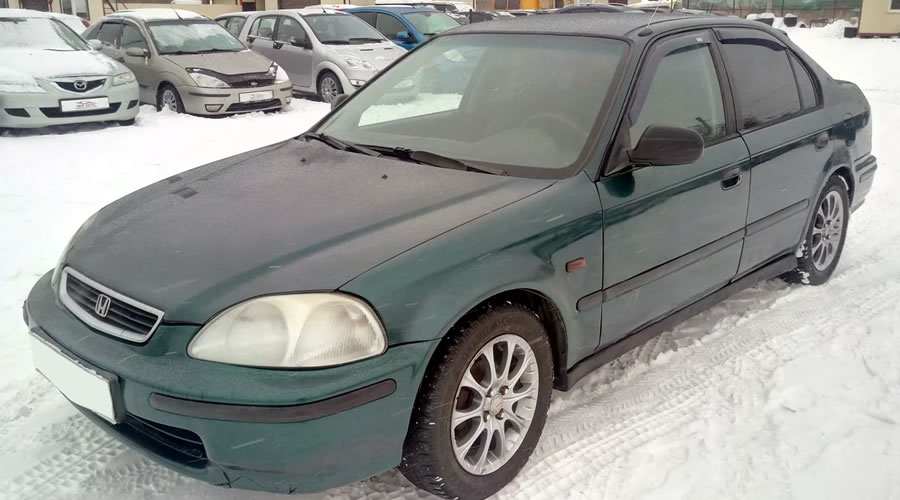
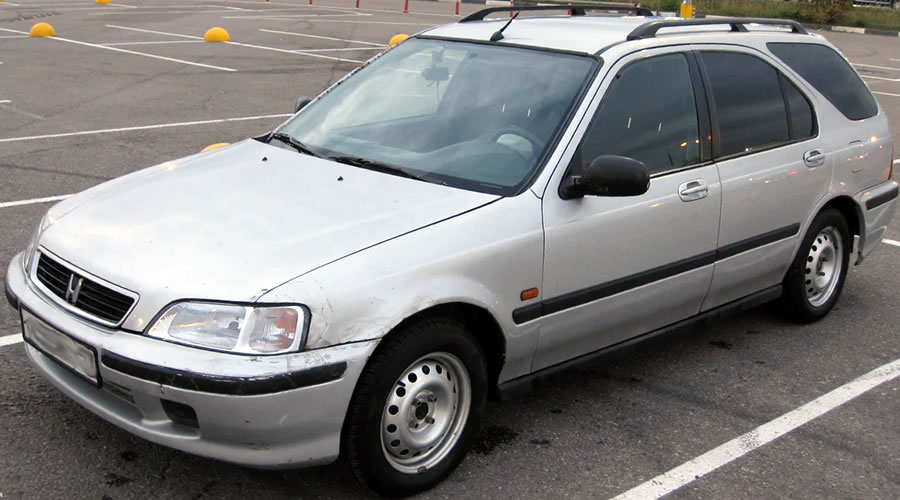
Like the previous generations, the sixth was introduced in September 1995 as a 1996 model. It immediately received the "Car of the Year in Japan" award for the third time in a row. The body is presented as a 2-door coupe, 3-door and 5-door hatchback (length 4325 mm, width 1704 mm, height 1390 mm), 4-door sedan (length 4448 mm, width 1704 mm, height 1389 mm), and a 5-door station wagon (Orthia). The curb weight was 1143 kg. The engine is located transversely in the front, the drive is mainly on the front wheels, but there are also all-wheel drive models. The car had the following trim levels - "CX", "DX", "LX", "EX", "HX", "GX", "VP" and "SI". Assembly was carried out in Japan, Brazil, Great Britain, Venezuela, Indonesia, Canada, Malaysia, New Zealand, Pakistan, USA, Thailand, Taiwan, Turkey, Philippines and South Africa.
The engine lineup has not changed much, traditionally four-cylinder petrol engines with the following characteristics were installed: 1.3 liters (1343 cm³, D13B4, 90 hp), 1.4 liters (1396 cm³, D14A3/A4/A7/A8, 74/89 hp), 1.5 liters (1493 cm³, D15Z4, 90 hp), 1.6 liters (1590 cm³, D16Y4/Y5/Y7/Y8, 120/115/106/127 hp), 1.6 liters (1595 cm³, B16A2, 160 hp) and 1.6 liters (1595 cm³, B16B, VTEC, 182 hp). The transmission was a 5-speed manual, 4-speed automatic or continuously variable transmission (CVT).
The 1999 model year saw updates to both the interior and exterior. These changes may vary depending on the country of origin of the vehicle. For example, some European countries did not see updates to the climate control or rear end of sedan models. The cars received a new grille, new headlights, as well as a new front bumper, fenders, hood, and redesigned taillights.
Seventh generation (EU/ES/EP/EM, 2000−2005)
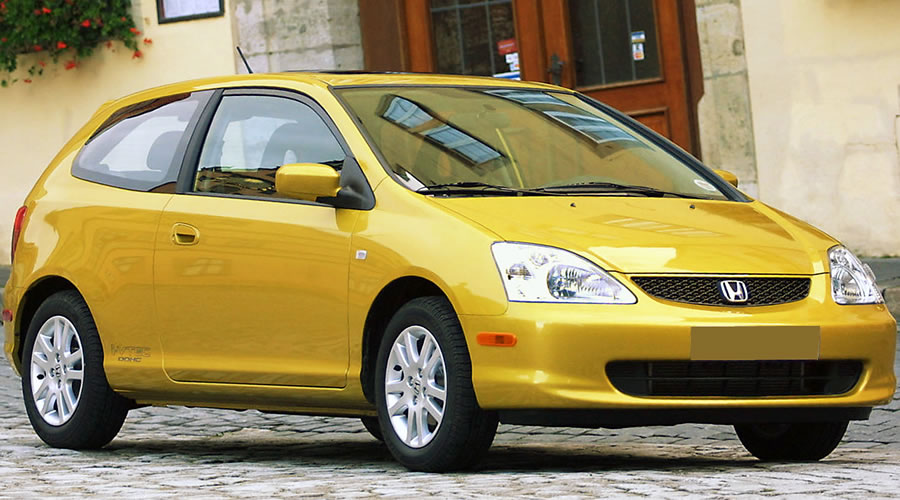
In September 2000, the seventh generation went on sale. The external dimensions remained approximately the same as the sixth generation, but thanks to the significantly increased interior space, the Civic moved from the subcompact (B-segment) to the next class of compact cars (C-segment). They abandoned the front suspension with a double wishbone, replacing it with a MacPherson strut. At the time of its release, the Civic won the Car of the Year in Japan award for the fourth time. The body was presented in the following forms - 2-door coupe (length 4437 mm, height 1397 mm), 4-door sedan (length 4435 mm, height 1440 mm), 3 or 5 door hatchback (length 4277 mm, height 1491 mm). The width of cars on the Japanese market was 1694 mm, for export the width was 1720 mm. Assembly shops were located in Japan, Brazil, Great Britain, Canada, Pakistan, the USA, Thailand, Taiwan and the Philippines.
From this generation onwards, cabin air filters (also known as pollen filters) were installed as standard equipment and located behind the glove compartment in the passenger compartment. Trim levels and equipment options were as follows: "VP", "DX", "EX", "HX", "GX", "LX", "Si", "RAJ", and there were also additions for some levels "Special Edition" and "Hybrid".
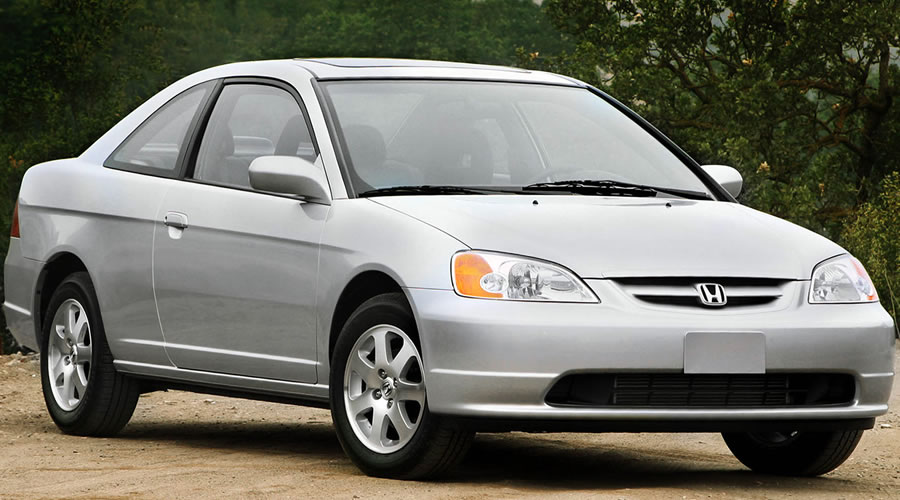
All four-cylinder 1.4-liter gasoline engines were installed (1396 cm³, D14Z6, 90 hp), 1.5 liters (1493 cm³, D15Y3/D15Z6, 120/112 hp), 1.6 liters (1590 cm³, D16W7/D16W9, 115/130 hp), 1.7 liters (1668 cm³, D17A1/D17A6/D17A2, 115/117/127 hp) and 2.0 liters (1998 cm³, K20A2/K20A3, 200/160 hp). The transmission is a 5- or 6-speed manual, 4-speed automatic or continuously variable transmission (CVT). A hybrid version was imported to North America from Japan in the spring of 2002 as a 2003 model. It used a small 1.3-liter gasoline engine and auxiliary electric motors, which together produced 93 hp.
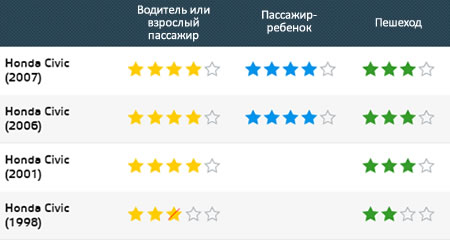
In 2003, the front end was updated, with new headlights, bumper and radiator grille. Since 1998, the car has been tested several times for safety by the European Committee Euro NCAP, the results of which you can see in the table below:
Eighth generation (FA/FG/FK/FN/FD, 2005−2011)
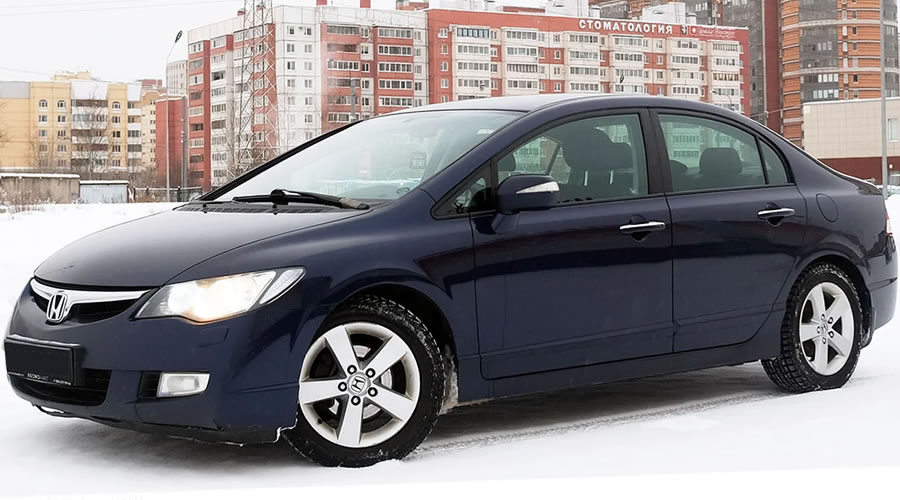
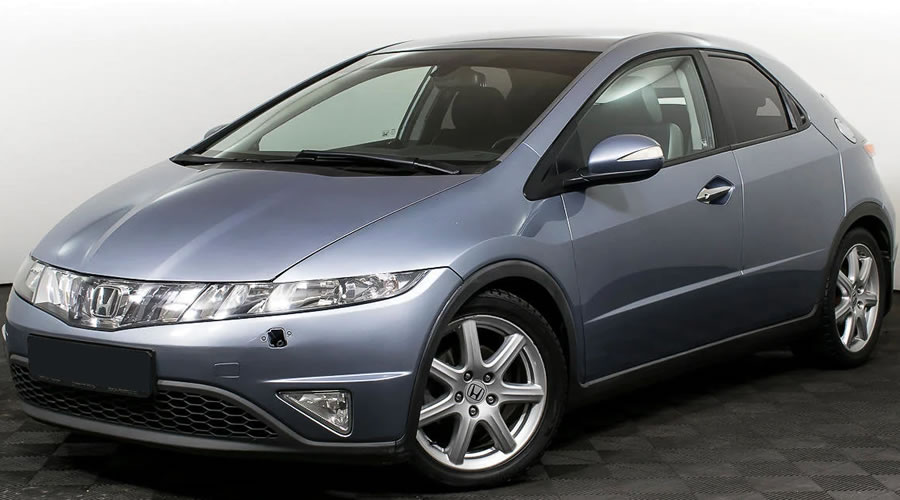
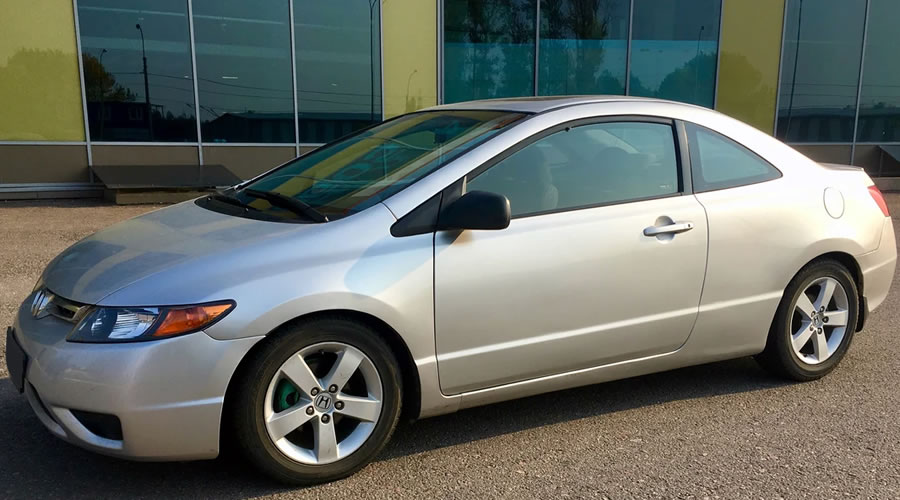
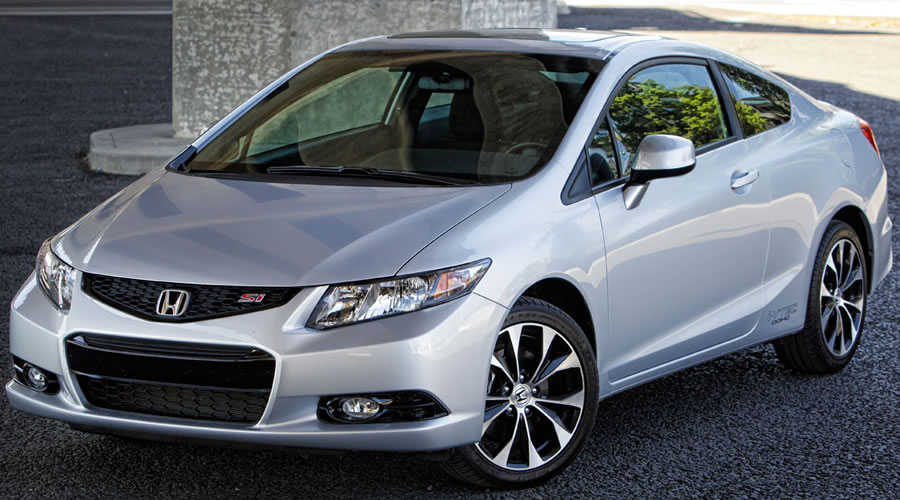
Traditionally, the eighth generation went on sale in September 2005 as a 2006 model. Externally, the car became more modern and kept up with the automotive fashion, inside, the "two-level" dashboard immediately attracted attention. All models (including basic) come standard with power windows, anti-lock brakes (ABS) and side/curtain airbags (only six pillows). The body had the following forms - 2-door coupe (length 4440-4458 mm, width 1750 mm, height 1359-1397 mm), 3 or 5 door hatchback (length 4245-4276 mm, width 1760 mm, height 1460 mm), and also a 4-door sedan (length 4488-4503 mm, width 1753 mm, height 1435 mm). The engine is located transversely in the front, the drive is on the front wheels. Production was carried out in the same countries as the production of the seventh generation. The American model is slightly different in design from models for other markets.
The car was traditionally equipped with four-cylinder petrol engines of the following characteristics: 1.4 liters (1339 cm³, L13A7, 83 hp), 1.6 liters (1595 cm³, R16A1, 123 hp), 1.8 liters (1799 cm³, R18A1, 139 hp), 2.0 liters (1998 cm³, K20Z1/K20Z2, 210/153 hp), 2.0 liters (1998 cm³, K20A, 201 hp) and 2.4 liters (2354 cm³, K24Z5, 184 hp). For the first time, the Civic was equipped with a 2.2-liter turbocharged four-cylinder diesel engine (2204 cm³, N₂2A2, 140 hp). The gearbox was 5- and 6-speed manual, 5-speed automatic or continuously variable transmission (CVT). The hybrid version of the car is based on a 1.3-liter gasoline engine (1339 cm³, LDA-MF5, I4, IMA, 94 hp).
A high-performance model was unveiled at the 2006 Geneva Motor Show "Civic Type R" with a three-door hatchback body and a two-liter engine producing 201 hp. In March 2008, Honda announced that it was recalling 79,000 vehicles due to a potential problem with the handbrake.
In 2009, a minor update was carried out, affecting some equipment, bumpers, and a radiator grille. The European Committee EuroNCAP conducted safety tests on a 2009 Civic hatchback, and the results were as follows:

Ninth generation (FB, 2011−2015)
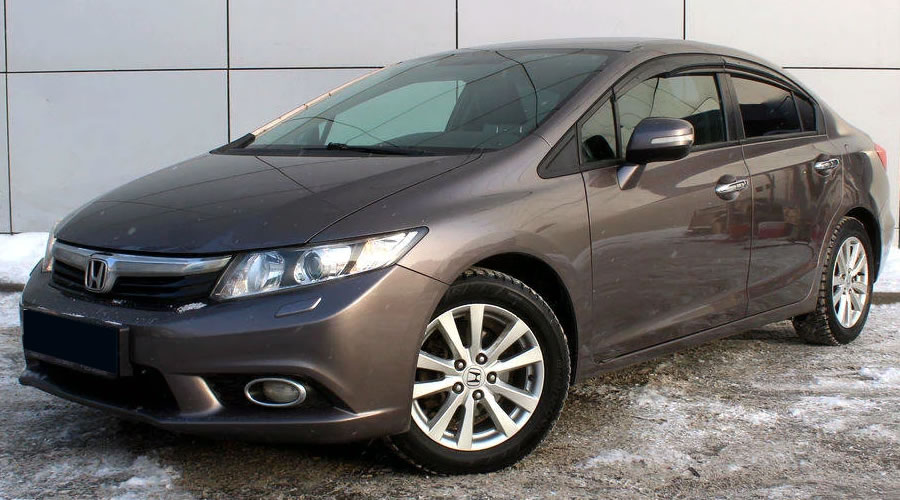
The coupe and sedan concepts were shown in January 2011 at the North American International Auto Show in Detroit. In April 2011, the tenth generation of the Civic went on sale in the United States, and the car appeared in Europe and Asia in early 2012. The five-door hatchback for the European market was presented at the Frankfurt Motor Show in September 2011. Most models began to be equipped with technology "Eco Assist", which helps the driver choose a more economical driving style. All models are equipped with ABS, VSA as standard (ensuring vehicle stability) and EBD (electronic Brakeforce Distribution).
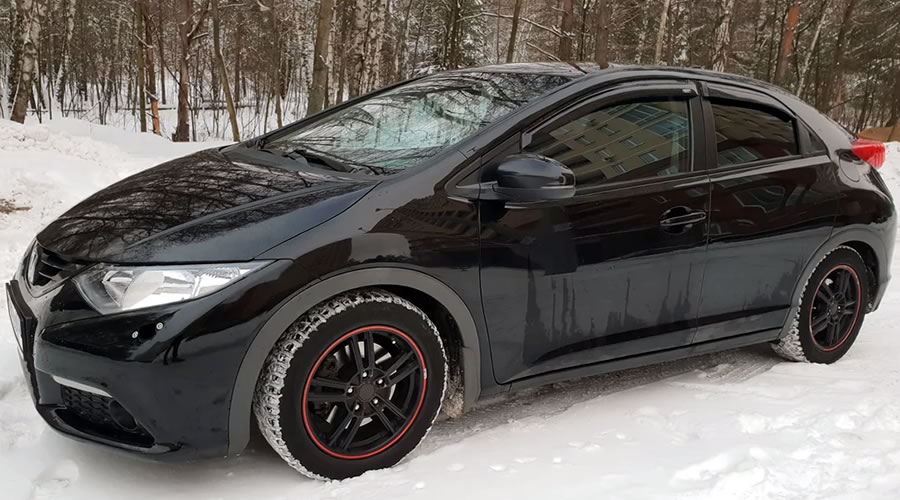
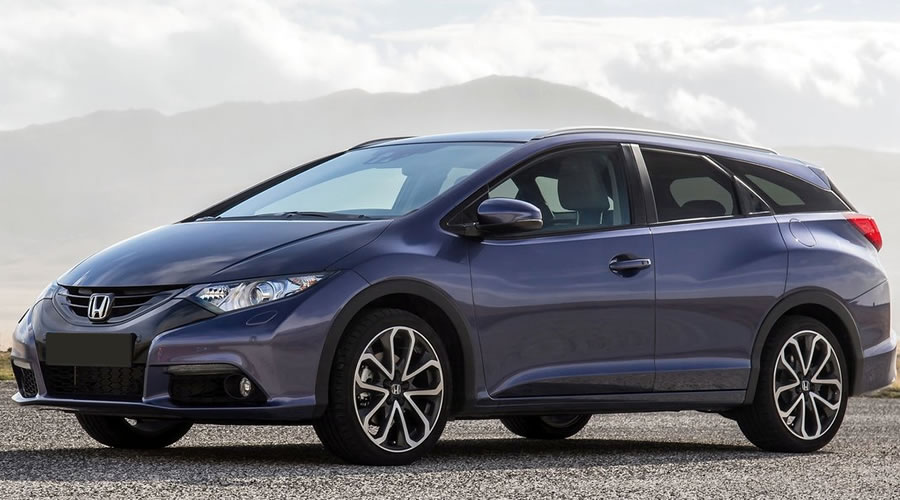
The car body was produced in the following forms - 2-door coupe (length 4472 mm, width 1755 mm, height 1397 mm), 4-door sedan (4525 mm, width 1755 mm, height 1435 mm), 5-door hatchback (length 4300 mm, width 1770 mm, height 1590 mm) and a 5-door station wagon (length 4535 mm, width 1770 mm, height 1480 mm). The curb weight was 1177-1304 kg. The engine was located transversely in the front, the drive was only on the front wheels. The car was produced in Japan, Brazil, Great Britain, Canada, China, Malaysia, Pakistan, the USA, Taiwan, Thailand and Turkey.
Petrol engines are represented by four-cylinder models with a volume of 1.4 liters (1339 cm³, L13A, i-VTEC, SOHC, 134 hp), 1.6 liters (1595 cm³, R16A1, i-VTEC, SOHC, 123 hp), 1.8 liters (1799 cm³, R18Z1, i-VTEC, SOHC, 139 hp), 2.0 liters (1997 cm³, R20Z1, i-VTEC, SOHC, 153 hp), 2.0 liters (1996 cm³, K20C1, DOHC, 306 hp) and 2.4 liters (2354 cm³, K24Z7, i-VTEC, DOHC, 201 hp). There were two models of 1.6-liter diesel engines (1598 cm³, N16A1, i-DTEC, DOHC, 118 hp) and 2.2 liters (2204 cm³, N₂2B, i-DTEC, DOHC, 148 hp), all are turbocharged. The hybrid model is powered by a 1.5-liter gasoline engine with IMA technology, which generates 90 hp. The transmission is a 5-speed automatic, 5- or 6-speed manual, and a continuously variable transmission (CVT).
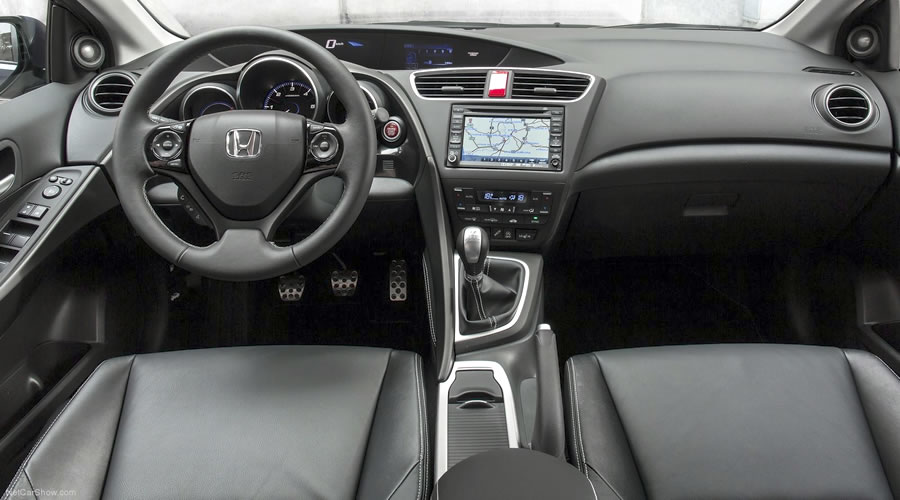
Due to the lack of positive reviews, the North American market was updated in 2012. The updated Civic received a new front fascia with a U-shaped grille and chrome inserts, a new hood and a redesigned rear end with new taillight lenses, as well as additional light clusters and a chrome strip on the trunk lid. New features include a rear backup camera, Bluetooth controls and access to Pandora radio. Dynamics, handling and interior material quality were also improved. In 2014, another update was made, but minor.
The American Insurance Institute for Highway Safety (IIHS) conducted crash tests to assess the safety of the 2013-2015 model sedan and coupe, the results of which are shown below.
Sedan ratings:
- Frontal Test with Partial Overlap - Good
- Frontal Low Overlap Test - Good
- Side Kick - Good
- Roof Strength - Good
Coupe ratings:
- Frontal Test with Partial Overlap - Good
- Frontal Low Overlap Test - Good
- Side Kick - Good
- Roof Strength - Good
The high-performance version of the hatchback with a 301 hp engine was still called "Civic Type R".
In 2012, the European Committee EuroNCAP conducted crash tests on the safety of a five-door hatchback, the results were as follows:

Tenth generation (FC/FK, 2015–present)
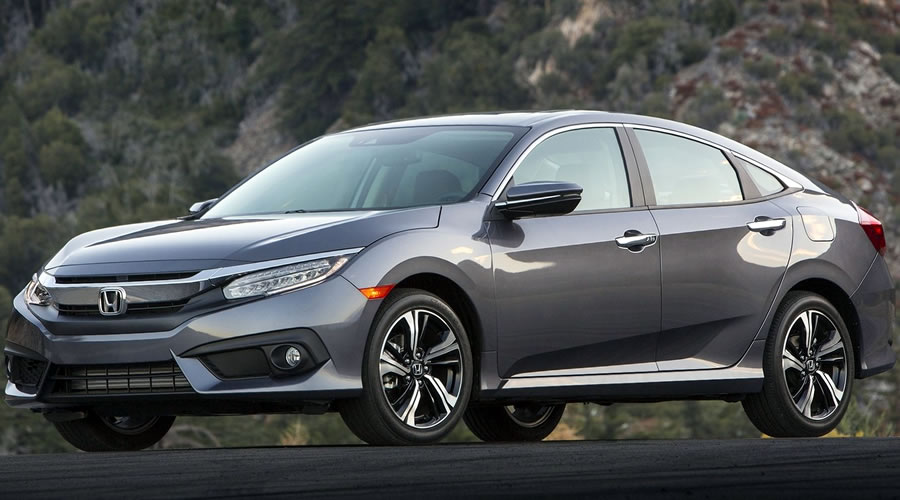
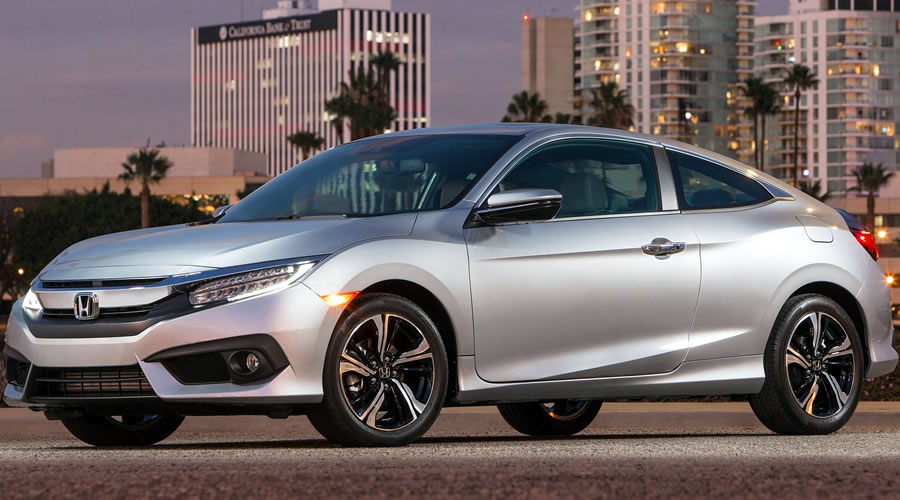
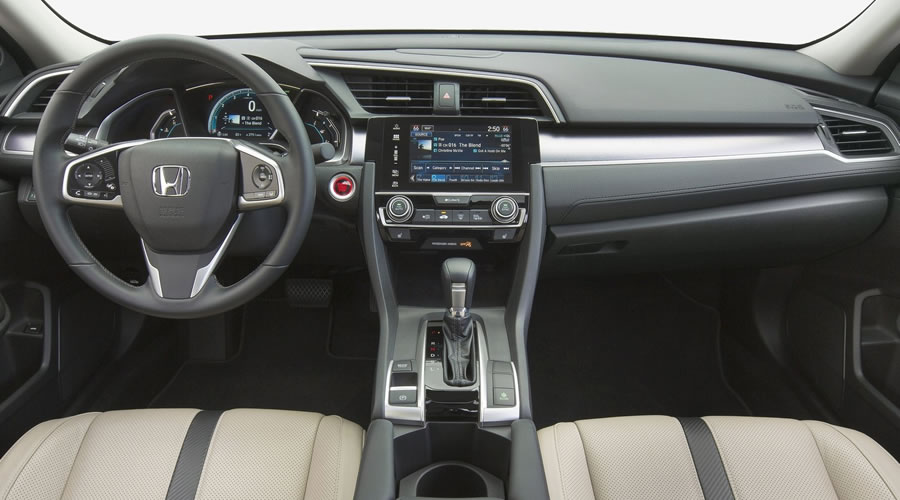
In November 2015, the tenth generation of the sedan went on sale as a 2016 model. The production version of the coupe was presented at the Los Angeles Auto Show in November 2015, and the hatchback and "Type R" at the Paris Auto Show in October 2016. The car is based on the all-new compact global platform "Honda". The body is made of high-strength steel, which allowed to reduce its weight. The body was produced as a 2-door coupe (FC3 / FC4; length 4492 mm, width 1799 mm, height 1395 mm), 4-door sedan (FC1/FC2/FC5; length 4630 mm, width 1799 mm, height 1416 mm) and 5-door hatchback (FK4/FK7; 4519 mm, width 1799 mm, height 1429 mm). The curb weight was 1242-1362 kg.
The range of petrol engines is represented by the following models: 1.0 liter (988 cm³, P10A2, turbo, DOHC, I3, 128 hp), 1.5 liters (1496 cm³, L15B7, turbo, DOHC, I4, 174 hp), 1.6 liters (1597 cm³, R16B, SOHC, I4, 123 hp), 1.8 liters (1799 cm³, R18Z1, SOHC, I4, 139 hp), 2.0 liters (1996 cm³, K20C2, DOHC, I4, 158 hp) and 2.0 liters (1996 cm³, K20C1, turbo, DOHC, I4, 306 hp). There is also one 1.6-liter turbocharged diesel engine (1598 cm³, N16 i-DTEC, DOHC, I4, 118 hp). The transmission is a 6-speed manual or continuously variable transmission (CVT).
The car's safety was assessed by the American agency "National Highway Traffic Safety Administration" (NHTSA), the results were as follows:
- Overall rating: 5 out of 5 stars
- Front Impact (Driver) - 5 out of 5 stars
- Frontal Impact (Passenger) - 5 out of 5 stars
- Side Impact (Driver) - 5 out of 5 stars
- Side Impact (Passenger) - 5 out of 5 stars
- Car Flip - 5 out of 5 stars
The American Insurance Institute for Highway Safety (IIHS) also conducted tests to determine safety:
- Frontal Test with Partial Overlap - Good
- Frontal Low Overlap Test - Good
- Side Kick - Good
- Roof Strength - Good
- Collision Avoidance - Good
- Ease of use of child seat - Acceptable
- Headlights - Bad
In 2017, the European Committee EuroNCAP conducted crash tests on a five-door hatchback, and the results were as follows: