
Contents: General description ⇊ Control ⇊
General description
1. The throttle control system reduces exhaust emissions, makes starting easier, and improves smoothness when shifting and decelerating.
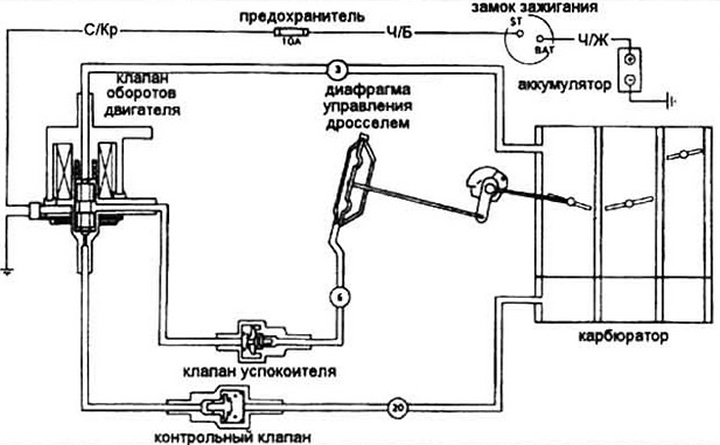
Fig. 13.1 Throttle control circuit
2. When the engine is idling, the vacuum taken after the carburetor is supplied to the throttle control diaphragm through the damper control valve. When slowing down, this vacuum is eliminated by sucking in air through the damper valve jet. The throttle closes slowly.
3. During starting, the engine speed valve supplies the vacuum created behind the carburetor to the diaphragm and thereby turns the valve to the desired angle.
Control
Damper diaphragm
4. Disconnect the vacuum hose from the diaphragm. Connect a hand vacuum pump to the diaphragm and create a vacuum of 8 mm Hg. Start the engine. After one minute (no more!) the engine should reach 2000 rpm.
- a) if the speed is higher than the permissible value, use pliers to reduce the thickness of the adjustment slot.
- b) if the speed is lower, widen the adjustment slot with a screwdriver
- c) If the engine speed cannot be adjusted or the diaphragm does not hold vacuum, replace the diaphragm.
Engine speed control valve
5. Ground the secondary wire of the coil to ground to prevent the engine from starting. Turn the ignition key to the "start" position. The throttle control diaphragm rod should retract (the damper opens), when the engine crankshaft starts to rotate. If this does not happen, check the hoses for integrity and correct connection (see table under the hood of the car). If you have any difficulties, please contact a service station.
You will find the original on the portal: hondabook.ru