


Vehicle power equipment Honda Civic 8
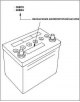
Checking the battery (L13A/R18A)
Warning: If you do not handle the battery properly, it may explode and cause serious injury to people nearby. Follow all instructions carefully and keep sparks and open flames away from the battery. Note: To obtain...
Warning: If you do not handle the battery properly, it may explode and cause serious injury to people nearby. Follow all instructions carefully and keep sparks and open flames away from the battery. Note: To obtain...

Troubleshooting the charging system (L13A)
Check for PGM-FI system DTCs. Check for a fault in the charging system indicator circuit. Check the drive belt for integrity. Check the drive belt tension. The battery is discharged 1. Check for parasitic current. 2....
Check for PGM-FI system DTCs. Check for a fault in the charging system indicator circuit. Check the drive belt for integrity. Check the drive belt tension. The battery is discharged 1. Check for parasitic current. 2....

Troubleshooting the Generator Control System Circuit (L13A)
1. Connect the Honda Diagnostic System (HDS) to the Data Link Connector (DLC). 2. Turn the ignition on by turning the key to the "ON" (II) position. 3. Verify that the HDS is communicating with the vehicle and the ECM....
1. Connect the Honda Diagnostic System (HDS) to the Data Link Connector (DLC). 2. Turn the ignition on by turning the key to the "ON" (II) position. 3. Verify that the HDS is communicating with the vehicle and the ECM....

Troubleshooting the Charging System Electrical Circuit (L13A)
1. Turn the ignition key to the "ON" (II) position. Does the charging system indicator light up? YES - go to step 2. NO - go to step 14. Start the engine. Maintain the engine speed at 2,000 rpm for 1 minute. Does the...
1. Turn the ignition key to the "ON" (II) position. Does the charging system indicator light up? YES - go to step 2. NO - go to step 14. Start the engine. Maintain the engine speed at 2,000 rpm for 1 minute. Does the...
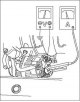
Troubleshooting Generator and Voltage Regulator Circuit (L13A)
1. Make sure the battery is sufficiently charged. 2. Connect the following equipment: ammeter, 0-400 A, voltmeter 0-20 V (with a measurement accuracy of at least 0.1 V). Start the engine. Keep the crankshaft speed at...
1. Make sure the battery is sufficiently charged. 2. Connect the following equipment: ammeter, 0-400 A, voltmeter 0-20 V (with a measurement accuracy of at least 0.1 V). Start the engine. Keep the crankshaft speed at...

Removal and installation the generator (L13A)
Removal 1. Disconnect the negative cable from the battery, then disconnect the positive cable. 2. Remove the drive belt. 3. Remove the intake pipe. 4. Disconnect the generator connector A and the BLK wire B from the...
Removal 1. Disconnect the negative cable from the battery, then disconnect the positive cable. 2. Remove the drive belt. 3. Remove the intake pipe. 4. Disconnect the generator connector A and the BLK wire B from the...
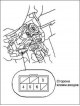
Ignition switch — check and replacement
Checking the ignition switch 1. Turn the ignition key to the "OFF" position. 2. Disconnect the negative battery cable. 3. Remove the steering column covers. 4. Disconnect the 7P connector from the fuse/relay box under...
Checking the ignition switch 1. Turn the ignition key to the "OFF" position. 2. Disconnect the negative battery cable. 3. Remove the steering column covers. 4. Disconnect the 7P connector from the fuse/relay box under...

Checking the functionality of the starter (L13A)
1. Disconnect the wire from terminal M. 2. Make connections as described below, using as heavy a wire as possible (preferably equivalent to the wire used on the vehicle). Note: To prevent damage to the starter, do not...
1. Disconnect the wire from terminal M. 2. Make connections as described below, using as heavy a wire as possible (preferably equivalent to the wire used on the vehicle). Note: To prevent damage to the starter, do not...
Troubleshooting the Starting System (L13A)
Using a diagnostic tool, check the engine injection system (PGM-FI). Check the battery terminals or connectors for tightness. Check the battery for low charge. Check the starter. Check the interlock relay. Check the...
Using a diagnostic tool, check the engine injection system (PGM-FI). Check the battery terminals or connectors for tightness. Check the battery for low charge. Check the starter. Check the interlock relay. Check the...
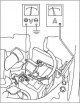
Troubleshooting the Starter Circuit (L13A)
Note: During this procedure, the air temperature should be between 15 and 38°C. After completing this procedure, you must reset the Engine Control Module (ECM), otherwise the ECM will continue to inhibit the injectors....
Note: During this procedure, the air temperature should be between 15 and 38°C. After completing this procedure, you must reset the Engine Control Module (ECM), otherwise the ECM will continue to inhibit the injectors....
This section is available on: russian, bulgarian, belarusian, ukrainian, serbian, croatian, romanian, polish, slovak, hungarian
Link in different formats to this section
TEXTHTMLBB Code
- General information
- Technical data
- Governing bodies
- Driving and maintenance
- Power unit
- Gasoline engines (L13A)
- Gasoline engines (R18A)
- Diesel engines (N22A)
- Cooling and lubrication (L13A)
- Cooling and lubrication (R18A)
- Cooling and lubrication (N22A)
- Injection system (gasoline)
- Injection system (diesel)
- Toxicity reduction system
- Troubleshooting
- Transmission
- Clutch and drive shafts
- Mechanical gearbox
- Chassis and running gear
- Suspension and wheels
- Steering
- Brake system
- Body and interior
- Exterior (external elements)
- Doors, locks and windows
- Electrical equipment
- Equipment and devices
- Headlights and lighting
- Power devices
- Electrical circuits
- General information
- User manual
- Maintenance
- Power unit
- Engines D15B and D17A
- K20A Engines
- Overhaul engine
- Cooling system
- Lubrication system
- Fuel injection system
- Toxicity reduction system
- Engine electrical equipment
- Transmission
- Clutch
- Manual gearbox
- Automatic gearbox
- Variator (CVT)
- Drive shafts
- Chassis and running gear
- Car suspension
- Steering
- Brake system
- Body and interior
- Exterior (external elements)
- Interior (internal elements)
- Doors, locks and windows
- Heater and air conditioner
- Manual air conditioner
- Automatic air conditioner
- Security system
- Electrical equipment
- Equipment and devices
- Headlights and lighting
- Windscreen wipers
- Audio system
- Electrical diagrams
- General information
- Introduction to guide
- User manual
- Maintenance
- Power unit
- Engine in car (Civic)
- Engine in car (Integra)
- Engine overhaul
- Cooling and heating
- Power and exhaust systems
- Engine electrical equipment
- Engine management systems
- Transmission
- Manual gearbox
- Automatic transmission (AT/CVT)
- Clutch and drive shafts
- Chassis and running gear
- Brake system
- Car suspension
- Steering
- Body and interior
- Exterior (external elements)
- Interior (internal elements)
- Doors, locks and windows
- Electrical equipment
- Equipment and devices
- Electrical circuits
- Power unit
- SOHC engines
- DOHC engines
- Engine overhaul
- Cooling and lubrication system
- Intake and exhaust system
- Fuel injection system (SOHC)
- Fuel injection system (DOHC)
- Carburetor
- Transmission
- Clutch
- Manual gearbox S4C
- Manual gearbox S40
- Automatic gearbox
- Drive shafts
- Chassis and running gear
- Car suspension
- Steering
- Brake system
- Body and interior
- Body elements
- Heater and air conditioner
- Electrical equipment
- Power devices
- Equipment and instruments
- Electrical circuits
- General information
- Maintenance
- Power unit
- Engine in a car
- Engine overhaul
- Cooling system
- Power and exhaust system
- Engine electrical equipment
- Emission control system
- Transmission
- Mechanical gearbox
- Automatic gearbox
- Clutch and drive shafts
- Four-wheel drive
- Chassis and running gear
- Brake system
- Car suspension
- Steering
- Body and interior
- Body elements
- Electrical equipment
- Equipment and devices
- Electrical circuits