
Cooling and lubrication of L13A engine of car Honda Civic 8

Replacing the coolant
1. Start the engine. Set the heating system temperature control to the maximum air temperature, then turn off the ignition. Make sure the engine and radiator are cool to the touch. 2. Remove the radiator cap. 3. Remove...
1. Start the engine. Set the heating system temperature control to the maximum air temperature, then turn off the ignition. Make sure the engine and radiator are cool to the touch. 2. Remove the radiator cap. 3. Remove...

Checking the coolant
1. Check the coolant level in the expansion tank. Make sure it is between the "MAX" A and "MIN" B marks. 2. If the coolant level in the expansion tank is at or below the "MIN" mark, add coolant to a level between the...
1. Check the coolant level in the expansion tank. Make sure it is between the "MAX" A and "MIN" B marks. 2. If the coolant level in the expansion tank is at or below the "MIN" mark, add coolant to a level between the...

Radiator check
1. Wait until the engine has cooled down, then carefully remove the radiator cap and add coolant to the radiator up to the base of the filler neck. 2. Connect pressure tester A (commercially available) to the radiator....
1. Wait until the engine has cooled down, then carefully remove the radiator cap and add coolant to the radiator up to the base of the filler neck. 2. Connect pressure tester A (commercially available) to the radiator....

Replacing the EGR channel
1. Drain the engine coolant. 2. Remove the coolant bypass hose and wire harness clamps, then disconnect the exhaust gas recirculation (EGR) valve connector. 3. Remove EGR channel A. 4. Install the EGR channel with a new...
1. Drain the engine coolant. 2. Remove the coolant bypass hose and wire harness clamps, then disconnect the exhaust gas recirculation (EGR) valve connector. 3. Remove EGR channel A. 4. Install the EGR channel with a new...

Disabling/installing the air purifier
1. Disconnect the MAF sensor/IAT sensor A connector. 2. Loosen bolt B and disconnect hoses C. 3. Remove the air cleaner housing D. 4. Install the parts in the reverse order of removal.
1. Disconnect the MAF sensor/IAT sensor A connector. 2. Loosen bolt B and disconnect hoses C. 3. Remove the air cleaner housing D. 4. Install the parts in the reverse order of removal.

Replacing the radiator and fan
1. Drain the engine coolant. 2. Disconnect connector A of the working fluid temperature sensor 2 (ECT), then disconnect connector B of the air conditioner clutch and the wire harness lock from the air conditioner...
1. Drain the engine coolant. 2. Disconnect connector A of the working fluid temperature sensor 2 (ECT), then disconnect connector B of the air conditioner clutch and the wire harness lock from the air conditioner...

Checking the water pump
1. Remove the drive belt. 2. Remove the water pump pulley. 3. Turn the water pump counterclockwise. Make sure it rotates freely. If it does not rotate freely, replace the water pump. Note: When checking the water pump,...
1. Remove the drive belt. 2. Remove the water pump pulley. 3. Turn the water pump counterclockwise. Make sure it rotates freely. If it does not rotate freely, replace the water pump. Note: When checking the water pump,...

Replacing the water pump
1. Remove the drive belt. 2. Drain the engine coolant. 3. Remove the water pump pulley. 4. Remove the five coolant pump mounting bolts, then remove the coolant pump. 5. Check and clean the O-ring groove and the surface...
1. Remove the drive belt. 2. Drain the engine coolant. 3. Remove the water pump pulley. 4. Remove the five coolant pump mounting bolts, then remove the coolant pump. 5. Check and clean the O-ring groove and the surface...

Troubleshooting the Cooling Fan Control System
The radiator fan and air conditioner condenser fan do not operate at low speed when the air conditioner is on. The radiator fan and the air conditioner condenser fan rotate at low speed, but the radiator fan does not...
The radiator fan and air conditioner condenser fan do not operate at low speed when the air conditioner is on. The radiator fan and the air conditioner condenser fan rotate at low speed, but the radiator fan does not...
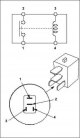
Checking the power relay
Use this table to determine the relay type and perform the test assigned to it. Normally open type (except PGM-FI relay 1, ignition coil relay, additional PGM-FI relay, ETCS relay, rear window defroster relay, air...
Use this table to determine the relay type and perform the test assigned to it. Normally open type (except PGM-FI relay 1, ignition coil relay, additional PGM-FI relay, ETCS relay, rear window defroster relay, air...

Replacing the Coolant Temperature (ECT) Sensor 1
1. Drain the engine coolant. 2. Remove the air cleaner housing. 3. Remove the throttle body. 4. Disconnect the ECT sensor 1 connector. 5. Remove the harness retainer B and sensor 1 ECT C. 6. Install the sensor in the...
1. Drain the engine coolant. 2. Remove the air cleaner housing. 3. Remove the throttle body. 4. Disconnect the ECT sensor 1 connector. 5. Remove the harness retainer B and sensor 1 ECT C. 6. Install the sensor in the...

Replacing the Coolant Temperature (ECT) Sensor 2
1. Drain the engine coolant. 2. Remove the lower engine cover. 3. Disconnect the ECT sensor 2 connector. 4. Remove the ECT 2V sensor. 5. Install the sensor in the reverse order of removal, with a new sealing ring D,...
1. Drain the engine coolant. 2. Remove the lower engine cover. 3. Disconnect the ECT sensor 2 connector. 4. Remove the ECT 2V sensor. 5. Install the sensor in the reverse order of removal, with a new sealing ring D,...

Removal and installation the engine oil level sensor
1. Remove the lower engine cover. 2. Drain the engine oil. 3. Unscrew bolts A, remove engine oil level sensor covers B and engine oil level sensor connector C. Note: If the cover is damaged, replace it. 4. Remove bolts...
1. Remove the lower engine cover. 2. Drain the engine oil. 3. Unscrew bolts A, remove engine oil level sensor covers B and engine oil level sensor connector C. Note: If the cover is damaged, replace it. 4. Remove bolts...
Checking the engine oil level sensor
Note: This procedure tests the functionality of the engine oil level sensor. Perform the procedure on a flat surface. Make sure the customer has not added oil before performing this procedure. Check for oil leaks before...
Note: This procedure tests the functionality of the engine oil level sensor. Perform the procedure on a flat surface. Make sure the customer has not added oil before performing this procedure. Check for oil leaks before...
Troubleshooting the engine lubrication system
Excessive consumption of motor oil 1. Check how tightly the oil filler cap is tightened 2. engine, drain plug bolt and 3. Oil filter. Check for oil leaks. 4. Check the valve guide bushing wear and valve stem seals....
Excessive consumption of motor oil 1. Check how tightly the oil filler cap is tightened 2. engine, drain plug bolt and 3. Oil filter. Check for oil leaks. 4. Check the valve guide bushing wear and valve stem seals....

Removal the engine oil pressure sensor
1. Remove the lower engine cover. 2. Disconnect the engine oil pressure sensor connector A from sensor B. 3. Check for continuity between the positive terminal C and the engine ("ground"). There should be continuity...
1. Remove the lower engine cover. 2. Disconnect the engine oil pressure sensor connector A from sensor B. 3. Check for continuity between the positive terminal C and the engine ("ground"). There should be continuity...

Replacing the engine oil filter supply pipe
1. Remove the filter. 2. Remove the oil filter inlet pipe. 3. Install two 20 x 1.5 mm A nuts onto the new oil filter feed pipe. Hold the nut with a flat wrench, then tighten the second nut with another wrench. 4....
1. Remove the filter. 2. Remove the oil filter inlet pipe. 3. Install two 20 x 1.5 mm A nuts onto the new oil filter feed pipe. Hold the nut with a flat wrench, then tighten the second nut with another wrench. 4....

Replacing the engine oil pressure sensor
1. Remove the lower engine cover. 2. Disconnect the oil pressure switch connector, then remove the oil pressure switch. 3. Remove all old liquid gaskets from the sensor and its mounting hole. 4. Apply a very small...
1. Remove the lower engine cover. 2. Disconnect the oil pressure switch connector, then remove the oil pressure switch. 3. Remove all old liquid gaskets from the sensor and its mounting hole. 4. Apply a very small...

Disassembling the oil pump
1. Remove the timing chain. 2. Remove oil filter A, then oil pump B. Checking the oil pump 1. Remove the pump cover. 2. Check the radial clearance between the inner and outer rotors (between the inner rotor A and the...
1. Remove the timing chain. 2. Remove oil filter A, then oil pump B. Checking the oil pump 1. Remove the pump cover. 2. Check the radial clearance between the inner and outer rotors (between the inner rotor A and the...

Installing an oil/air separator
1. Clean and dry the oil/air separator mating surfaces, bolts and bolt holes. 2. Apply a 1.5mm wide layer of sealant P/N 08C70-K0234M, 08C70-K0334M or 08C70-X0331S along the damage lines. Note: If 5 minutes or more have...
1. Clean and dry the oil/air separator mating surfaces, bolts and bolt holes. 2. Apply a 1.5mm wide layer of sealant P/N 08C70-K0234M, 08C70-K0334M or 08C70-X0331S along the damage lines. Note: If 5 minutes or more have...
This section is available on: russian, bulgarian, belarusian, ukrainian, serbian, croatian, romanian, polish, slovak, hungarian
Link in different formats to this section
TEXTHTMLBB Code
- General information
- Technical data
- Governing bodies
- Driving and maintenance
- Power unit
- Gasoline engines (L13A)
- Gasoline engines (R18A)
- Diesel engines (N22A)
- Cooling and lubrication (L13A)
- Cooling and lubrication (R18A)
- Cooling and lubrication (N22A)
- Injection system (gasoline)
- Injection system (diesel)
- Toxicity reduction system
- Troubleshooting
- Transmission
- Clutch and drive shafts
- Mechanical gearbox
- Chassis and running gear
- Suspension and wheels
- Steering
- Brake system
- Body and interior
- Exterior (external elements)
- Doors, locks and windows
- Electrical equipment
- Equipment and devices
- Headlights and lighting
- Power devices
- Electrical circuits
- General information
- User manual
- Maintenance
- Power unit
- Engines D15B and D17A
- K20A Engines
- Overhaul engine
- Cooling system
- Lubrication system
- Fuel injection system
- Toxicity reduction system
- Engine electrical equipment
- Transmission
- Clutch
- Manual gearbox
- Automatic gearbox
- Variator (CVT)
- Drive shafts
- Chassis and running gear
- Car suspension
- Steering
- Brake system
- Body and interior
- Exterior (external elements)
- Interior (internal elements)
- Doors, locks and windows
- Heater and air conditioner
- Manual air conditioner
- Automatic air conditioner
- Security system
- Electrical equipment
- Equipment and devices
- Headlights and lighting
- Windscreen wipers
- Audio system
- Electrical diagrams
- General information
- Introduction to guide
- User manual
- Maintenance
- Power unit
- Engine in car (Civic)
- Engine in car (Integra)
- Engine overhaul
- Cooling and heating
- Power and exhaust systems
- Engine electrical equipment
- Engine management systems
- Transmission
- Manual gearbox
- Automatic transmission (AT/CVT)
- Clutch and drive shafts
- Chassis and running gear
- Brake system
- Car suspension
- Steering
- Body and interior
- Exterior (external elements)
- Interior (internal elements)
- Doors, locks and windows
- Electrical equipment
- Equipment and devices
- Electrical circuits
- Power unit
- SOHC engines
- DOHC engines
- Engine overhaul
- Cooling and lubrication system
- Intake and exhaust system
- Fuel injection system (SOHC)
- Fuel injection system (DOHC)
- Carburetor
- Transmission
- Clutch
- Manual gearbox S4C
- Manual gearbox S40
- Automatic gearbox
- Drive shafts
- Chassis and running gear
- Car suspension
- Steering
- Brake system
- Body and interior
- Body elements
- Heater and air conditioner
- Electrical equipment
- Power devices
- Equipment and instruments
- Electrical circuits
- General information
- Maintenance
- Power unit
- Engine in a car
- Engine overhaul
- Cooling system
- Power and exhaust system
- Engine electrical equipment
- Emission control system
- Transmission
- Mechanical gearbox
- Automatic gearbox
- Clutch and drive shafts
- Four-wheel drive
- Chassis and running gear
- Brake system
- Car suspension
- Steering
- Body and interior
- Body elements
- Electrical equipment
- Equipment and devices
- Electrical circuits