HondaBook.ru
Auto companies Volkswagen Auto companies Ford Auto companies Lada Auto companies Skoda Auto companies BMW Auto companies Mazda Auto companies Peugeot
English Русский
Български
Беларускі
Український
Српски
Hrvatski
Română
Polski
Slovenský
Magyar
Bookmark Contacts Sitemap   


Accord Civic Fit / Jazz CR-V HR-V Others Articles
Fit 1 (2001-2008)

Description of generations of the car Honda Fit (Jazz)

  • Main
  • Honda Fit
Honda Fit 2017 year 
Honda Fit 2017 year
Honda Fit — a five-door subcompact hatchback (B-segment according to the European classification). It has been produced by the Japanese automaker Honda since 2001 and is currently in its third generation. In Russia, Europe and some other countries, it is called Honda Jazz. Replaced the subcompact "Honda Logo", "Honda Capa" and "Honda S-MX". The engine is located transversely in the front, the drive is mainly on the front wheels, for the Japanese market there are all-wheel drive models. Based on the "Honda Global Small Car" platform. In 2010, the hybrid model "Fit Hybrid" appeared, and in 2012, the fully electric model "Fit EV" appeared.

The main competitors of Fit/Jazz are cars Chevrolet Aveo, Citroën C2, Fiat Punto, Ford Fiesta, Hyundai Accent, Kia Rio, Lada Granta, Mazda 2, Mercedes-Benz A-Class, Mitsubishi Colt, Nissan Micra, Opel Corsa, Peugeot 208, Renault Logan, Skoda Fabia, Seat Ibiza, Suzuki Swift, Toyota Yaris and, Volkswagen Polo.

First generation (GD1/2/3/4, 2001−2008)
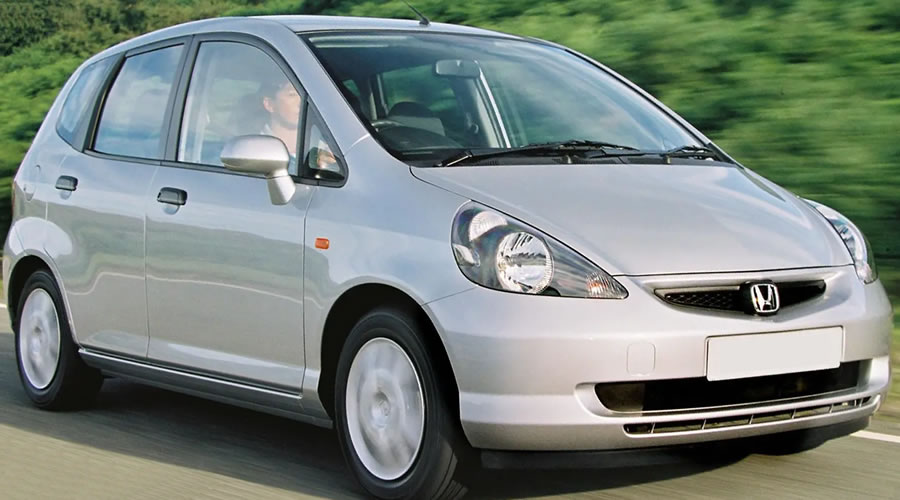


Honda Fit 1, front view 
Honda Fit 1, front view
In June 2001, the first generation debuted in Japan and the car immediately became a hit and was awarded the "Car of the Year in Japan" award. In 2002, it became the first in sales in Japan. The fuel tank is located under the front seats, which allowed the rear seats to fold low, creating a large volume for cargo in its class. The production model for the United States and Canada debuted on January 8, 2006 at the North American International Auto Show in Detroit. The body was only a 5-door hatchback 4000 mm long (North America) and 3845 (all other countries), 1675 mm wide, 1525 mm high. The curb weight was 1084 kg. The car was assembled in Japan, Brazil, Indonesia, China, Thailand and the Philippines.

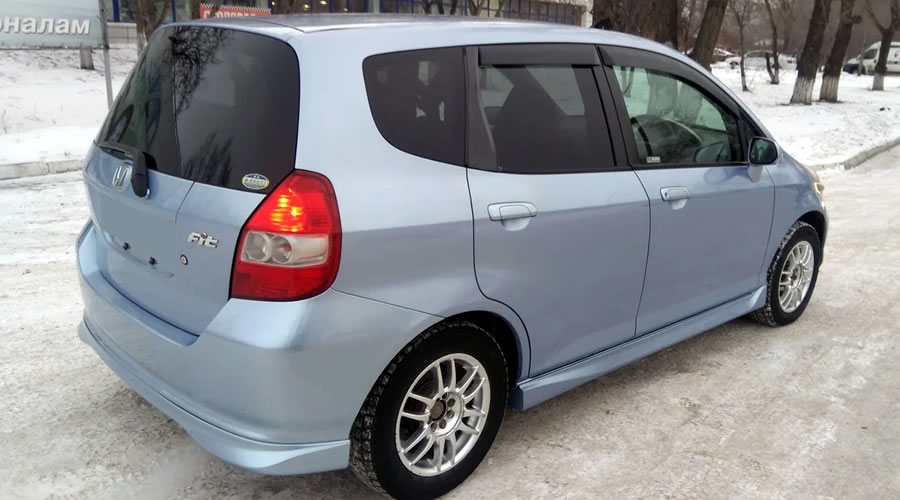
Honda Fit 1, back view 
Honda Fit 1, back view
Only four-cylinder petrol "L" series engines were installed with a volume of 1.2 liters (1246 cm³, L12A, i-DSI, 76 hp), 1.3 liters (1339 cm³, L13A, i-DSI, 82 hp) and 1.5 liters (1496 cm³, L15A1, VTEC, 109 hp). Eight-valve i-DSI engines use two spark plugs per cylinder. The 1.5 liter VTEC engine has a typical 16-valve configuration. The gearbox is a 5-speed automatic or manual, as well as a continuously variable transmission (CVT).

All European models have anti-lock braking systems (ABS) with disc brakes on the front wheels and drum or disc brakes on the rear wheels. Side airbags are standard on high-end models. In North America, the car comes with power windows, a tire pressure monitoring system (TPMS), standard side airbags, side curtain airbags, and ABS, in addition to the mandatory front airbags.

In 2004, the model was updated in Japan, which affected the design of the bumpers, radiator grille and headlights, the rear lights were made LED. A new audio system with a screen was installed inside.

The American National Highway Traffic Safety Administration (NHTSA) tested the 2007 car and found the following results:
  • Front Impact (Driver) - 5 out of 5 stars
  • Frontal Impact (Passenger) - 5 out of 5 stars
  • Side Impact (Driver) - 5 out of 5 stars
  • Side Impact (Rear Passenger) - 3 out of 5 stars
  • Car Flip - 4 out of 5 stars

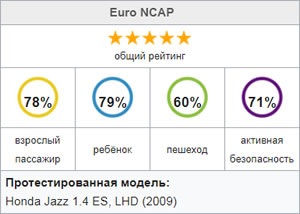
In 2004, the European committee Euro NCAP also conducted crash tests, the results are shown in the table above.

Second generation (GE, GP, ZA, 2009−20014)


Honda Fit 2, front view 
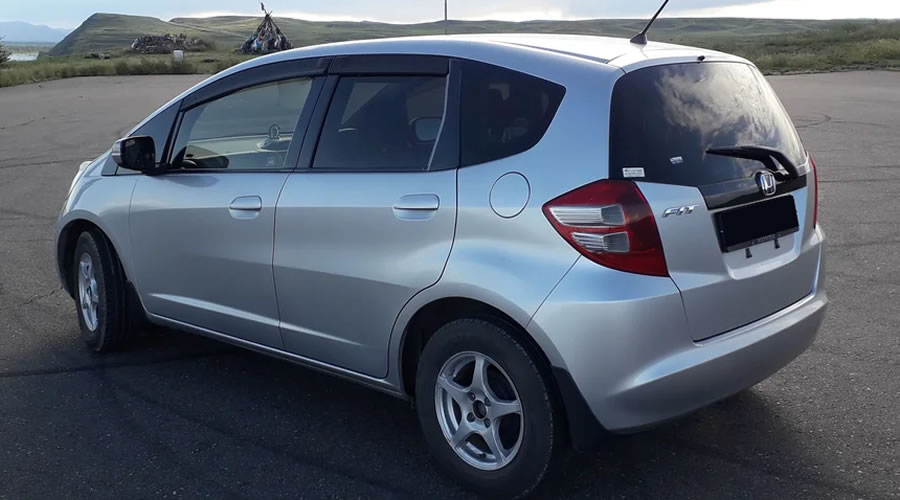
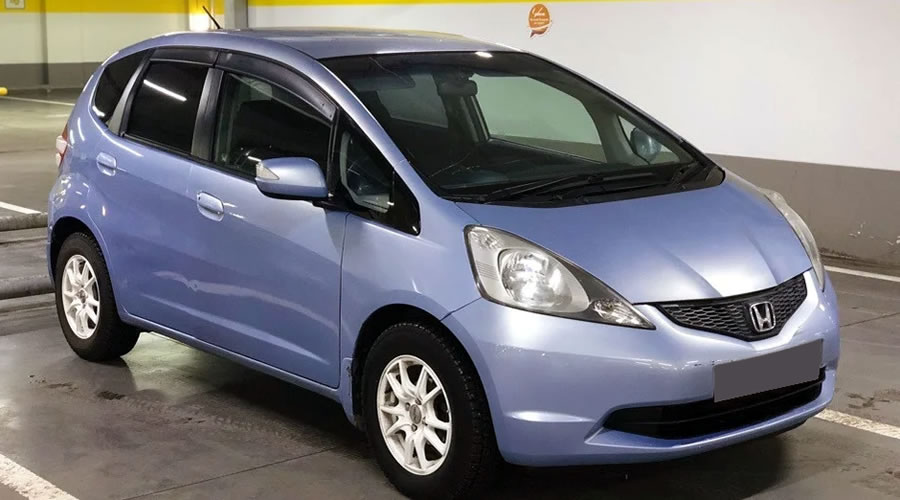
Honda Fit 2, front view
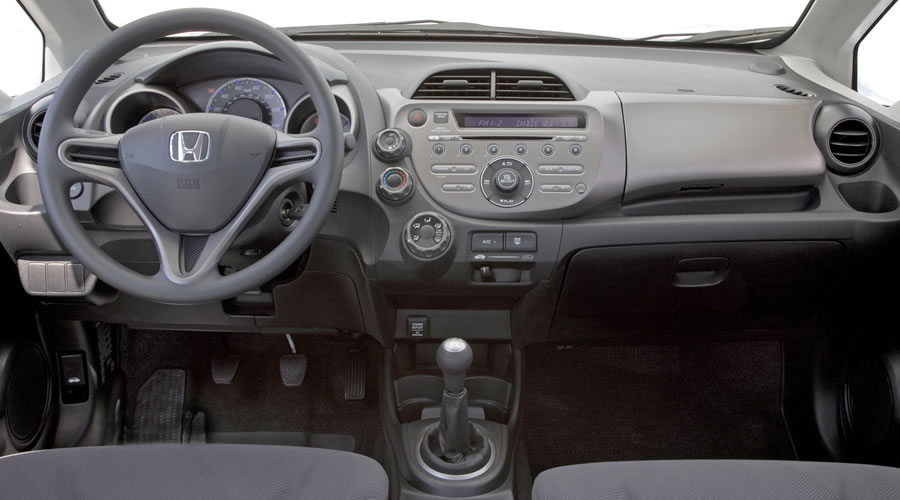
In October 2007, the second generation of Fit was presented at the Tokyo Motor Show, which immediately received the "Car of the Year in Japan" award. The body became stronger due to the increased share of high-strength steel. The length of the body was 3985-4100 mm, the width was 1695 mm, the height was 1525 mm, that is, the car became wider and longer, the volume of the cabin increased, and the volume of the luggage compartment was slightly reduced. The exterior design was significantly changed, the dashboard was also updated in the cabin and modern functions were added, such as Bluetooth with the ability to connect an iPhone, a USB port for the audio system, a navigation system with a large screen. Production was carried out in the same countries as the first generation, plus England, India and Taiwan were added.

Honda Fit 2, back view 
Honda Fit 2, back view
The engines remained with the same volumes and names, but the power of each increased significantly. The second generation Fit/Jazz was equipped with the following engines - 1.2 liters (1246 cm³, L12A, i-VTEC, 89 hp), 1.3 liters (1339 cm³, L13A, i-VTEC, 98 hp) and 1.5 liters (1496 cm³, L15A1, i-VTEC, 117 hp). Each of the engines became 16-valve, they abandoned the 2 spark plugs per cylinder scheme in favor of a valve timing scheme called VTEC. The gearbox was 5- or 6-speed manual, 5-speed automatic, and in the Japanese market there was also a continuously variable transmission (CVT).

Honda Fit 2, interior 
Honda Fit 2, interior
In October 2010, the hybrid model "Fit Hybrid" was launched, which was equipped with a 1.3-liter engine with an estimated fuel consumption of 3.3 liters per 100 kilometers. The European version of the car was shown at the 2010 Paris Motor Show, sales of which began in early 2011. The interior space of the hybrid version is the same as that of the classic car.

In 2011, a station wagon called the Fit Shuttle appeared on the Japanese domestic market with a classic or hybrid power plant. In 2012, the Fit EV (Electric Vehicle) appeared - a fully electric car with an updated front end without ventilation holes and a new front bumper. The battery is built into the floor along the entire length, and the 92 kW MCF3 electric motor is located under the hood.

The car's safety was tested in 2009 by the European agency Euro NCAP, see the results in the table. The American National Highway Traffic Safety Administration (NHTSA) also conducted crash tests of the second generation of the Fit:
  • Front Impact (Driver) - 5 out of 5 stars
  • Frontal Impact (Passenger) - 5 out of 5 stars
  • Side Impact (Driver) - 5 out of 5 stars
  • Side Impact (Rear Passenger) - 4 out of 5 stars
  • Car Flip - 4 out of 5 stars

Third generation (GK, GP, 2014−present)


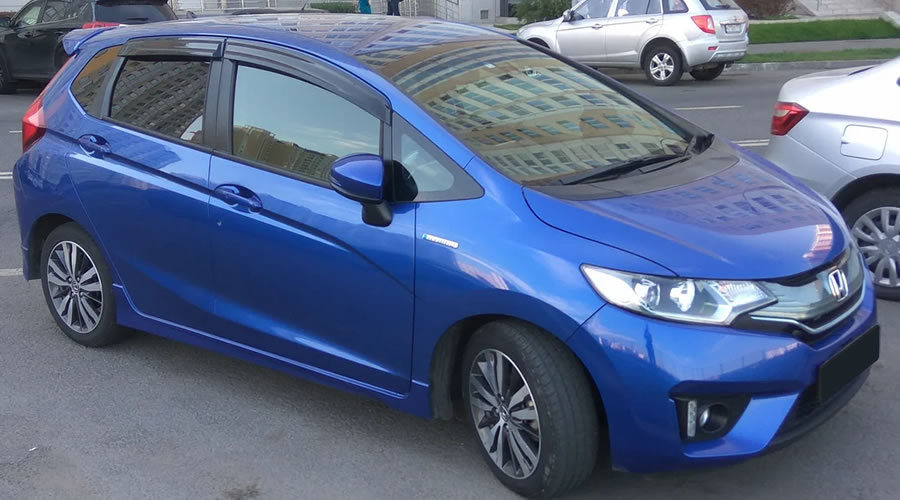
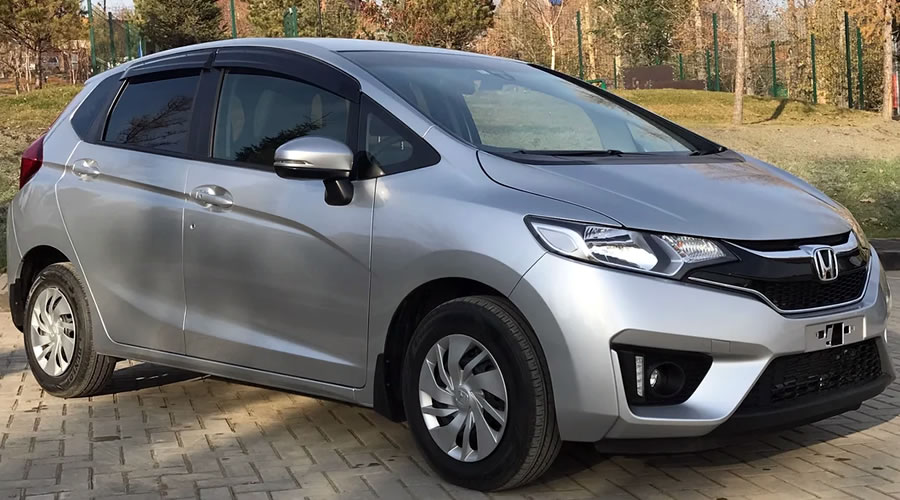
Honda Fit 3, front view 
Honda Fit 3, front view
The third generation was introduced in Japan in September 2013 as a 2014 model. It was shown in the United States at the North American International Auto Show in Detroit in January 2014. The car retains the general design concept of previous generations, a centrally located fuel tank and an interior with several configurations. An all-new "Global Small Car Platform" using ultra-high-strength steel made the body even more rigid. This platform is also used for a subcompact crossover "HR-V". The overall length of the car is 3955 mm, width 1695 mm, height 1525-1550 mm and the unladen weight is 1020-1080 kg. The hybrid model is slightly heavier.

Honda Fit 3, back view 
Honda Fit 3, back view
The range of four-cylinder petrol engines includes the following models: 1.2 litres (1198 cm³, L12B, i-VTEC, 89 hp), 1.3 litres (1318 cm³, L13B, Earth Dreams, i-VTEC, 98 hp), 1.5 litres (1496 cm³, L15A7, i-VTEC, 118 hp) and 1.5 litres (1496 cm³, L15B1, i-VTEC, 130 hp). The transmission is 5- or 6-speed manual or continuously variable transmission (CVT). The Fit Hybrid uses a 1.5-liter DOHC i-VTEC engine with Earth Dreams technology paired with a 7-speed dual-clutch transmission (DCT) and a high-output IPU (Intelligent Power Unit) electric motor with a lithium-ion battery.

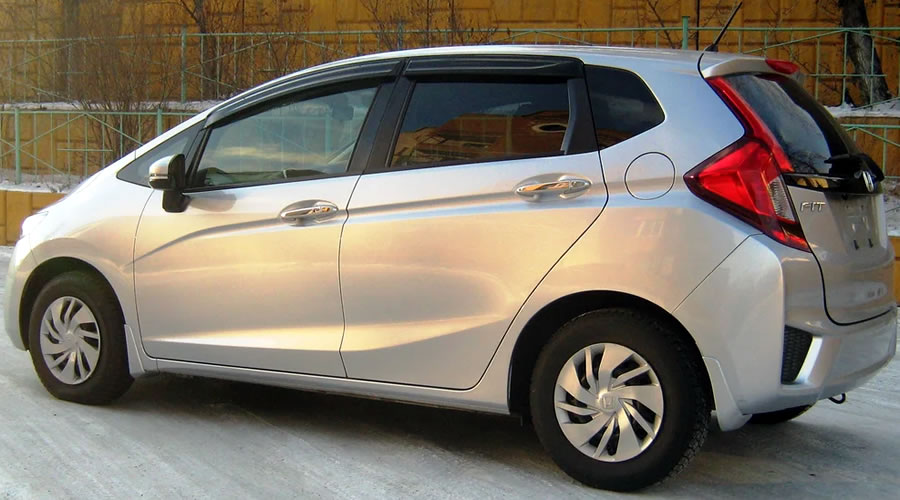
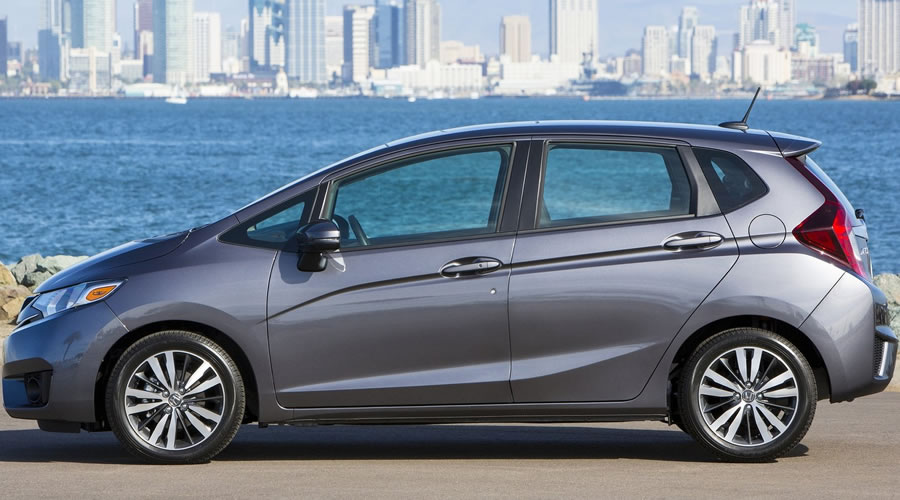
Honda Fit 3, side view 
Honda Fit 3, side view
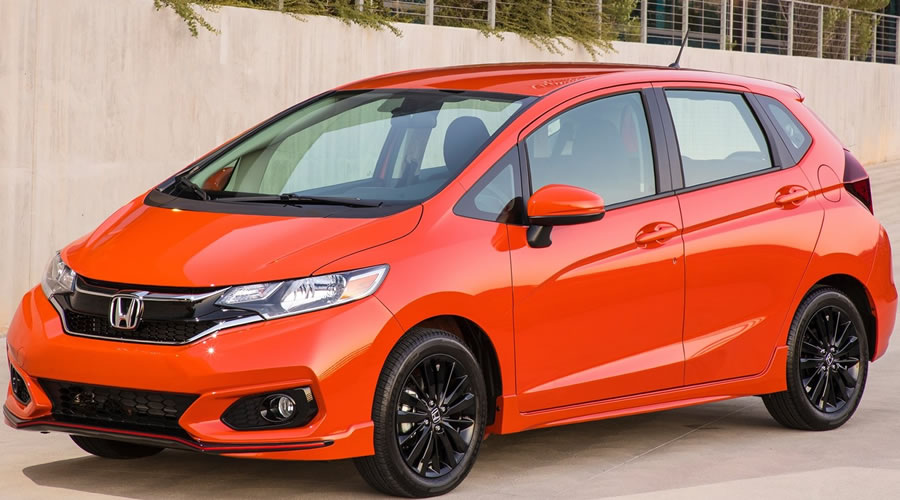
In May 2017, the model was updated. The bumpers were changed, the headlights became LED with built-in daytime running lights.

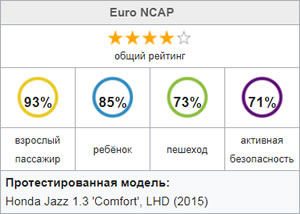
The 2015 Fit received an award from the European committee Euro NCAP as the best car in its class. American organizations - the Insurance Institute for Highway Safety (IIHS) and the National Highway Traffic Safety Administration (NHTSA) conducted their own independent safety tests.

IIHS test results:
  • Frontal Test with Partial Overlap - Good
  • Frontal Small Overlap Test - Acceptable
  • Side Kick - Good
  • Roof Strength - Good

NHTSA test results:
  • Overall rating: 5 out of 5 stars
  • Front Impact (Driver) - 5 out of 5 stars
  • Frontal Impact (Passenger) - 5 out of 5 stars
  • Side Impact (Driver) - 5 out of 5 stars
  • Side Impact (Passenger) - 5 out of 5 stars
  • Car Flip - 4 out of 5 stars

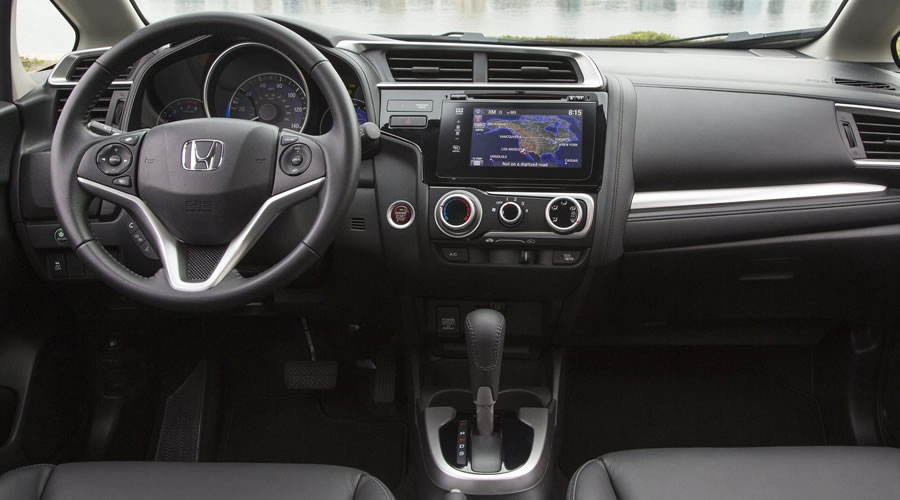
Honda Fit 3, interior 
Honda Fit 3, interior
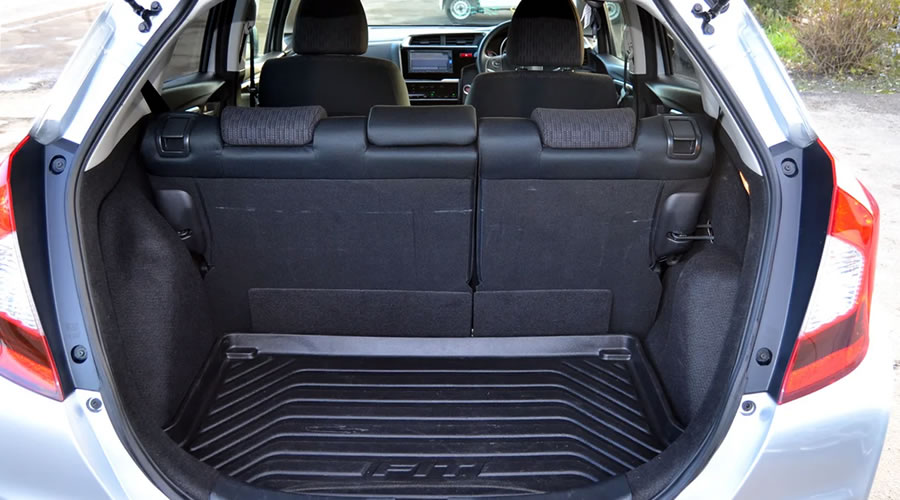
Honda Fit 3, trunk 
Honda Fit 3, trunk
Honda Fit 3, restyling 
Honda Fit 3, restyling
Share with friends:
Link in different formats to this article
TEXTHTMLBB Code
Fit 1 (2001-2008) 
  • General information
  • User manual
  • Maintenance
  • Power unit
  • Engine repair
  • Cooling and lubrication system
  • Injection and power system
  • Control system
  • Engine electrical equipment
  • Transmission
  • Clutch
  • Mechanical gearbox
  • Automatic gearbox
  • Variator (CVT)
  • Drive shafts and gearbox
  • Chassis and running gear
  • Car suspension
  • Steering
  • Brake system
  • Body and interior
  • Exterior (external elements)
  • Interior (internal elements)
  • Doors, locks and windows
  • Heater and air conditioner
  • Safety system
  • Electrical equipment
  • Equipment and devices
  • Wiring diagrams (since 06.2001)
  • Wiring diagrams (since 06.2004)
HondaBook.ru © 2018–2026 • Mobile version • Sitemap: EN BG BY UA RS HR RO PL SK HU • Feedback • Driver Information • Search system • Bookmark
Accord 3 (1985-1989) • Accord 6 (1997-2002) • Civic 3 and 4 (1983-1991) • Civic 5 and 6 (1991-2000) • Civic 6 (1995-2000) • Civic 7 (2000-2005) • Civic 8 (2005-2011) • Fit 1 (2001-2008) • CR-V 1 (1995-2001) • CR-V 2 (2002-2006) • HR-V 1 (1998-2006) • Avancier 1 (1999-2003) •