
Engine cooling and vehicle heating Honda Civic 6

Cooling and Heating Systems — General Information
Engine cooling system All models of vehicles considered in this Manual are equipped with an engine cooling system operating under excess pressure with thermostatic control of the circulation of the working fluid (see...
Engine cooling system All models of vehicles considered in this Manual are equipped with an engine cooling system operating under excess pressure with thermostatic control of the circulation of the working fluid (see...

Location of cooling system components
Location of cooling system components in the engine compartment of a car (Honda Civic) 1 - Heating hoses; 2 - Lower radiator hose; 3 - Expansion tank; 4 - Upper radiator hose; 5 - Radiator cap; 6 - Cooling system fans;...
Location of cooling system components in the engine compartment of a car (Honda Civic) 1 - Heating hoses; 2 - Lower radiator hose; 3 - Expansion tank; 4 - Upper radiator hose; 5 - Radiator cap; 6 - Cooling system fans;...
Cooling and Heating System Specifications
General parameters Characteristic Meaning Coolant volume See Chapter Routine maintenance Drive belt tension force See Chapter Routine maintenance Calculated pressure of the radiator cap, kgf/cm² 0.1÷1.3 Thermostat...
General parameters Characteristic Meaning Coolant volume See Chapter Routine maintenance Drive belt tension force See Chapter Routine maintenance Calculated pressure of the radiator cap, kgf/cm² 0.1÷1.3 Thermostat...
Antifreeze — General Information
Warning! Do not allow antifreeze to come into contact with exposed areas of the body or painted surfaces of the vehicle. If any splashes do come into contact, wash them off immediately with plenty of water. Remember...
Warning! Do not allow antifreeze to come into contact with exposed areas of the body or painted surfaces of the vehicle. If any splashes do come into contact, wash them off immediately with plenty of water. Remember...

Checking the correct operation and replacing the thermostat
Warning! Do not open the radiator cap or remove the thermostat until the engine has cooled down completely! See also warning at the beginning Antifreeze - general information . Examination 1. Before you finally confirm...
Warning! Do not open the radiator cap or remove the thermostat until the engine has cooled down completely! See also warning at the beginning Antifreeze - general information . Examination 1. Before you finally confirm...

Checking the cooling system fan and its switching circuit, replacing the fan
Warning! Avoid touching the fan blades with your hands, tools, or clothing. To avoid injury or equipment damage, do not start the engine if the fan is faulty. Do not attempt to repair broken impeller blades – replace...
Warning! Avoid touching the fan blades with your hands, tools, or clothing. To avoid injury or equipment damage, do not start the engine if the fan is faulty. Do not attempt to repair broken impeller blades – replace...

Removal and installation the radiator and expansion tank of the cooling system
Warning! Do not proceed with the procedures until the engine has cooled down completely. See also warning at the beginning Antifreeze - general information . Removal Radiator 1. Disconnect the negative cable from the...
Warning! Do not proceed with the procedures until the engine has cooled down completely. See also warning at the beginning Antifreeze - general information . Removal Radiator 1. Disconnect the negative cable from the...

Removal and installation the oil cooler
Attention! Before starting the procedure, wait until the engine has completely cooled down. 1. Some Integra models have an oil cooler installed between the full-flow oil filter and the engine block (see accompanying...
Attention! Before starting the procedure, wait until the engine has completely cooled down. 1. Some Integra models have an oil cooler installed between the full-flow oil filter and the engine block (see accompanying...

Checking the condition of the water pump
Failure of the water pump can lead to the most serious consequences, including complete seizure of the engine due to overheating. There are two ways to check the water pump's functionality without removing it from the...
Failure of the water pump can lead to the most serious consequences, including complete seizure of the engine due to overheating. There are two ways to check the water pump's functionality without removing it from the...

Replacing the water pump
Attention! Proceed with the procedure only after the engine has completely cooled down! 1. Disconnect the negative cable from the battery. Warning! If the car stereo system is equipped with a security code, make sure...
Attention! Proceed with the procedure only after the engine has completely cooled down! 1. Disconnect the negative cable from the battery. Warning! If the car stereo system is equipped with a security code, make sure...

Checking and replacing the coolant temperature sensor unit
Attention! Before starting the procedure, wait until the engine has cooled down completely! The coolant temperature indicator device consists of a gauge mounted in the vehicle's instrument panel and a temperature sensor...
Attention! Before starting the procedure, wait until the engine has cooled down completely! The coolant temperature indicator device consists of a gauge mounted in the vehicle's instrument panel and a temperature sensor...

Checking the heater fan drive motor and the condition of its electrical circuit, replacing components
Examination 1. Check the condition of the fuses and all terminal connections of the corresponding electrical circuit. Make sure the battery is fully charged. 2. Shift the transmission into position "P", set the parking...
Examination 1. Check the condition of the fuses and all terminal connections of the corresponding electrical circuit. Make sure the battery is fully charged. 2. Shift the transmission into position "P", set the parking...

Removal and installation the electric motor of the heater fan drive
1. Disconnect the negative battery cable. Disable the airbag (see Chapter On-board electrical equipment ). Warning! If the car stereo system is equipped with a security code, make sure you have the correct combination...
1. Disconnect the negative battery cable. Disable the airbag (see Chapter On-board electrical equipment ). Warning! If the car stereo system is equipped with a security code, make sure you have the correct combination...

Removal and installation the heater and air conditioner control panel assembly, adjusting the drive cable
Warning! The vehicles covered in this Manual are equipped with an additional SRS safety system, better known as an airbag. Before performing any work in the vicinity of the airbag or steering column assembly, be sure to...
Warning! The vehicles covered in this Manual are equipped with an additional SRS safety system, better known as an airbag. Before performing any work in the vicinity of the airbag or steering column assembly, be sure to...

Replacing the heater heat exchanger
Warning! The vehicles covered in this Manual are equipped with an additional SRS safety system, better known as an airbag. Before performing any work in the vicinity of the airbag or steering column assembly, be sure to...
Warning! The vehicles covered in this Manual are equipped with an additional SRS safety system, better known as an airbag. Before performing any work in the vicinity of the airbag or steering column assembly, be sure to...

Checking and servicing heating and air conditioning systems
Air conditioning system Warning! The air conditioning system is under constant high pressure. Never disconnect refrigeration lines or remove any system components without first discharging the system. Discharging the...
Air conditioning system Warning! The air conditioning system is under constant high pressure. Never disconnect refrigeration lines or remove any system components without first discharging the system. Discharging the...
Checking the electrical circuit of the air conditioning compressor clutch
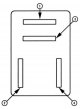
1a. If the compressor clutch fails to engage, first remove the corresponding relay and check its condition (see accompanying illustrations). Location of relay terminals (civic models). 1b. Location of relay terminals...
1a. If the compressor clutch fails to engage, first remove the corresponding relay and check its condition (see accompanying illustrations). Location of relay terminals (civic models). 1b. Location of relay terminals...

Removal and installation the air conditioner receiver-dryer
Warning! The air conditioning system is under constant high pressure. Never disconnect refrigeration lines or remove any system components without first discharging the system. Discharging the air conditioning system...
Warning! The air conditioning system is under constant high pressure. Never disconnect refrigeration lines or remove any system components without first discharging the system. Discharging the air conditioning system...

Removal and installation the air conditioning compressor
Warning! The air conditioning system is under constant high pressure. Never disconnect refrigeration lines or remove any system components without first discharging the system. Discharging the air conditioning system...
Warning! The air conditioning system is under constant high pressure. Never disconnect refrigeration lines or remove any system components without first discharging the system. Discharging the air conditioning system...

Removal and installation the air conditioner condenser
Warning! The air conditioning system is under constant high pressure. Never disconnect refrigeration lines or remove any system components without first discharging the system. Discharging the air conditioning system...
Warning! The air conditioning system is under constant high pressure. Never disconnect refrigeration lines or remove any system components without first discharging the system. Discharging the air conditioning system...

Removal and installation the air conditioner evaporator with expansion valve
Warning! The air conditioning system is under constant high pressure. Never disconnect refrigeration lines or remove any system components without first discharging the system. Discharging the air conditioning system...
Warning! The air conditioning system is under constant high pressure. Never disconnect refrigeration lines or remove any system components without first discharging the system. Discharging the air conditioning system...
This section is available on: russian, bulgarian, belarusian, ukrainian, serbian, croatian, romanian, polish, slovak, hungarian
Link in different formats to this section
TEXTHTMLBB Code
- General information
- Technical data
- Governing bodies
- Driving and maintenance
- Power unit
- Gasoline engines (L13A)
- Gasoline engines (R18A)
- Diesel engines (N22A)
- Cooling and lubrication (L13A)
- Cooling and lubrication (R18A)
- Cooling and lubrication (N22A)
- Injection system (gasoline)
- Injection system (diesel)
- Toxicity reduction system
- Troubleshooting
- Transmission
- Clutch and drive shafts
- Mechanical gearbox
- Chassis and running gear
- Suspension and wheels
- Steering
- Brake system
- Body and interior
- Exterior (external elements)
- Doors, locks and windows
- Electrical equipment
- Equipment and devices
- Headlights and lighting
- Power devices
- Electrical circuits
- General information
- User manual
- Maintenance
- Power unit
- Engines D15B and D17A
- K20A Engines
- Overhaul engine
- Cooling system
- Lubrication system
- Fuel injection system
- Toxicity reduction system
- Engine electrical equipment
- Transmission
- Clutch
- Manual gearbox
- Automatic gearbox
- Variator (CVT)
- Drive shafts
- Chassis and running gear
- Car suspension
- Steering
- Brake system
- Body and interior
- Exterior (external elements)
- Interior (internal elements)
- Doors, locks and windows
- Heater and air conditioner
- Manual air conditioner
- Automatic air conditioner
- Security system
- Electrical equipment
- Equipment and devices
- Headlights and lighting
- Windscreen wipers
- Audio system
- Electrical diagrams
- General information
- Introduction to guide
- User manual
- Maintenance
- Power unit
- Engine in car (Civic)
- Engine in car (Integra)
- Engine overhaul
- Cooling and heating
- Power and exhaust systems
- Engine electrical equipment
- Engine management systems
- Transmission
- Manual gearbox
- Automatic transmission (AT/CVT)
- Clutch and drive shafts
- Chassis and running gear
- Brake system
- Car suspension
- Steering
- Body and interior
- Exterior (external elements)
- Interior (internal elements)
- Doors, locks and windows
- Electrical equipment
- Equipment and devices
- Electrical circuits
- Power unit
- SOHC engines
- DOHC engines
- Engine overhaul
- Cooling and lubrication system
- Intake and exhaust system
- Fuel injection system (SOHC)
- Fuel injection system (DOHC)
- Carburetor
- Transmission
- Clutch
- Manual gearbox S4C
- Manual gearbox S40
- Automatic gearbox
- Drive shafts
- Chassis and running gear
- Car suspension
- Steering
- Brake system
- Body and interior
- Body elements
- Heater and air conditioner
- Electrical equipment
- Power devices
- Equipment and instruments
- Electrical circuits
- General information
- Maintenance
- Power unit
- Engine in a car
- Engine overhaul
- Cooling system
- Power and exhaust system
- Engine electrical equipment
- Emission control system
- Transmission
- Mechanical gearbox
- Automatic gearbox
- Clutch and drive shafts
- Four-wheel drive
- Chassis and running gear
- Brake system
- Car suspension
- Steering
- Body and interior
- Body elements
- Electrical equipment
- Equipment and devices
- Electrical circuits