
HondaBook.ru
Auto companies Volkswagen Auto companies Ford Auto companies Lada Auto companies Skoda Auto companies BMW Auto companies Mazda Auto companies Peugeot
English Русский
Български
Беларускі
Український
Српски
Hrvatski
Română
Polski
Slovenský
Magyar
Bookmark Contacts Sitemap   


Accord Civic Fit / Jazz CR-V HR-V Others Articles
Civic 3 and 4 (1983-1991) Civic 5 and 6 (1991-2000) Civic 6 (1995-2000) Civic 7 (2000-2005) Civic 8 (2005-2011)

Crankshaft Position Sensor — Checking and Replacement (Honda Civic 3)

  • Main
  • Honda Civic
  • 3 (1983-1991)
  • Power unit
  • Emission control system
  • Crankshaft Position Sensor — Checking and Replacement
0
Contents: Models before 1988 ⇊ Models since 1988 ⇊ Replacement ⇊

Models before 1988


1. On these models, the angular position sensor consists of two individual sensors: "TDC" and "cylinder". The "cylinder" sensor determines the position of the first cylinder as a base for counting the injection sequence. The TDC sensor determines the injection start angle and generates a signal about the engine speed for the ECU.

2. To check the "cylinder" sensor, disconnect the distributor connector and measure the resistance between the white and red contacts of the connector. Compare the measurement data with the values given in the specification.

3. To check the TDC sensor, disconnect the distributor connector and measure the resistance between the brown and blue contacts of the connector. Compare the measurement data with the values given in the specification.

Models since 1988


4. Turn off the ignition.

5. Remove the "HAZARD" fuse from the fuse panel for 10 seconds to reset the ECU memory.

6. Start the engine and make sure that the indicator "CHECK ENGINE" blinking.

7. Stop the engine and disconnect the electrical connector at the distributor.

8. For a two-point injection system, measure the resistance between terminals D and E, then between B and C (see fig. 5.8a). For multi-point injection, measure the resistance between terminals C and D, then A and B (see fig. 5.8b). Compare the instrument readings with the specification data.
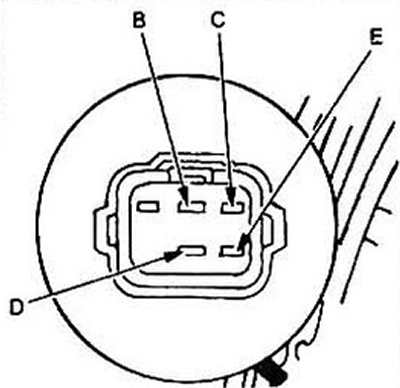
Fig. 5.8a. Distributor connector contacts…

Fig. 5.8a. Distributor connector contacts arrangement for two-point injection
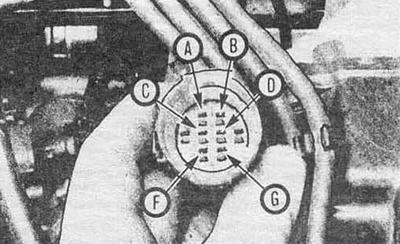

Fig. 5.8b Location of distributor connector…

Fig. 5.8b Location of distributor connector contacts for multi-point injection


9. Check the conductivity from contacts E, D, B and C (two-point injection) or from contacts C, D, A and B (multipoint injection) to the "mass". There should be conductivity.


10. If the ECU lamps display code 9, measure the resistance between terminals F and G. Compare with the specification data.

11. Check the conductivity from contacts F and G to ground. There should be conductivity.

12. If you have any difficulties, contact a service station.

Replacement


13. If any of the above tests fail, replace the distributor (see Chapter 5).
This article is available at: russian, bulgarian, belarusian, ukrainian, serbian, croatian, romanian, polish, slovak, hungarian
This information has been verified: Yaroslav Shiryaev
Share with friends:
◀ Previous
Civic 3 and 4: Emission control system
Next ▶

Absolute pressure sensor — inspection and replacement
Oxygen sensor — control and replacement
Self-diagnostic system — description and error codes
General information about the emission control system
Emission Control System Specifications
Throttle Position Sensor — Checking and Replacing
Air Flow Control Valve (1988 and Later Models) — Inspection and Replacement
Air temperature sensor (models with injection) — control and replacement
Crankcase ventilation system
Fuel vapor recovery system
See also other articles from Honda manuals:
Checking the condition and replacing the TDC/Crankshaft Position… Honda Accord 6 (1997-2002)
Reset and write parameters of the crankshaft position sensor Honda Fit 1 (2001-2008)
Crankshaft Angle Sensor — Checking, Removing and Installing Honda CR-V 1 (1995-2001, petrol)
Checking the starter brushes Honda HR-V 1 (1998-2006, petrol)
Replacing the TDC/Crankshaft Sensor Honda Avancier 1 (1999-2003, petrol)
Link in different formats to this article
Comments and feedback from visitors
No comments yet


How much will 32 + 10 ?


Civic 8 (2005-2011) 
  • General information
  • Technical data
  • Governing bodies
  • Driving and maintenance
  • Power unit
  • Gasoline engines (L13A)
  • Gasoline engines (R18A)
  • Diesel engines (N22A)
  • Cooling and lubrication (L13A)
  • Cooling and lubrication (R18A)
  • Cooling and lubrication (N22A)
  • Injection system (gasoline)
  • Injection system (diesel)
  • Toxicity reduction system
  • Troubleshooting
  • Transmission
  • Clutch and drive shafts
  • Mechanical gearbox
  • Chassis and running gear
  • Suspension and wheels
  • Steering
  • Brake system
  • Body and interior
  • Exterior (external elements)
  • Doors, locks and windows
  • Electrical equipment
  • Equipment and devices
  • Headlights and lighting
  • Power devices
  • Electrical circuits
Civic 7 (2000-2005) 
  • General information
  • User manual
  • Maintenance
  • Power unit
  • Engines D15B and D17A
  • K20A Engines
  • Overhaul engine
  • Cooling system
  • Lubrication system
  • Fuel injection system
  • Toxicity reduction system
  • Engine electrical equipment
  • Transmission
  • Clutch
  • Manual gearbox
  • Automatic gearbox
  • Variator (CVT)
  • Drive shafts
  • Chassis and running gear
  • Car suspension
  • Steering
  • Brake system
  • Body and interior
  • Exterior (external elements)
  • Interior (internal elements)
  • Doors, locks and windows
  • Heater and air conditioner
  • Manual air conditioner
  • Automatic air conditioner
  • Security system
  • Electrical equipment
  • Equipment and devices
  • Headlights and lighting
  • Windscreen wipers
  • Audio system
  • Electrical diagrams
Civic 6 (1995-2000) 
  • General information
  • Introduction to guide
  • User manual
  • Maintenance
  • Power unit
  • Engine in car (Civic)
  • Engine in car (Integra)
  • Engine overhaul
  • Cooling and heating
  • Power and exhaust systems
  • Engine electrical equipment
  • Engine management systems
  • Transmission
  • Manual gearbox
  • Automatic transmission (AT/CVT)
  • Clutch and drive shafts
  • Chassis and running gear
  • Brake system
  • Car suspension
  • Steering
  • Body and interior
  • Exterior (external elements)
  • Interior (internal elements)
  • Doors, locks and windows
  • Electrical equipment
  • Equipment and devices
  • Electrical circuits
Civic 5 and 6 (1991-2000) 
  • Power unit
  • SOHC engines
  • DOHC engines
  • Engine overhaul
  • Cooling and lubrication system
  • Intake and exhaust system
  • Fuel injection system (SOHC)
  • Fuel injection system (DOHC)
  • Carburetor
  • Transmission
  • Clutch
  • Manual gearbox S4C
  • Manual gearbox S40
  • Automatic gearbox
  • Drive shafts
  • Chassis and running gear
  • Car suspension
  • Steering
  • Brake system
  • Body and interior
  • Body elements
  • Heater and air conditioner
  • Electrical equipment
  • Power devices
  • Equipment and instruments
  • Electrical circuits
Civic 3 and 4 (1983-1991) 
  • General information
  • Maintenance
  • Power unit
  • Engine in a car
  • Engine overhaul
  • Cooling system
  • Power and exhaust system
  • Engine electrical equipment
  • Emission control system
  • Transmission
  • Mechanical gearbox
  • Automatic gearbox
  • Clutch and drive shafts
  • Four-wheel drive
  • Chassis and running gear
  • Brake system
  • Car suspension
  • Steering
  • Body and interior
  • Body elements
  • Electrical equipment
  • Equipment and devices
  • Electrical circuits
HondaBook.ru © 2018–2026 • Mobile version • Sitemap: EN BG BY UA RS HR RO PL SK HU • Feedback • Driver Information • Search system • Bookmark
Accord 3 (1985-1989) • Accord 6 (1997-2002) • Civic 3 and 4 (1983-1991) • Civic 5 and 6 (1991-2000) • Civic 6 (1995-2000) • Civic 7 (2000-2005) • Civic 8 (2005-2011) • Fit 1 (2001-2008) • CR-V 1 (1995-2001) • CR-V 2 (2002-2006) • HR-V 1 (1998-2006) • Avancier 1 (1999-2003) •
 
This website uses cookies to ensure proper functioning. By clicking "OK," you agree.