
Note: Do not spill brake fluid on the car body - this may cause destruction of the paintwork. If brake fluid gets on the paintwork, wash it off immediately with water.
1. Remove the air purifier.
2. Make sure the ignition is off, then disconnect the negative battery cable and remove it from the engine compartment.
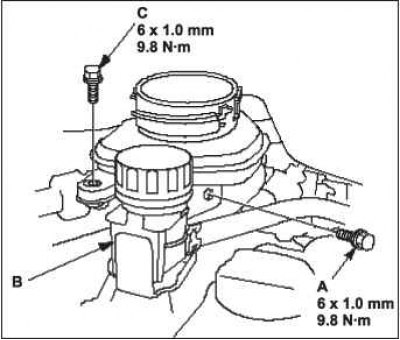
3. Remove the reservoir cap and use a syringe to pump out the brake fluid from the master cylinder reservoir, then unscrew the bracket mounting bolt A and the clutch master cylinder expansion tank B.
4. Remove bolt C securing the expansion tank.
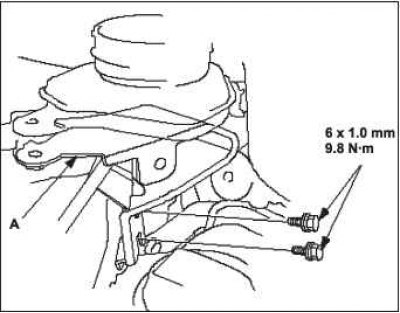
5. Remove the expansion tank bracket A.
6. Disconnect the electrical connector A of the brake fluid level indicator in the reservoir.
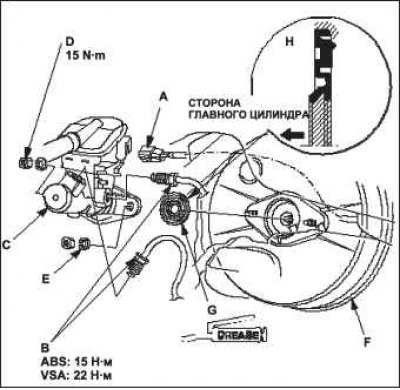
7. Disconnect the pipes B from the master brake cylinder C. To prevent the brake fluid from leaking out, it is necessary to close the holes in the disconnected pipes with special plugs or simply small pieces of rags.
8. Unscrew nuts D and washers E securing the master cylinder.
9. Disconnect the master cylinder from the brake booster F. Be careful not to damage the brake lines when removing the master cylinder.
10. Remove the G-rod seal from the master cylinder.
Note: When installing, insert the new rod seal into the master cylinder with the grooved side H facing it.
11. Install the brake master cylinder in the reverse order of removal. Note the following:
Replace the stem seal upon installation.
Lubricate the inner edge and seat diameter of the master cylinder piston rod seal with silicone grease from the repair kit.
Check the brake pedal height and free travel. Make adjustments if necessary.
12. Install the battery and connect the negative battery cable. Set the clock to the correct time.
13. Bleed the brake system.
14. Spin the wheels to check the rolling resistance.