
Contents: Positions of the range selector lever ⇊ Cars with five-speed transmission ⇊ Cars with six-speed transmission ⇊ Positions of the range selector…⇊ Cars with five-speed transmission ⇊ Cars with six-speed transmission ⇊
The original design of the continuously variable transmission installed on Honda vehicles allows for smooth changes in the transmission ratio without interrupting the power flow. The variator is controlled by an electronic unit, which ensures high accuracy of gear ratio regulation and high fuel efficiency of the vehicle.
Positions of the range selector lever
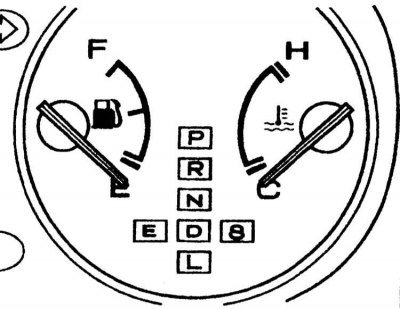
The instrument panel contains indicators that allow you to easily monitor the position of the continuously variable transmission range selector and the active CVT mode.
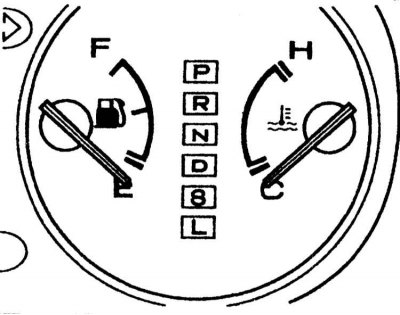
Indicator D lights up for a few seconds when the ignition is turned on (the key is turned in the lock to position II). If the D indicator flashes while the vehicle is moving (regardless of the position of the range selector lever), this indicates a possible transmission malfunction. In this case, avoid sudden acceleration of the car and contact a Honda service station to check and repair the transmission.
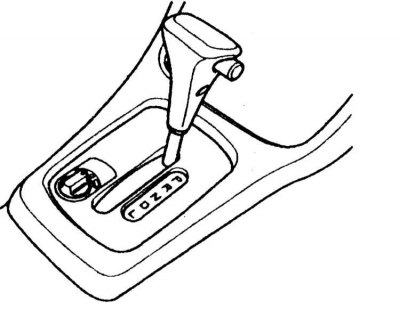
Depending on the vehicle modification, the range selector lever may have five or six locking positions. When starting the engine, the selector lever should only be in the P (Park) or N (Neutral) position. If you stop the vehicle when one of the D, S ranges is engaged, (available only on the six-speed transmission modification), L, N or R, then you must fully release the accelerator pedal and press the brake pedal to reliably brake the car. When starting the car on an incline, you must simultaneously apply the parking brake along with the service brake system.
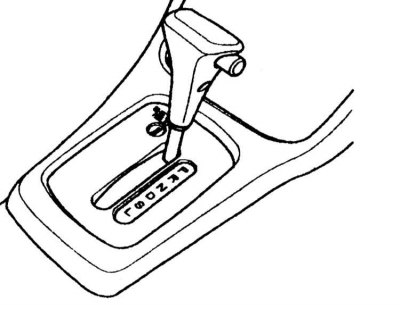
Certain shifts of the range selector lever can only be made by simultaneously pressing the locking button, which is located on the side of the handle.
Cars with five-speed transmission
Shifting the range selector lever with the lock button pressed
- From position P to R
- From position R to P
- From position N to R
- From position D to L
Range selector lever shifts that do not require pressing the release button
- From position N to D
- From position D to N
- From position L to D
- From position R to N
Cars with six-speed transmission
To shift the gear selector lever from position P to position R, you must simultaneously press the brake pedal and the release button.
Shifting the range selector lever with the lock button pressed
- From position R to P
- From position N to R
- From S to L position
Range selector lever shifts that do not require pressing the release button
- From position N to D
- From position D to N
- From L to S position
- From position D to S
- From S to D position
- From position R to N
Positions of the range selector lever and mode switch
R (Parking)
In this position of the selector lever, the output shaft of the transmission is mechanically locked. Always engage the selector lever in the P (Park) position when switching off or starting the engine. In order to move the selector lever out of the P (Park) position, it is necessary to press the brake pedal, having previously released the accelerator pedal. Press the locking button located on the side of the lever handle and disengage the lever from the P (Park) position.
If, on a vehicle equipped with a selector lever release device, after all the above steps it is still not possible to move the selector lever out of the P (Park) position, it is necessary to release the selector lever using the ignition key, see. Automatic transmission.
To engage the range selector lever in the P (Park) position, you must also press the locking button. To avoid damage to the transmission, engage the lever in the P (Park) position only after the vehicle has come to a complete stop.
On a vehicle equipped with a selector lever release device, you can remove the key from the ignition switch only when the selector lever is in the P (Park) position.
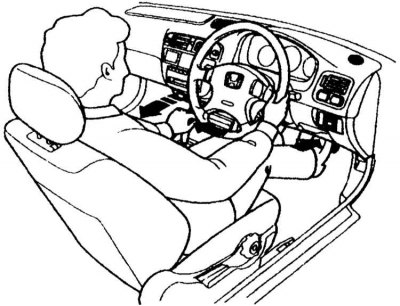
R (Reverse)
Methods of switching the range selector lever between the R positions (Reverse) and P (Parking) are described above. Switch the lever to position R from position N (Neutral) only after the car has come to a complete stop, and you must press the locking button located on the side of the lever handle.
N (Neutral)
Use the N (Neutral) position when starting a stalled engine while the vehicle is moving and when briefly stopping the vehicle with the engine running. If you need to leave the vehicle for any reason, first move the selector lever to the P (Park) position. Press the brake pedal when disengaging the range selector lever from the N (Neutral) position.
Cars with five-speed transmission
D (Movement)
The selector lever should be in this position at all times when the vehicle is moving under normal road conditions. In the D range, the transmission can operate in one of three modes: normal, sport (dynamic) and economical.
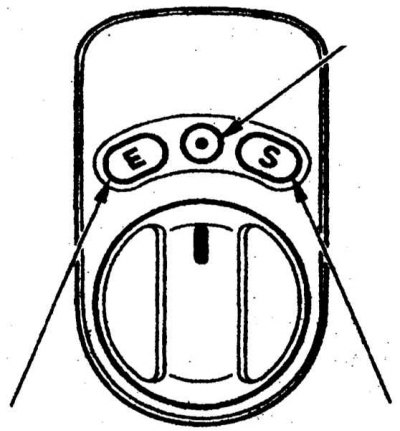
The transmission operating modes are switched using a rotary handle located near the range selector lever. The mode that is on is displayed by a corresponding indicator on the instrument panel.
Normal mode
It is intended for predominant use in normal vehicle operating conditions. The continuously variable transmission control system, by adjusting the transmission ratio, ensures engine operation in the optimal crankshaft speed range. The normal mode is switched on when the switch handle is in the middle position.
Sports, (dynamic) mode
Provides for the use of a wider range of gear ratios of the continuously variable transmission to improve the vehicle's responsiveness. To activate this mode, turn the selector knob to the S position. Sport (dynamic) the transmission operating mode can be switched on and off at any time.
Economy mode
Provides for the use of the upper part of the continuously variable transmission ratio range to improve the vehicle's fuel economy. To activate this mode, turn the selector knob to position E. The transmission's economy mode can be switched on and off at any time.
Position L (Lower subrange)
To move the selector lever from position D (Drive) to position L, press the locking button located on the side of the lever handle. The L range is recommended for improving the vehicle's traction properties when climbing hills, as well as for more intensive engine braking on descents. To accelerate the vehicle sharply when the transmission is operating in the D or L range, press the accelerator pedal all the way down. This will shift the continuously variable transmission to the lower gear ratios.
Cars with six-speed transmission
Position D (Movement)
The selector lever should be in this position at all times when the vehicle is moving under normal road conditions. The continuously variable transmission control system automatically adjusts the transmission gear ratio, maintaining engine operation in the optimum crankshaft speed range. If the engine is not warmed up to normal operating temperature, the transmission will operate at lower gear ratios, which ensures faster engine warm-up.
Position S (Reduced range)
When the selector lever is engaged in the S position, the continuously variable automatic transmission operates at lower gear ratios than in the D range. This improves engine braking response. The S range is recommended for driving in hilly areas and in heavy traffic with frequent slowdowns and stops.
Position L (Lower subrange)
To move the selector lever to the L position, press the locking button located on the side of the lever handle. The L range is recommended for improving the vehicle's traction properties when climbing hills, as well as for intensive engine braking on steep descents.
To accelerate the car sharply when the transmission is in the D, S or L range, press the accelerator pedal all the way down. This will cause the continuously variable transmission to move into the lower gear ratios.