
Contents: Inspection of the guide bearing ⇊ Replacing the guide bearing ⇊ Checking the flywheel ⇊ Flywheel replacement ⇊ Installing the pressure and friction…⇊
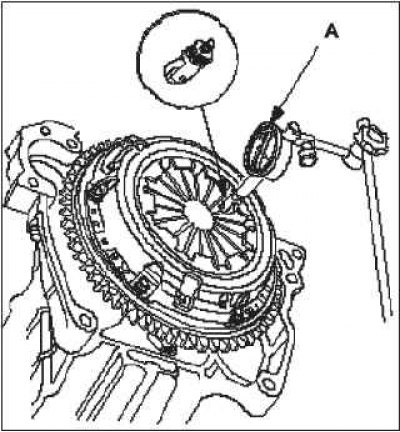
1. Check the position of the diaphragm spring petals using the dial indicator A. If the dial indicator readings go beyond the operating value, replace the pressure spring.
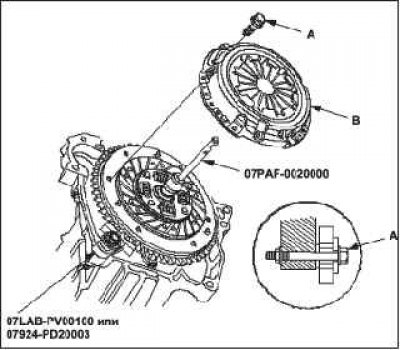
2. Install the special tool.
3. To prevent deformation, unscrew the bolts securing the pressure plate A crosswise in several steps. Then remove the pressure plate.
4. Check the surface of pressure plate A for wear, cracks and signs of overheating.
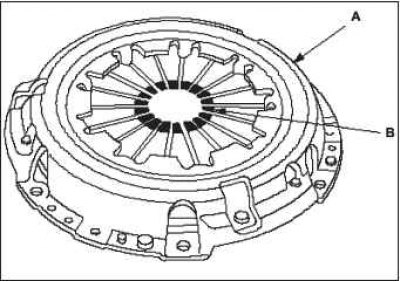
5. Check the petals of diaphragm spring B for wear in the area of contact with the release bearing.
 |
 |
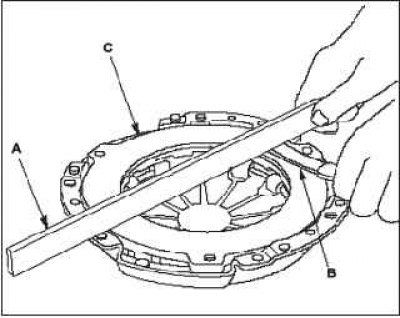
6. Check that the control ruler A and the calibrated feeler gauge B are not deformed. Take measurements along the diagonal of the pressure plate C. If the measurement results are outside the working value, replace the pressure plate.
- Standard (new): 0.03 mm.
- Working range: max 0.15mm.
7. Remove the pressure plate and special tool.
8. Check the clutch friction disc for traces of oil. If the friction disc is blackened from overheating or is oily, replace it.
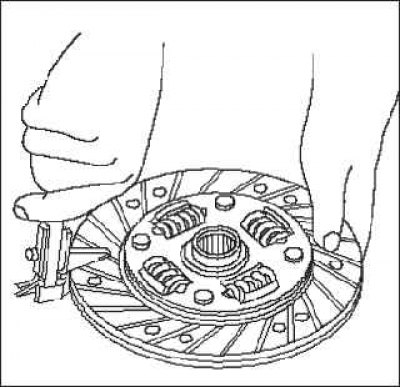
9. Measure the thickness of the friction disc. If the measurement results are outside the working value, replace the friction disc.
- Standard (new): 7.15-7.85 mm.
- Working range: maximum 5.0mm.
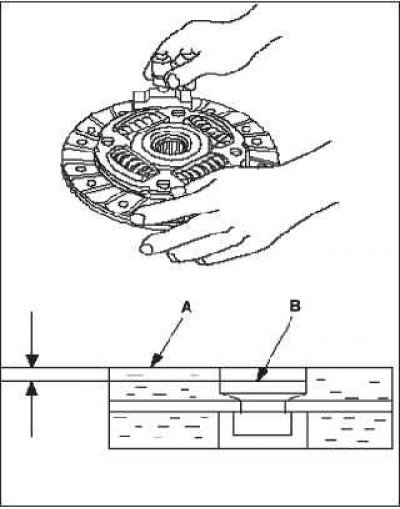
10. Measure the distance from the surface of the friction linings A to the heads of the rivets B on both sides of the disc. If the measurement results are outside the working value, replace the friction disc.
- Standard (new): 0.9-1.4 mm.
- Working range: maximum 0.2mm.
 |
 |
Inspection of the guide bearing
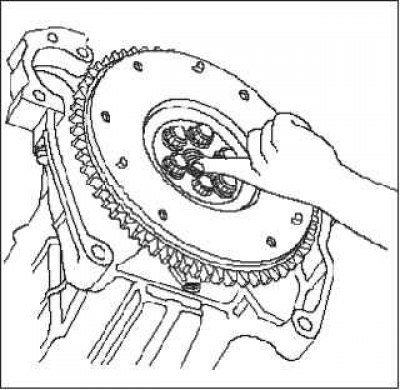
1. Turn the inner race of the pilot bearing with your finger. Turn the pilot bearing smoothly and quietly. Make sure that the outer race of the pilot bearing fits tightly to the flywheel. If the race does not turn smoothly, quietly, or does not fit tightly to the crankshaft, replace the pilot bearing.
Replacing the guide bearing
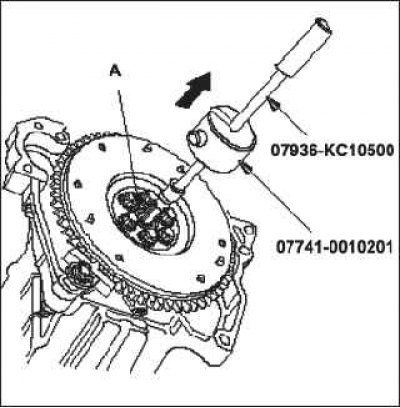
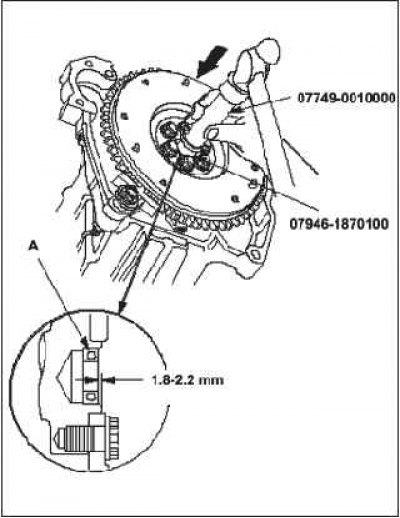
1. Remove the guide bearing A using a special tool.
2. Install the new pilot bearing A into the crankshaft using the special tool. Lightly lubricate the bearing surface.
 |
 |
Checking the flywheel
1. Check the flywheel ring gear for wear and damage.
2. Check the contact surface of the flywheel with the clutch friction disc for wear, cracks and signs of overheating.
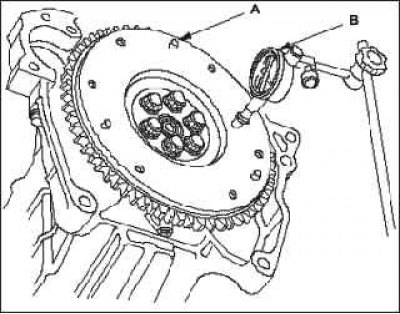
3. Measure the wear of the flywheel friction surface A using a dial indicator by rotating the flywheel installed on the engine at least two revolutions. Press on the flywheel as it rotates to eliminate the influence of the clearance in the crankshaft bearings on the measurement results. If the wear exceeds the operating values, replace the flywheel and check again. Regrinding the flywheel surface is not recommended.
- Standard (new): 0.1 mm.
- Working range: max 0.2mm.
 |
 |
Flywheel replacement
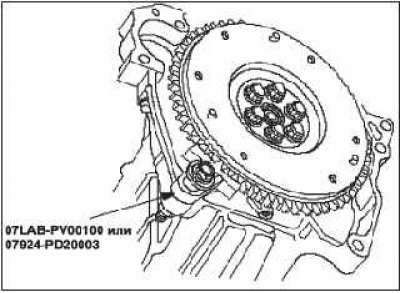
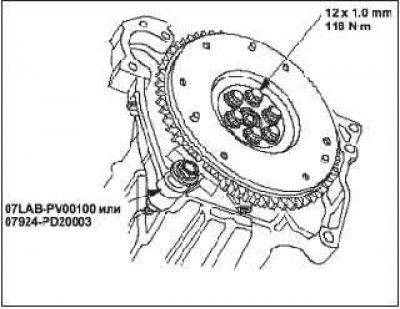
1. Install the special tool.
2. Unscrew the flywheel mounting bolts crosswise in several steps. Then remove the flywheel.
3. Install the flywheel on the crankshaft and tighten the mounting bolts.
4. Install the fixture and tighten the flywheel mounting bolts crosswise in several steps.
 |
 |
Installing the pressure and friction discs
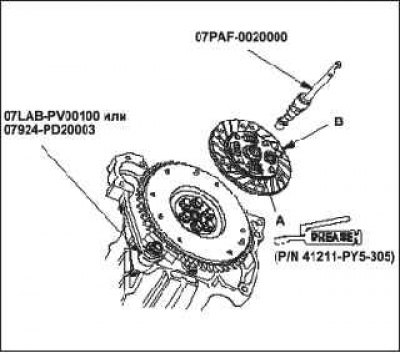
1. Install the ring gear holder.
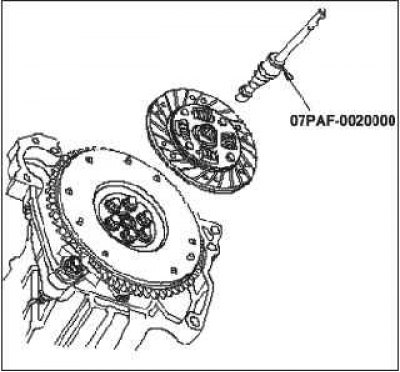
2. Apply UM 264 grease (P/N 41211-PY5—305) to splines A on clutch disc B, then install the clutch disc using special tools.
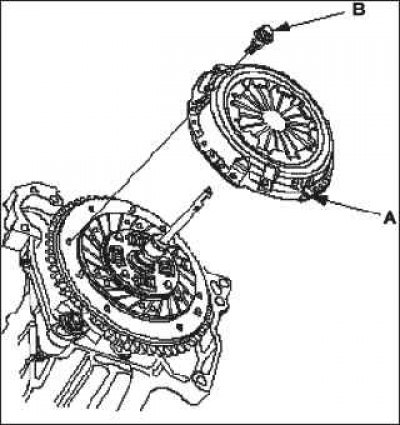
3. Install pressure plate A and tighten mounting bolts B.
4. Tighten the mounting bolts crosswise. Tightening should be done in several stages to prevent deformation of the diaphragm spring.
5. Remove the special tool.
 |
 |
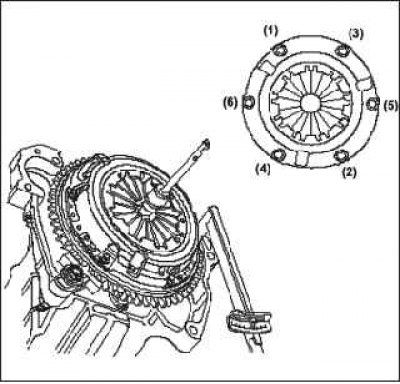
6. Make sure that the diaphragm spring petals are at the same height.
The text can be found on the website hondabook.ru