
Measure the voltage between pins 16 (Pink (+)) and 32 (Black (-)).
If the voltage is less than 3 V, then see point A), if not - point B).
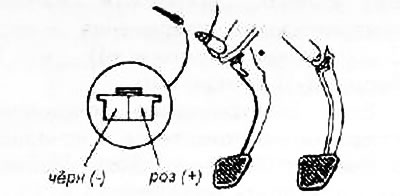
A) Press the clutch pedal.
Measure the voltage between pins 16 (Pink (+)) and 32 (Black (-)).
If there is battery voltage, then the clutch switch signal is normal.
If there is no voltage, then the ignition should be turned off.
Next, disconnect the 2-pin connector on the clutch switch.
Turn on the ignition.
Measure the voltage between pins 16 (Pink (+)) and 32 (Black (-)).
If there is no battery voltage, then the control unit should be replaced and the checking procedure repeated. If there is voltage, then you should press the clutch pedal.
Next, check for electrical continuity between the two contacts on the clutch switch.
If there is an electrical connection, then the short circuit of the Pink wire between the clutch switch and terminal 16 of the control unit should be eliminated.
If there is no electrical connection, the clutch switch should be replaced.
B) Turn off the ignition.
Disconnect the 2-pin connector on the clutch switch.
Check for electrical continuity between the two contacts on the clutch switch.
If there is an electrical connection, the clutch switch should be replaced.
If there is no electrical connection, then the ignition should be turned on.
Next, measure the voltage between the Pink contact and ground.
If there is no voltage, then you should repair the break in the Pink wire between the clutch switch and terminal 16 of the control unit.
If there is no battery voltage, then the break in the Black wire between the clutch switch and point G10 should be repaired.