


Contents: Heating, ventilation and air…⇊ Cars with 5-door hatchback body ⇊ Recommendations for the operation of…⇊ Turning off heating and ventilation…⇊
When the heating and ventilation system of your car is used correctly, comfortable living conditions are provided in the cabin and fogging of the windows is prevented.
If your car was not equipped with an air conditioning system when you bought it. You can install this system on your car at any time. To do this, contact a Honda service station to equip your car with an air conditioning system manufactured at Honda factories and meeting all the requirements of our company.
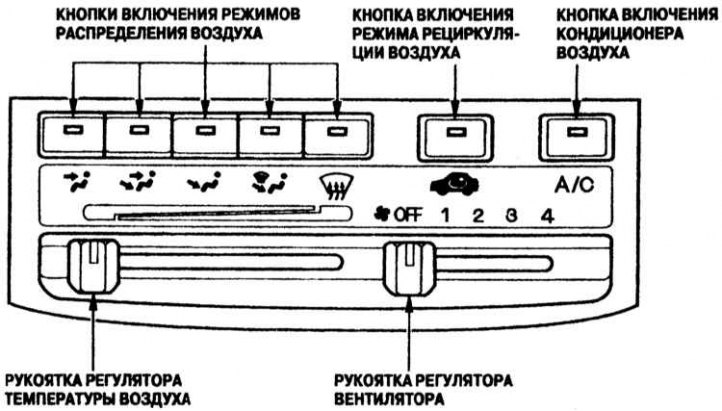
Heating, ventilation and air conditioning control panel
Fan control handle
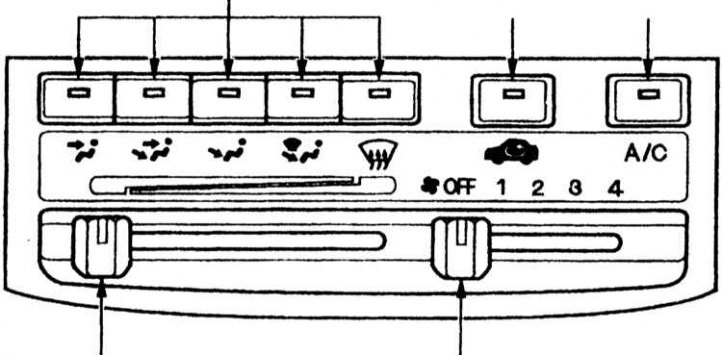
Moving the handle to the right increases the fan speed and air supply to the vehicle interior.
Air temperature control knob
Moving the handle to the right increases the temperature of the air entering the vehicle interior.
Air conditioner power button (individual models)
The A/C button is used to turn the air conditioner on and off. When the air conditioner is on, the indicator built into the button lights up.
Air recirculation mode activation button
The button is designed to turn the air recirculation mode on and off.
With recirculation mode on (what does the lit indicator built into the button indicate?) the car interior is isolated from the atmosphere and the supply of fresh air to the interior is stopped. The fan ensures air circulation in a closed circuit. If you press the button again and turn off the recirculation mode (the indicator built into the button will go out), fresh outside air from the atmosphere will begin to flow into the cabin.
Air distribution mode activation buttons
The buttons are used to select the air distribution mode.

Outside air enters the passenger compartment through the central and side ventilation deflectors located in the control panel.

Outside air enters the passenger compartment simultaneously through the central and side ventilation deflectors in the control panel and the lower ventilation nozzles, which provide air supply to the foot area of the driver and passengers.

Outside air enters the cabin only through the lower ventilation nozzles, which provide air supply to the driver's and passenger's foot area.

Outside air enters the passenger compartment simultaneously through the windshield and side window blower nozzles located on the upper shelf of the control panel, and through the lower ventilation nozzles.

Outside air is supplied to blow air onto the windshield and side windows through nozzles located on the upper shelf of the control panel.
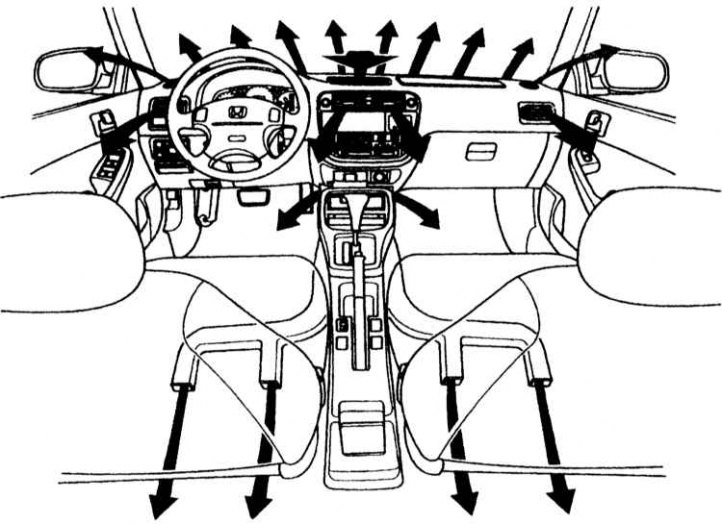
Cars with 5-door hatchback body
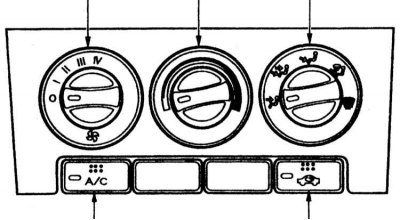
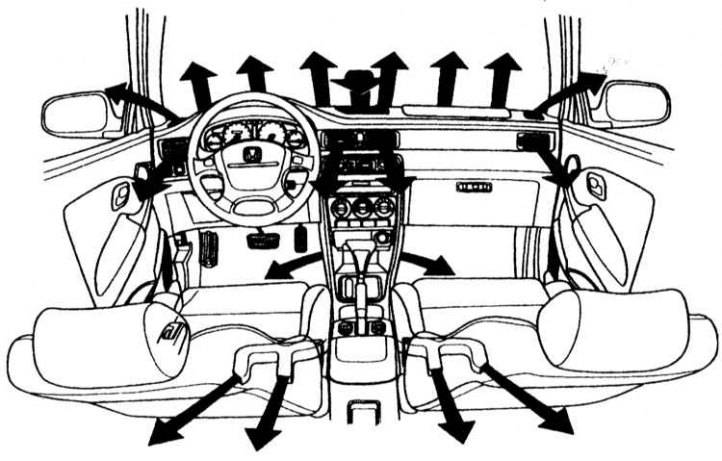
Control of deflectors
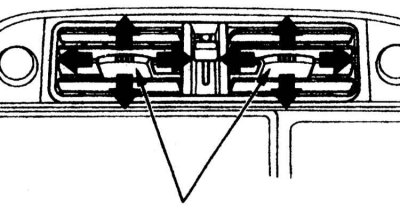
You can adjust the direction of the air flow coming into the cabin from the deflectors using the controls. Direct the air in the desired direction by moving the deflectors' levers left-right and up-down.
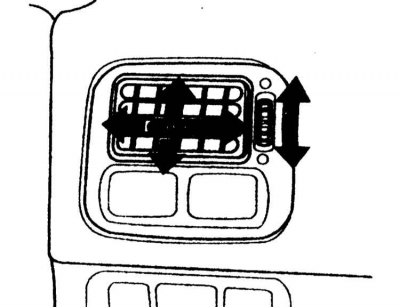
The air supply through the side air vents located on the left and right side of the control panel can be completely stopped. To close or open a side air vent, turn the control located on the side of the air vent.
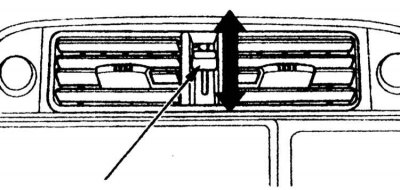
The deflector, located on the upper shelf of the control panel, can be opened or closed using the lever, which is located between the central ventilation deflectors.
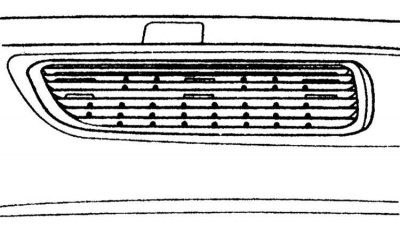
If one of the air distribution modes is enabled
 or
or  , then in the upper position of the lever, air will enter the car's interior simultaneously through the central and upper ventilation deflectors. To stop air flow through the upper deflector, lower the lever completely down.
Recommendations for the operation of the heater and air conditioner
The interior heating and air conditioning systems require the vehicle's engine to be running in order to function. The heater uses hot engine coolant to warm the air entering the interior. If the engine is not at normal operating temperature, it will take several minutes before warm air begins to flow into the interior.
In the vast majority of cases, the best results of systems providing a comfortable microclimate are achieved in the mode of outside air intake into the passenger compartment. Long-term activation of the air recirculation mode, especially when the air conditioner is not working, leads to fogging of the windows. Therefore, it is recommended to activate the air recirculation mode only if necessary and for a short time, for example, when driving in an area with a smoky or polluted atmosphere. As soon as the need to isolate the car interior from the atmosphere has disappeared, turn off the air recirculation mode.
Outside air enters the heating and air conditioning systems through the intake grille located in front of the windshield. Periodically clean the openings of the intake grille from leaves and other debris that obstruct the passage of air.
Car interior ventilation
The supply and exhaust ventilation system ensures a constant exchange of air in the car's interior. Fresh outside air, entering through the front intake grille, circulates through the interior and is then removed through the outlet openings located near the rear window.
1. Move the temperature control knob to the extreme left position. Make sure the air conditioner is turned off.
2. Turn on the air distribution mode
 , pressing the corresponding button. The air recirculation mode must be turned off.
3. Use the fan control knob to set the desired level of air supply to the passenger compartment.
Cooling the air in the car interior (individual models)
1. Turn on the air conditioner by pressing the corresponding button. The indicator light built into the button should light up.
2. Check that the air temperature control handle is in the extreme left position.
3. Turn on the air distribution mode
 , pressing the corresponding button. The air recirculation mode must be turned off.
4. Use the fan control knob to set the desired level of air supply to the passenger compartment.
If your car has been parked in the sun for a long time and the air inside the car has become very hot, you can quickly reduce the air temperature inside the car as follows.
1. Start the engine.
2. Turn on the air conditioner by pressing the corresponding button. Check that the air temperature control knob is in the extreme left position.
3. Use the fan control knob to set the maximum air flow into the passenger compartment.
4. Open the windows slightly and turn on the air distribution mode
 , by pressing the appropriate button. The air recirculation mode should be turned off. After the air temperature in the cabin has dropped to an acceptable level, close the windows and set the normal air conditioning mode as described above.
Operating the air conditioning system places additional strain on the vehicle's engine. Therefore, watch the coolant temperature gauge carefully when driving at low speed in traffic jams or when climbing steep, steep hills. If the gauge moves toward the red zone, temporarily turn off the air conditioning until the engine temperature returns to normal.
Heating the car interior
To raise the air temperature inside the car, do the following.
1. Start the engine.
2. Turn on the air distribution mode
 , pressing the corresponding button. The air recirculation mode must be turned off.
3. Use the fan control knob to set the desired level of air supply to the passenger compartment.
4. Move the air temperature control handle to set the desired degree of heating of the air entering the passenger compartment.
Heating the interior with simultaneous air dehumidification (individual models)
When the air conditioning system is operating, the air humidity decreases. Therefore, turning on the heater and air conditioner simultaneously allows you to make the air in the car warm and dry.
1. Turn on the fan.
2. Turn on the air conditioner.
3. Turn on the air distribution mode
 , pressing the corresponding button. The air recirculation mode must be turned off.
4. Move the air temperature control knob to set the desired degree of heating of the air entering the passenger compartment. In this mode, cold air from the air conditioner mixes with warm air from the heater.
The combined activation of the heating and air conditioning systems can be used in all driving conditions when the ambient temperature is above 0°C.
Removal moisture and frost from glass
You can clean the inner surfaces of glass from condensed moisture in the following way.
1. Turn on the fan.
2. Turn on the air conditioner (on some vehicle modifications).
3. Turn on the windshield defroster mode
 , pressing the corresponding button. The air recirculation mode must be turned off.
4. Move the air temperature control handle to set the desired degree of heating of the air supplied to blow air onto the glass.
5. Turn on the rear window heater to quickly remove condensed moisture from its surface.
To remove frost or ice from the outer surface of the glass that has formed after parking the car outside in frosty weather, do the following.
1. Start the car engine.
2. Turn on the windshield defroster mode
 , pressing the corresponding button. The air recirculation mode must be turned off.
3. Move the air temperature control handle to the extreme right position (maximum air heating) and turn on the fan to maximum air flow.
To clear the windshield of frost or ice more quickly in very cold weather, it is recommended to first turn on the air recirculation mode. After the windshield is clear of frost or ice, turn off the air recirculation mode to prevent the glass from fogging up.
In the windshield defrost mode, all air enters the passenger compartment through the slot nozzles located on the upper shelf of the control panel at the base of the windshield and through the side ventilation deflectors, which are located at the edges of the control panel. The temperature of the air blowing on the glass and the speed of cleaning the glass increase as the engine warms up. To more quickly remove condensation, frost or ice from the windshield, you can close the side ventilation deflectors by turning the corresponding controls down. In this case, all the air will go only to defrost the windshield.
For safety reasons, do not drive until all windows are clear of condensation, frost or ice and you have a clear view from the vehicle.
Turning off heating and ventilation systems
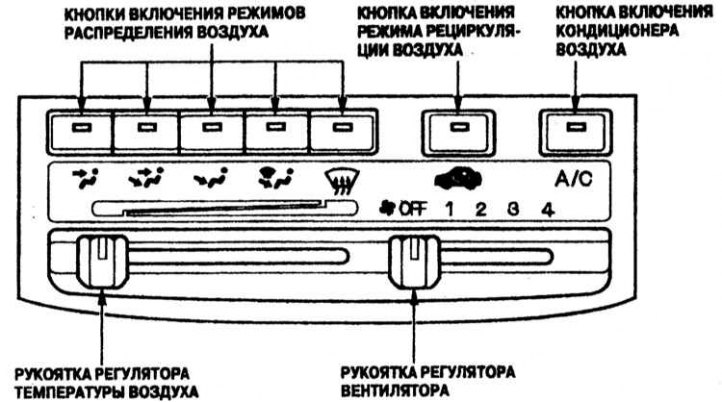
To temporarily turn off the heating and ventilation systems, move the fan and air temperature control handles to the far left position.
It is necessary to turn off the heating system in the first few minutes after starting the engine in cold weather. This ensures faster warming up of the engine to a temperature sufficient for the effective operation of the heater. In all other cases, keep the fan constantly on to avoid accumulation of stale air in the cabin.