
Contents: Cars with 5-door hatchback body ⇊ Cars with 3-door hatchback body ⇊ Cars with 5-door hatchback body ⇊ Cars with 3-door hatchback body ⇊ Cars with 5-door hatchback body ⇊ Cars with 5-door hatchback body ⇊ Cars with 3-door hatchback body ⇊
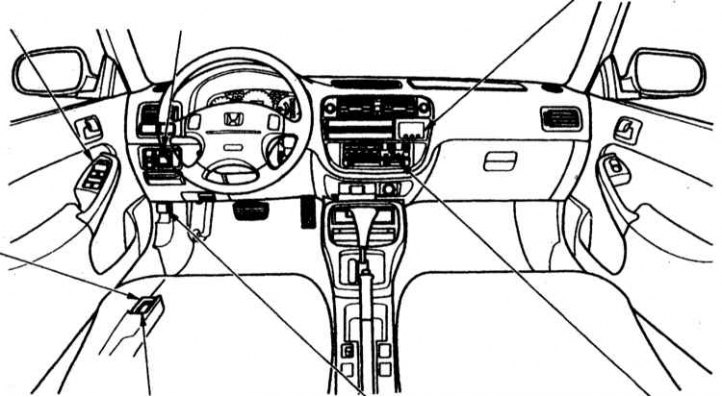
Cars with 5-door hatchback body
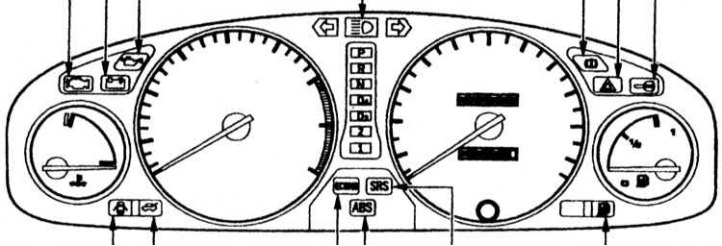
The instrument panel and climate control panel differ from those shown in the illustration. All differences are described in detail below in the relevant Sections.
The power window switches are located in two places: in front of the driver's door armrest handle and on the center console near the parking brake lever.
The dashboard contains many indicators and signaling devices, with the help of which the driver receives important information about the functioning of the vehicle's units and systems.
Checking the serviceability of light signaling devices and indicators
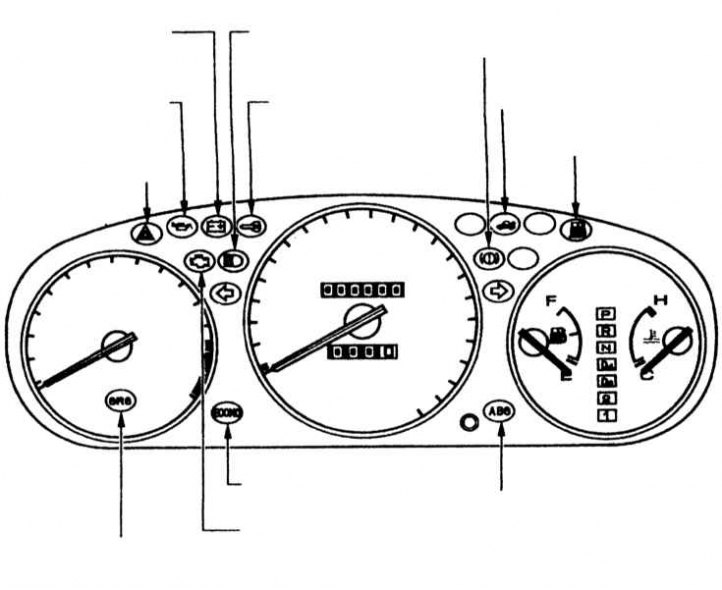
Most of the alarms and indicators should light up briefly when the ignition is turned on (the ignition key is turned to position III. This is intended to check the serviceability of the alarms and indicators. If any alarm or indicator does not light up when the ignition is turned on, you will not be able to receive a timely signal about a failure or abnormal operation of the corresponding unit or system of the car. If a malfunction of the alarm or indicator is detected, the lamp should be replaced or the necessary repairs should be carried out.
Engine oil pressure drop indicator

This indicator should light when the ignition is turned on (the key is turned to position II) and go out after the engine starts. The indicator should not light when the engine is running. If the indicator starts to blink, this indicates a short-term sharp drop in pressure in the engine lubrication system, after which the oil pressure is restored to normal. If the indicator lights up constantly while the engine is running, this indicates an emergency drop in oil pressure to a dangerous level. Serious damage and engine failure are possible. In both cases (when the indicator light flashes or stays on) urgent measures should be taken, which are described below.
Attention! Engine operation with low pressure in the lubrication system leads almost immediately to engine failure due to serious mechanical damage to critical parts. Therefore, when the emergency oil pressure drop indicator comes on, you must immediately stop and quickly turn off the engine.
1. Pull over to the side of the road or to the edge of the roadway, stop the car and turn off the engine.
2. After waiting one minute, open the hood and check the engine oil level. Although engine oil level and lubrication system pressure are not directly related, a short-term drop in pressure when the vehicle is cornering or making other abrupt maneuvers may be due to a very low oil level in the engine oil pan.
3. If necessary, add oil to the engine and bring the oil level to the norm, using the marks on the oil dipstick as a guide, see Chapter Routine maintenance.
4. Start the engine and watch the oil pressure warning light. If the light does not go out within 10 seconds of starting the engine, turn off the engine. This indicates serious engine faults that must be corrected before the vehicle can be driven. (Refer to Section Jacking and towing)
Low battery indicator

This indicator should light when the ignition is turned on (the key is turned to position II) and go out after the engine starts. If the indicator comes on while the engine is running, this indicates that the battery has stopped charging from the generator.
When the indicator lights up, immediately switch off all electrical energy consumers: car radio, heater, rear window heater, air conditioner, cruise control, etc. Do not turn on electric windows or other drives and devices that consume electrical energy. Try to keep the engine running steadily so that it does not stall. Subsequent engine start-up will result in a strong additional discharge of the battery.
By reducing the electrical load on the battery as much as possible, you can drive a few more kilometers before the battery is discharged so much that it cannot support normal engine operation. When the battery discharge indicator comes on, immediately go to a service station or workshop where they will help you fix the problem.
Trunk lid open indicator

The indicator turns on when the trunk lid is open or not closed tightly.
High beam indicator

The indicator lights up simultaneously with the high beam headlights. The light switch and headlight switch are described later in this Section.
Engine system malfunction indicator

This indicator lights up for a few seconds when the ignition is turned on (the key is turned in the ignition switch to position II). If the indicator comes on at any other time, this indicates a possible malfunction of one of the emission control systems. Even if you do not notice any changes in engine operation or deterioration in vehicle dynamics, malfunctions of these systems may cause increased fuel consumption and engine toxicity. Continued operation of the vehicle with the indicator on may result in serious engine damage and failure.
If the engine system malfunction indicator comes on while the vehicle is moving, stop in a safe place on the side of the road or at the edge of the roadway and turn off the engine. Then start the engine again and watch the indicator. If the indicator remains on, you must immediately contact a service station to check and repair the engine systems. Until the engine system malfunctions are eliminated, drive the vehicle at a moderate speed. Avoid sudden acceleration of the vehicle by fully pressing the accelerator pedal and do not drive at high speed.
Even if the engine malfunction indicator goes out after turning off and restarting the engine, you should contact a service station if the indicator turns on quite often while the car is moving.
Warning! Continued operation of the vehicle with the engine malfunction indicator on may cause serious damage to the catalytic converter or engine. Defects caused by operating the vehicle with the engine malfunction indicator on are not covered by the warranty.
Parking brake indicator/low brake fluid level indicator

The indicator performs two functions.
1. The indicator lights up when the parking brake is engaged. On some vehicle modifications, the indicator also lights up when the starter is engaged (the ignition key is turned to position III) and the parking brake is off. Driving with the parking brake on leads to overheating and failure of the rear wheel brakes, rapid wear of the tires, and may also cause the anti-lock braking system to turn off.
2. If the indicator remains lit after the parking brake is released or lights up while the vehicle is moving, this may indicate a drop in the working fluid level in the master brake cylinder reservoir. One of the reasons for a gradual decrease in the brake fluid level in the reservoir is normal wear of the brake pads. When the indicator comes on, you should check the condition of the brake pads and the tightness of the hydraulic brake drive.
Direction indicator and hazard warning lights indicators

The direction indicator lights operate simultaneously with the corresponding direction indicator lights. The direction of the arrows on the lights shows the direction of the turn or lane change. If the lights do not flash or flash at an increased rate, this usually indicates that a bulb in one of the direction indicator lights has burned out. Replace the burned-out bulb as soon as possible, since other road users cannot see your direction change signals. Inoperative direction indicators can cause an accident. There are two types of hazard warning systems. Your vehicle is equipped with a hazard warning system that meets the standards applicable in your country. One type of system involves the simultaneous activation of the direction indicator lights (located on the dashboard) and all direction indicator lights. The second type of hazard warning system additionally includes a hazard warning indicator, which is located on the instrument panel.
Non-attached seat belt warning light (for some vehicle modifications)

The indicator lights up when the ignition is turned on (the ignition key is turned to position II). It reminds the driver and passengers to fasten their seat belts. In addition, if you have not fastened your seat belt, an additional audible signal will be activated. The audible signal of an unfastened seat belt will turn off after a few seconds, and the light signal will continue to burn until you fasten your belt. The signaling devices do not turn on if you fasten your seat belt before turning on the ignition.
Anti-lock Brake System (ABS) Malfunction Indicator (individual models)

The indicator should light for a few seconds when the ignition or starter is turned on (the ignition key is turned to position II or III, respectively). If the indicator comes on under any other conditions, it indicates a malfunction in the anti-lock braking system. If the indicator comes on while the vehicle is moving, stop in a safe place and turn off the engine. Try to eliminate the possible malfunction in the system by restarting the engine.
After starting the engine, check the status of the indicator. If it does not turn off or lights up again while the car is moving, you need to contact a service station for diagnostics and repair of the ABS. When the ABS malfunction indicator is on, the working brake system of the car remains fully functional, but the ABS will not work.
Additional security system malfunction indicator
SRS
The indicator is designed to warn the driver about a possible failure of the additional safety system.
If:
- The indicator does not light when the ignition is turned on (the ignition key is turned to position II);
- The indicator continues to light after the engine is started;
- The indicator has turned on and is constantly or flashing while the vehicle is moving – diagnostics and repair of the system are required.
ECONO indicator for economical engine operating modes (individual models)
ECONO
The ECONO indicator helps the driver improve the fuel economy of the car. The indicator turns on when the car engine is operating in the most favorable modes in terms of fuel consumption.
The indicator should light for a few seconds when the ignition is turned on (the ignition key is turned to position II). The indicator remains on as long as the engine continues to operate economically. When the engine deviates from the most economical mode and fuel consumption increases, the indicator turns off. If the gearshift lever is in the first or second position, the ECONO indicator does not turn on at all (the exception is modifications of the car with a continuously variable transmission). On vehicles with continuously variable transmission, the indicator does not work when ranges 2 or L are engaged (6-speed transmission option) or if the dynamic (S) transmission control mode is selected with the D range engaged (5-speed transmission option).
In addition, the ECONO indicator does not work when the vehicle speed is less than 20 km/h and when the engine has not warmed up to normal operating temperature.
Fuel reserve indicator (individual models)

When the indicator comes on, it means that there is less than 6.5 liters of gasoline left in the tank. You need to fill up the fuel tank immediately.
Anti-theft device indicator (immobilizer) (for some, car modification)

The indicator should light for a few seconds when the ignition is turned on (the ignition key is turned to position II). After removing the key from the ignition, the immobilizer indicator flashes for a few seconds and then goes out. If an incorrect key is inserted into the ignition, the immobilizer indicator starts flashing. In this case, the anti-theft device blocks the engine from starting. If the immobilizer indicator flashes, it is impossible to start the engine.
Speedometer
The speedometer shows the speed of the vehicle. The speedometer scale can be graduated in km/h or simultaneously in km/h and mph, depending on the version of the device. Some vehicle modifications are equipped with an audible warning signal if the speed exceeds 120 km/h.
Tachometer (individual models)
The tachometer shows the engine crankshaft speed. The tachometer scale is graduated in rpm units. To avoid engine failure, do not exceed the maximum permissible crankshaft speed (the tachometer needle should not enter the red zone of the scale).
Total mileage counter
The counter shows the total mileage of the car (in kilometers or miles depending on the version of the device).
Odometer since reset
The device displays the vehicle's mileage since the last reset (in kilometers or miles depending on the version). To reset the odometer readings and start counting the mileage again, press the reset button.
Engine temperature gauge
The device shows the engine coolant temperature. The normal operating temperature of the engine when the car is used under normal conditions corresponds to the middle position of the pointer. In very hot weather or when the car is moving on a long climb, the pointer may rise to the blue mark on the scale. If the engine temperature has increased so much that the pointer is on the red mark (H) of the scale, you should immediately stop the car and find out the reason for the engine overheating.
Fuel tank indicator
The device shows the relative amount of fuel in the tank. The indicator works with a minimum error if the car is on a flat horizontal surface. When the car is moving on winding or hilly roads, the error of the device increases.
If you turn off the ignition, the fuel gauge needle will remain in place. After filling the fuel tank and turning on the ignition, the needle will gradually move to a new position corresponding to the actual amount of fuel in the tank. As soon as the needle drops to the "E" mark (Empty tank), the fuel tank needs to be filled urgently.
Cars with 3-door hatchback body
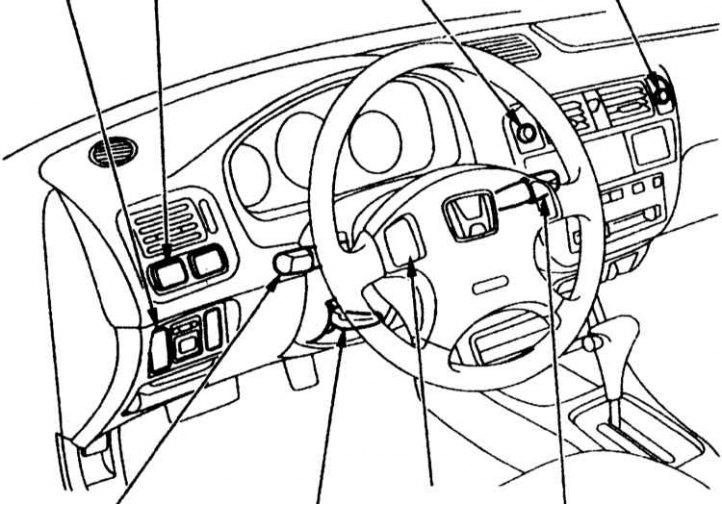
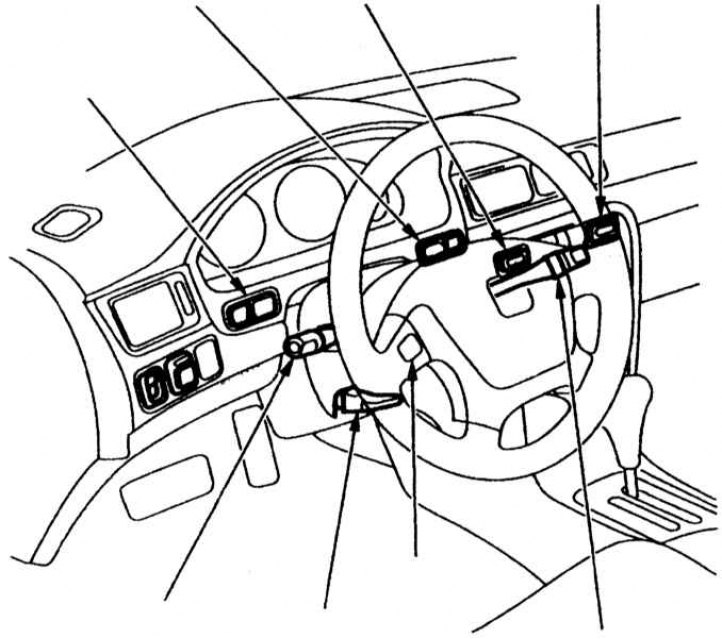
Light switch
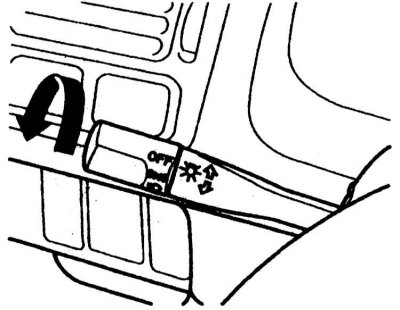
The light switch is designed as a rotary handle, which is located at the end of the turn signal control lever. To turn on the vehicle's exterior lighting, turn the switch handle to the first fixed position. This will turn on the front and rear side lights, license plate lights, and control panel lighting. To turn on the front headlights, turn the light switch handle to the second fixed position.
Some vehicle modifications are equipped with a warning sound signal when the driver's door is opened if you left the exterior lights on and turned the ignition key to position I (ACCESSORY-Auxiliary consumers of electricity) or to position 0 (LOCK-Lock).
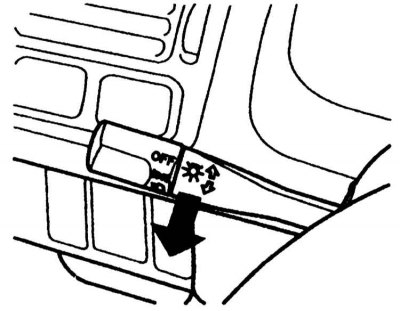
Switching the headlights from low beam to high beam and back is done by pressing the direction indicator control lever towards you. Press the lever until it clicks and then release it. When the high beam headlights are switched on, a blue indicator will light on the instrument panel, see above in this Section. To signal with high beam headlights, press the direction indicator control lever towards you and hold it in the pressed position. The high beam will remain on for as long as you hold the lever. When you release the lever, the high beam headlights will turn off.
The high beam headlights are switched on when the direction indicator control lever is pressed, regardless of the position of the light switch rotary knob.
Lighting for daytime movement (individual models)
Daytime running lights are switched on and off automatically. Switching on occurs when the ignition key is turned to position II (Ignition is on), and switching off is done by turning the light switch handle to the first or second position.
Control panel backlight brightness regulator (individual models)
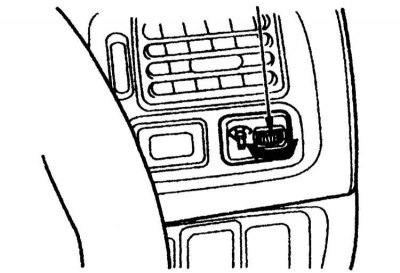
The rotary control for the illumination brightness is located on the control panel to the left of the steering column. Rotate the control to set the desired brightness of the control panel illumination.
Cars with 5-door hatchback body
The location of the control panel backlight brightness control is different from that shown in the illustration.
Turn signal switch
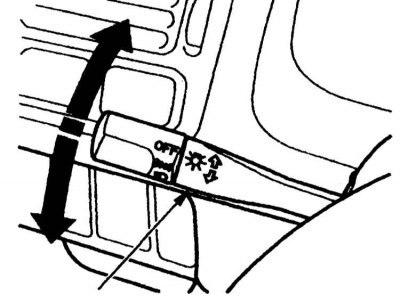
The lever mounted on the left side of the steering column is designed to turn on the turn signals when changing direction or changing lanes (changing lanes). The left or right turn signals are switched on by pressing the lever down or up, respectively. In the extreme upper and lower positions, the lever is fixed, so the turn signal lights continue to flash even after the lever is released. The turn signals are switched off automatically after the steering wheel is returned to the neutral position.
To signal a lane change with the turn signals, lightly press the lever up or down and hold it while maneuvering. When released, the lever automatically returns to its original position and the turn signals turn off.
Windscreen wiper switch
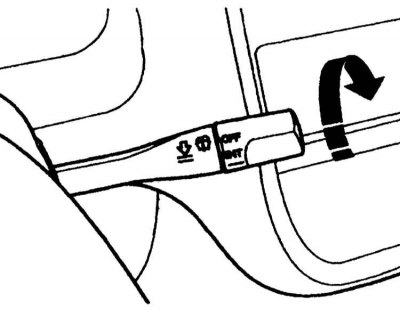
The wiper switch rotary handle is located at the end of the windshield washer control lever. (The lever is mounted on the right side of the steering column.) The windshield wiper switch can have two or three locking positions:
- first position INT: interval wiper mode;
- second position -: continuous operation of the windshield wiper at low speed;
- third position ===: continuous wiper operation at high speed.
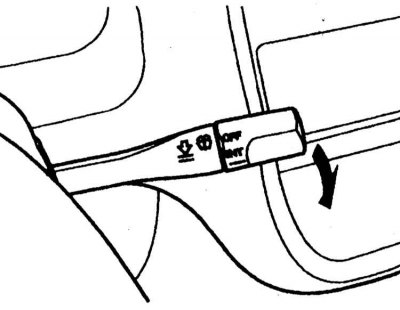
In interval mode of operation (the switch is turned to the INT position) there are short pauses of a few seconds between the wiper cycles. In the second and third positions of the switch, the wiper operates continuously.
In addition, you can quickly turn on the windshield wiper for several working cycles by pressing the lever down. In this case, the windshield wiper will work at high speed until you release the lever. This mode is convenient because it allows you to quickly restore visibility through the windshield, for example, after overtaking or passing an oncoming car on a dirty and wet road after rain.p
Windshield Washer Switch
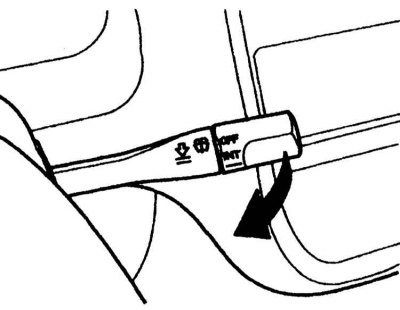
To turn on the windshield washer, push the lever located on the right side of the steering column towards you. The pump will continuously spray the windshield with liquid from the washer reservoir through the nozzles until you release the lever.
On some vehicle modifications, the windshield wiper is switched on simultaneously with the windshield washer, and operates continuously at low speed. After releasing the washer control lever, the wiper blades perform one additional working cycle and stop in their original position.
Rear window defroster switch
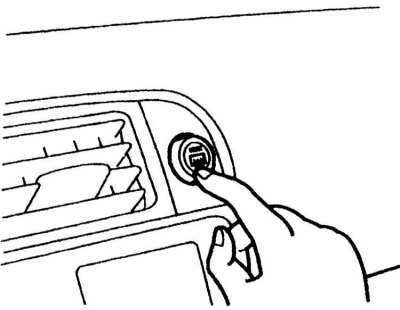
The electric heater is designed to remove condensed moisture, frost or a thin layer of ice from the surface of the rear window. The rear window heater is turned on and off using one button located on the control panel. Press the button to turn on the heater. The indicator light on the button will light up when the heater is turned on. Pressing the button again will turn off the heater.
Cars with 3-door hatchback body
The location of the rear window defroster switch is different from that shown in the illustration.
Before driving, check the visibility through the rear window. The conductive grid of the heater, located on the inner surface of the rear window, can be accidentally damaged by careless handling, for example, by improper cleaning of the rear window surface. Wipe the rear window only along the threads of the conductive grid of the heater.
Hazard warning switch
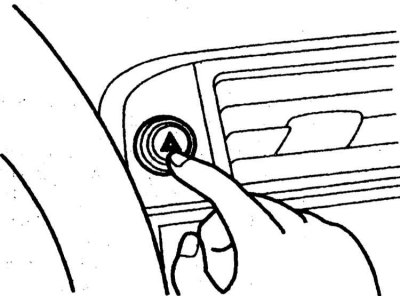
To turn on the hazard warning lights, press the red button with the triangular symbol located in the central part of the control panel. The front and rear direction indicators, as well as the arrow indicators located on the dashboard, will flash simultaneously. Use the hazard warning lights to warn other road users about an accident, a forced stop of the car and in other dangerous situations, guided by the current Traffic Regulations.
Cars with 5-door hatchback body
The location of the hazard warning light switch is different from that shown in the illustration.
Headlight wiper and washer switch (individual models)
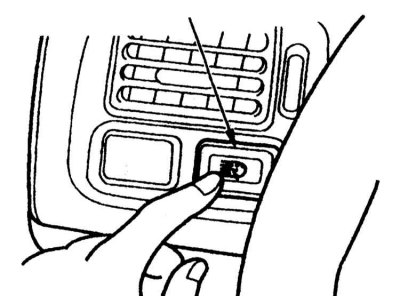
Each time the button is pressed, the headlight wipers perform several working cycles. The headlight washers are connected to the same reservoir as the windshield washer.
Cars with 5-door hatchback body
The headlight washer switch is located next to the control panel backlight control, see the illustration with a general view of the front panel.
Rear fog light switch (individual models)
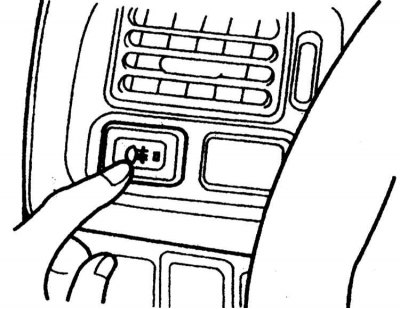
The rear fog lights can only be used when the headlights are on. To turn on the fog lights, press the switch button. The indicator on the button will light up at the same time as the rear fog lights are on. The indicator reminds you that the fog lights are on.
Cars with 3-door hatchback body
The location of the rear fog light switch is different from that shown in the illustration.
Adjustable steering column locking lever (individual models)
You can adjust the height of the steering wheel at your discretion. Before driving, set the steering wheel to the most comfortable position for you.
Warning! Adjusting the steering wheel while the vehicle is moving may result in loss of control of the vehicle and a serious accident. Adjust the steering wheel only when the vehicle is stationary.
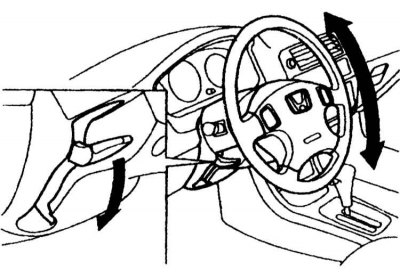
1. Adjust the seat position so that you can comfortably operate the pedals.
2. The adjustable steering column lock lever is located on the left under the steering wheel. Lower the lever until it stops.
3. Adjust the steering wheel height by moving it up or down to the desired position. A properly adjusted steering wheel should not obscure the arrow indicators, signal lights and indicators located on the instrument panel from your view. After adjustment, lock the steering wheel by fully raising the lever to its original position.
4. Check the reliability of the steering wheel fixation by trying to move it upward.
(The text can be found on the website «www.hondabook.ru»)