
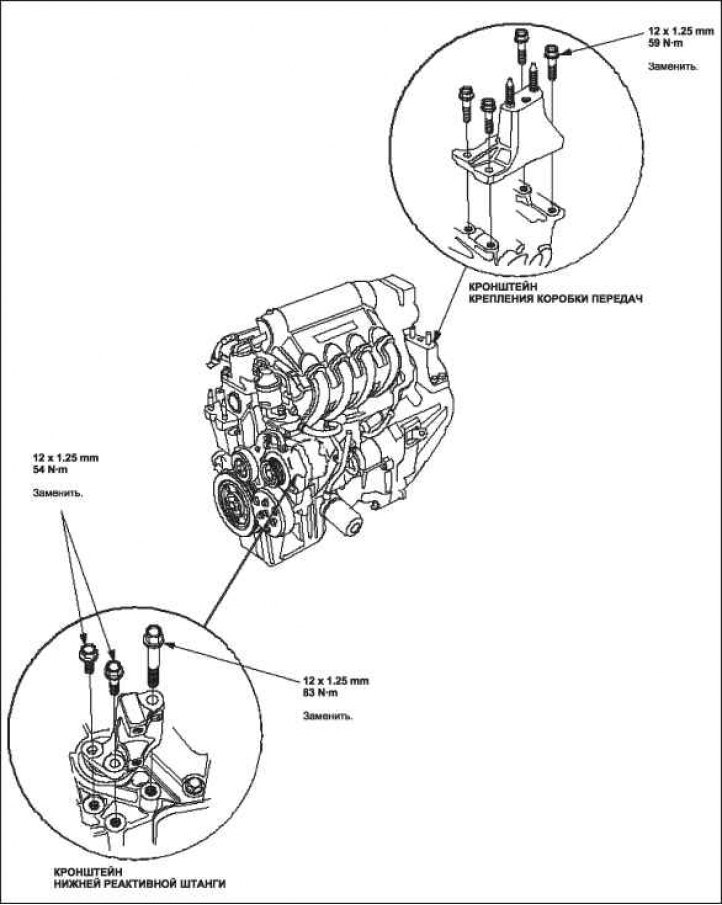
1. Install the attachment mounting brackets and tighten their mounting bolts to the required torque.
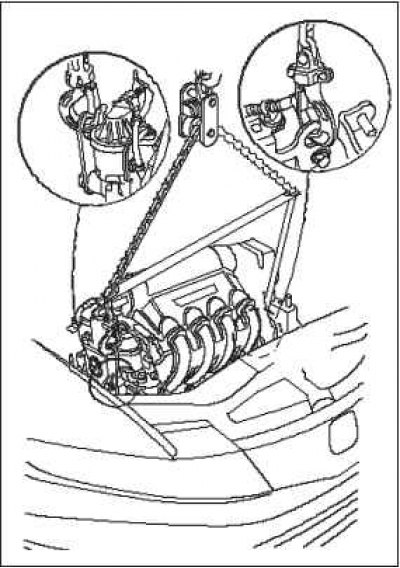
2. Position the engine/transmission assembly under the vehicle. Ensure that they are properly aligned. Carefully lower the vehicle until the engine and transmission are properly seated in the engine bay. Ensure that the vehicle is not resting on any part of the engine or transmission. Raise and support the engine with a chain hoist and carefully lift the engine/transmission assembly into place.
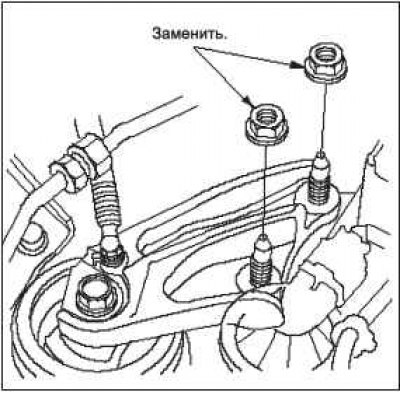
Note: Reinstall the mounting bolts/support nuts in the sequence shown. Failure to do so may result in increased noise and vibration levels and reduced engine mount life.
3. Tighten the new side engine mount bracket nuts.
 |
 |
4. Tighten the new transmission mounting bracket bolts and nuts A.
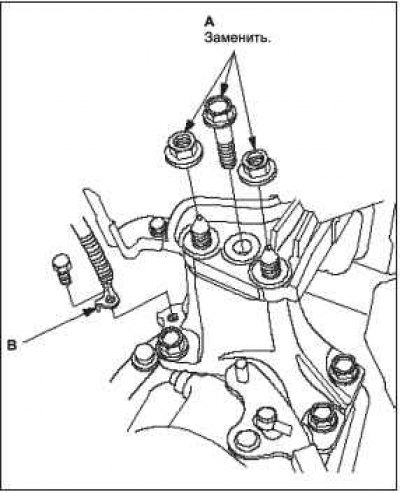
5. Install ground connection cable B.
6. Make sure the lift mounts are positioned correctly. Raise the lift to its maximum height.
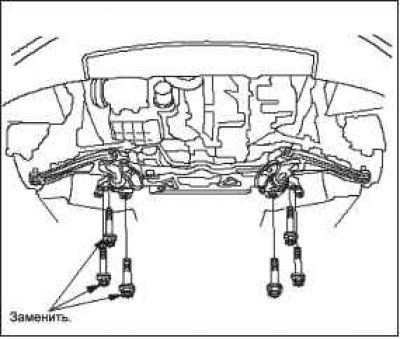
7. Support the front subframe with a wooden block and a jack, and lift it up.
8. Tighten the new mounting bolts.
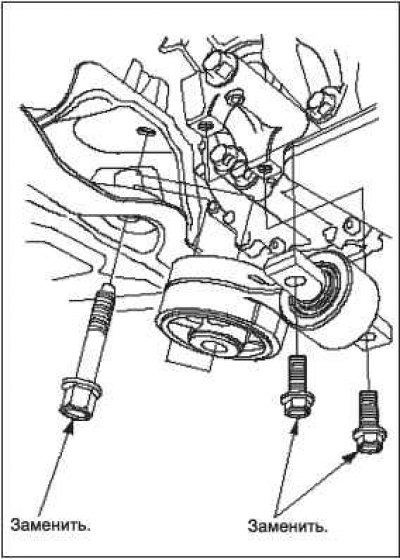
9. Install the lower reaction rod, then tighten the new lower reaction rod mounting bolts in the numerical sequence shown.
10. Make sure the lift mounts are positioned correctly. Lower the car onto the lift.
11. Disconnect the chain hoist from the engine/gearbox block.
12. Raise the machine to the full height of the lift.
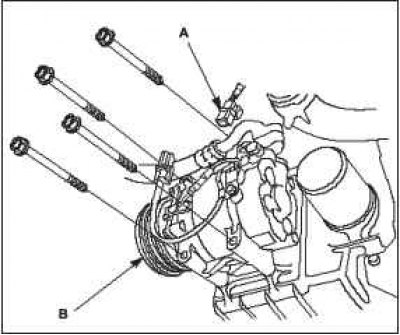
13. Install the air conditioner compressor A, then connect the air conditioner compressor electromagnetic clutch connector B.
14. Install a new snap ring onto each end of the drive shaft, then install the drive shafts. Make sure each snap ring "snaps" into place in the differential and intermediate shaft grooves as it is installed.
15. Connect the lower suspension arms to the swing arms.
16. Connect the ball joints at the end of the steering rod to the cams.
17. Connect the anti-roll bar links.
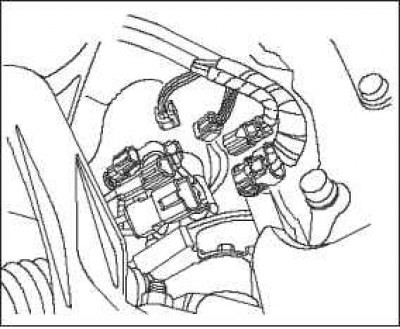
18. Connect the connectors to the steering gear.
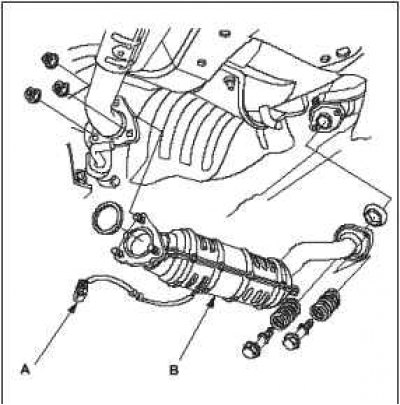
19. Install the three-way catalytic converter (TWC) A. Use new gaskets B and new self-locking nuts C.
20. Connect the secondary heated oxygen sensor connector D (secondary HO2S).
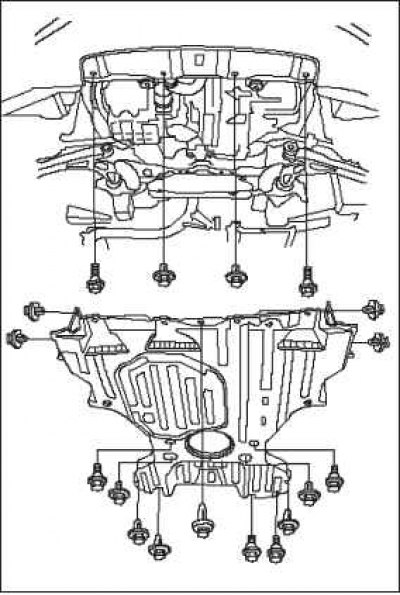
21. Install the lower engine cover.
22. Lower the car onto the lift.
 |
 |
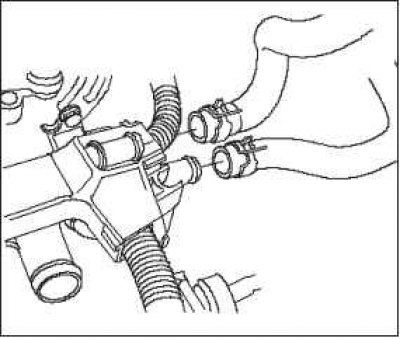
23. Install the heater hoses.
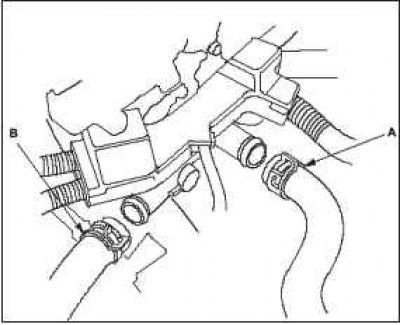
24. Install the upper radiator hose A and lower radiator hose B.
25. Install the drive belt, then adjust its tension.
26. Install the clutch slave cylinder and the bolt securing the bracket holding the clutch hydraulic drive pipe.
 |
 |
27. Install the gear shift cable.
28. Align mark A on the steering joint and the steering gear pinion shaft. Connect the steering joint B to the steering gear pinion shaft C. Tighten the steering joint bolt.
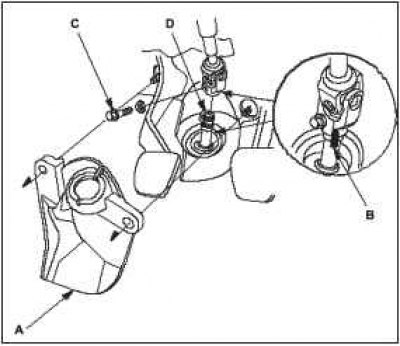
29. Install the steering joint cover D.
30. Install the steering wheel.
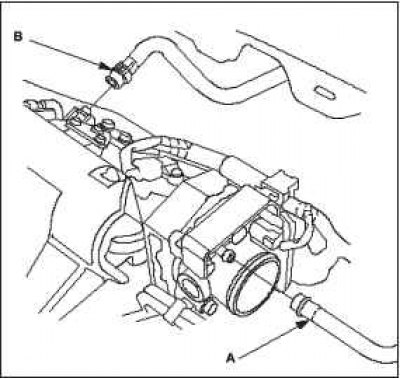
31. Install the Fuel vapor absorber tank (EVAP) hose A and the brake booster vacuum hose B.
 |
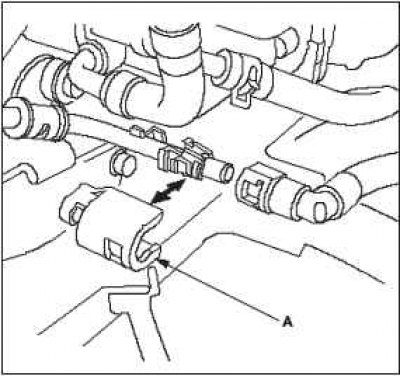 |
32. Connect the fuel supply hose, then install the quick-release cap A.
33. Connect the engine control module (ECM) connectors A and the engine wire harness connectors B.
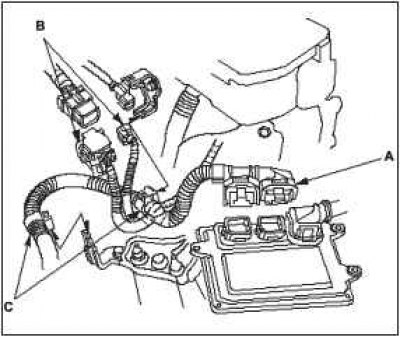
34. Install the wire harness clamps C.
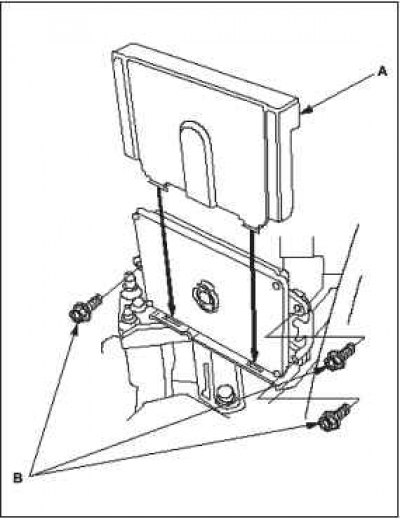
35. Install ECM A, then ECM housing B.
36. Install the battery A cables to the fuse/relay box.
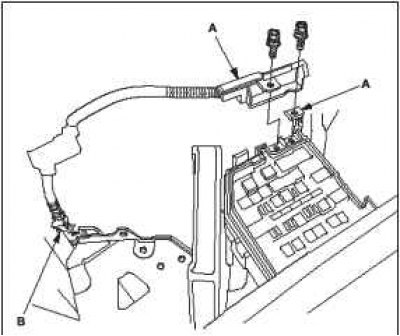
37. Install the wiring harness retainer B.
38. Install the intake pipe.
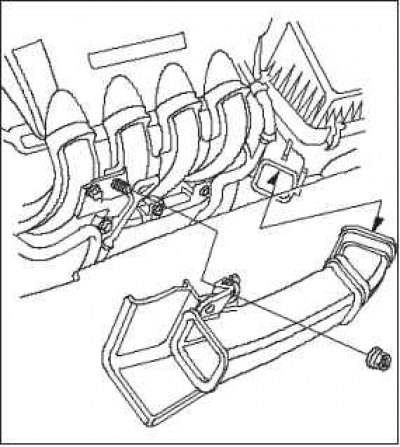
39. Install the air cleaner housing assembly.
40. Install the panel under the shield.
41. Install the battery.
42. Install the front wheels.
43. Install the battery. Clean the battery terminals and cable terminals with sandpaper, then connect them and apply a layer of anti-corrosion grease.
44. Make sure the gear shifts smoothly.
45. Check for fuel leaks: turn on the ignition (position "ON" (II)) (do not turn on the starter), to run the fuel pump for about 2 seconds and pressurize the fuel line. Repeat this operation two or three times, then check to make sure there are no fuel leaks at all points in the fuel system.
46. Fill the engine with engine oil.
47. Refill the transmission fluid into the gearbox:
48. Fill the radiator with coolant and bleed the cooling system with the heater valve open.
49. Perform the Block Data reset (ECM) procedure.
50. Perform the Crankshaft Position (CKP) computer diagnostic procedure/CKP sensor reference position diagnostic procedure.
51. Check the idle speed.
52. Check the ignition timing angle.
53. Check the wheel alignment angles.
54. Perform the initialization procedure for the electric windows.
55. Set the correct time on the clock.