
Warning!
- Do not start the engine when the electrolyte level in the battery is low. There is a risk of battery failure.
- Do not run the engine in a garage or other poorly ventilated area. Exhaust gas will accumulate in the cabin or room and there is a risk of carbon monoxide poisoning.
- When starting the engine, press the brake pedal.
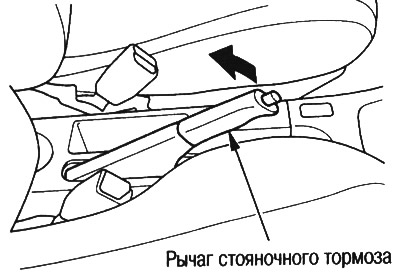
1. Make sure the parking brake is applied.
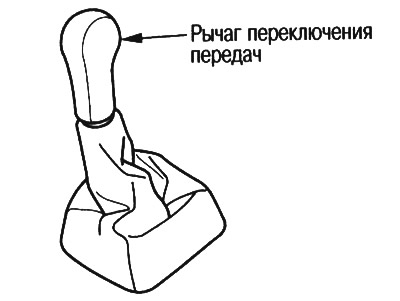
2. Models with manual transmission.
Place the gear shift lever in neutral position.
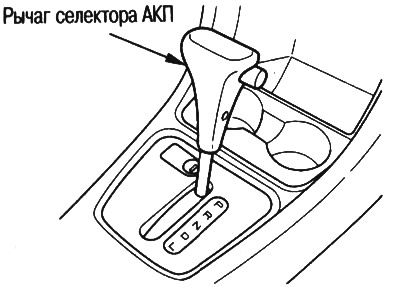
Models with automatic transmission
Make sure the selector lever is in the "P" position.
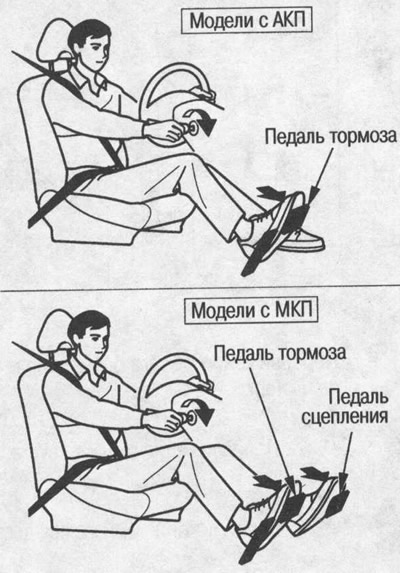
3. Fully depress the brake pedal. On models with a manual transmission, the clutch pedal is also fully depressed.
4. Without pressing the accelerator pedal, turn on the starter to start the engine.
Clutch
Models with manual transmission: Do not engage the starter without fully depressing the clutch pedal.
Note:
- Starting the engine is made easier if you turn off such powerful consumers of electricity as lighting, air conditioning, and rear window defroster.
- To avoid discharging the battery, do not allow the starter to run continuously for more than 15 seconds. If the engine does not start within 15 seconds, set the ignition key to position "I", wait at least 10 seconds and try to start again.
- If the engine is warm, the starting time may increase. In this case, it is recommended to start the engine by pressing the accelerator pedal halfway. After the engine starts, release the accelerator pedal.
- After the engine starts, the engine management system operates to increase engine speed and then automatically reduce it to the optimum level.
[The text of the article is available on the website hondabook]