
Attention:
- Do not start the engine if the battery electrolyte level is low. This may cause battery failure.
- Do not leave the vehicle with the engine running in a poorly ventilated area, as you may be poisoned by carbon monoxide contained in the exhaust gases.
- Before starting the engine, press the brake pedal.
Note: If the exhaust sound has changed or there is a smell of exhaust gases or gasoline in the cabin, it is possible that there is a malfunction in the exhaust system or fuel system, so be sure to contact a service station.
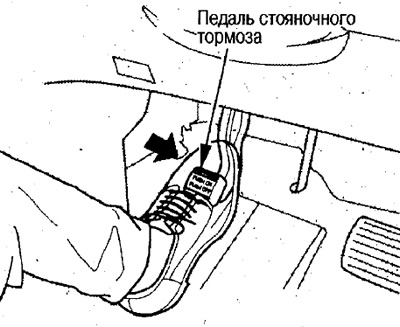
1. Fully tighten the parking brake.
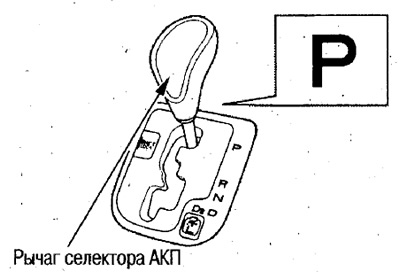
2. Make sure that the automatic transmission selector lever is in position P.
3. Press the brake pedal firmly.
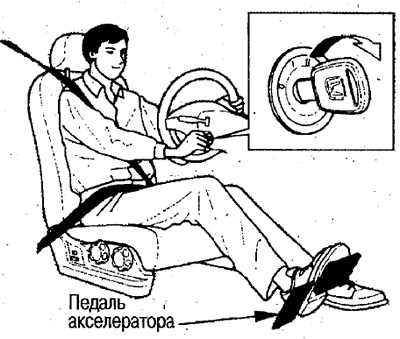
4. Without pressing the accelerator pedal, crank the engine with the starter until the engine starts.
Note:
- The engine starts more easily if powerful power consumers (headlights, air conditioner, rear window heater, etc.) are switched off.
- Do not turn on the starter for more than 15 seconds, as this may discharge the battery or damage the starter.
- If the engine does not start within 15 seconds, turn the ignition key to position "I", wait at least 10 seconds, and then try starting again.
If the engine is warm, the engine may not start immediately. In such cases, press the accelerator pedal approximately halfway and start. After the engine starts, release the accelerator pedal.
After the engine is started, the engine management system maintains the engine speed high, but as the engine warms up, the speed decreases to normal.