
1. Do not work on the airbag system earlier than 3 minutes after setting the ignition switch to the "OFF" position and disconnecting the wire from the negative terminal of the battery.
Note: DTCs will not be cleared by turning the ignition switch to the "OFF" position and disconnecting the battery.
2. Never install components of the passive safety system from another vehicle.
3. Do not expose the components of the passive safety system to impacts or strong magnetic fields. Do not install damaged components on the vehicle.
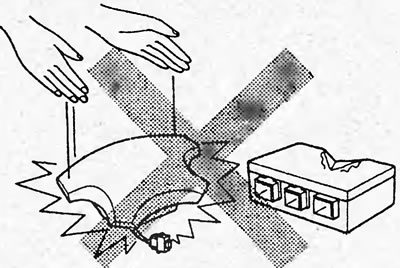
4. When removing any component (except disconnecting the connectors) disconnect the connector from the passive restraint system control unit.
When disconnecting the connectors, first disconnect the connectors from the driver's airbag, front passenger's airbag, side airbag and seat belt pretensioner, and then disconnect the connector from the passive restraint system control unit.
5. When checking the passive safety system, use a digital multimeter with an output current of no more than 10 mA (in ohmmeter mode). Using a multimeter with a high output current may cause the system to trip spontaneously.
6. Never place anything on top of the front passenger air bag module.
7. Do not disassemble the spiral wire.
8. Do not disassemble the airbag modules.
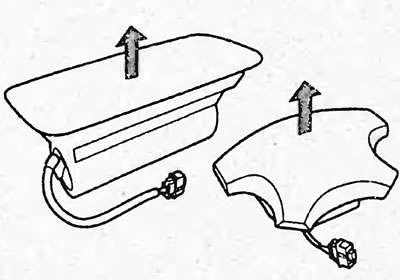
9. When storing, place the airbag modules face up on a flat, stable surface. Never place anything on the airbag modules
10. Do not allow moisture, oil, grease or other substances to come into contact with the airbag modules.
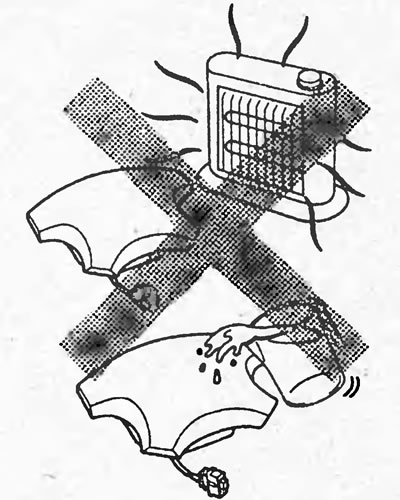
11. Avoid exposing air bag modules to high temperatures (over 93°C).
12. Do not use an ohmmeter to test airbag modules. This may cause them to deploy unintentionally.
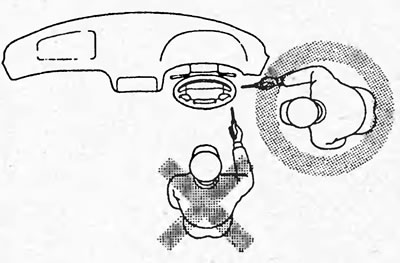
13. When checking and repairing, position yourself as shown in the figure.
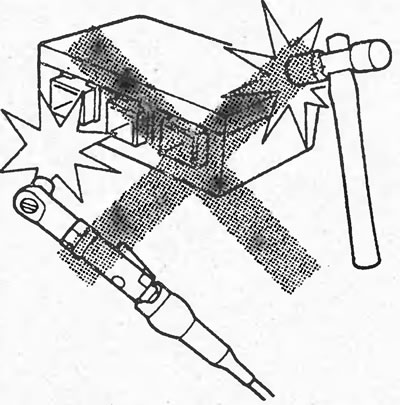
14. When removing and installing the control unit and sensors of the passive safety system, do not allow them to be hit (with a key, hammer and other tools). This may result in the system triggering spontaneously.
15. If all airbags have deployed, replace the control unit and sensors of the passive safety system. If the side airbags have not deployed, visually assess the condition of the control unit and sensors of the passive safety system. If there are any deformations, chips, scratches, etc., replace the damaged components.
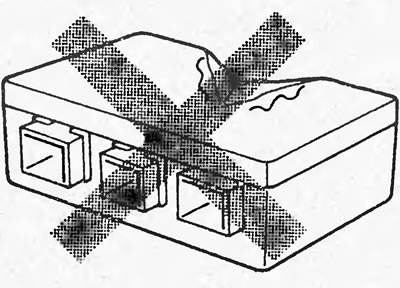
16. Do not disassemble the passive restraint system control unit and side airbag sensors.
17. Before connecting the connectors to the SRS control unit and airbag sensors, secure them to the vehicle. Tighten the bolts to the specified torque.
Tightening torque - 10 Nm
18. Do not allow moisture, oil, grease or other substances to come into contact with the passive restraint system unit and side airbag sensors.
19. Store the passive restraint system control unit and side airbag sensors at a temperature of no more than 40°C and a humidity of no more than 80%.
20. Do not use liquids to clean seats with side airbags.
21. If the side airbags have deployed, replace them and the damaged parts of the seat back (frame, padding, finishing). After repair, make sure the seats are working properly and the wiring is located properly.
22. If the wiring is damaged, replace the wires, do not try to repair them.
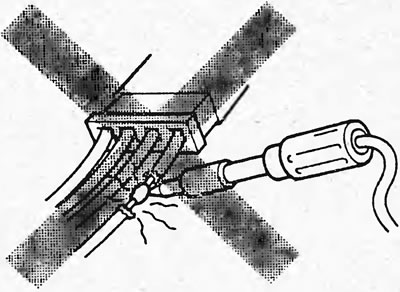
23. Make sure that the passive restraint system wiring is not pinched.
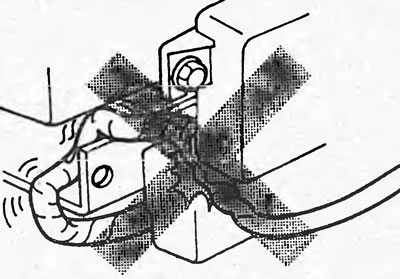
24. Even if the airbags or seat belt pretensioners did not deploy in a collision and do not show signs of external damage, they may have internal damage, which may lead to their spontaneous deployment. Even after a minor collision, diagnose the passive restraint system to identify internal damage, and if any is found, replace the faulty components.
25. Take all measurements from the wiring harness side.
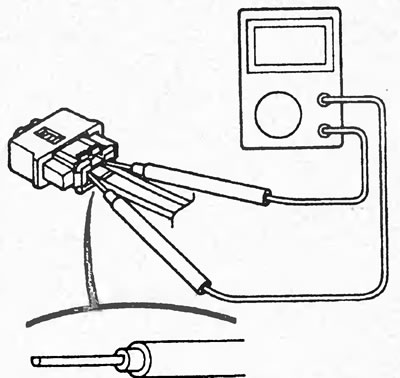
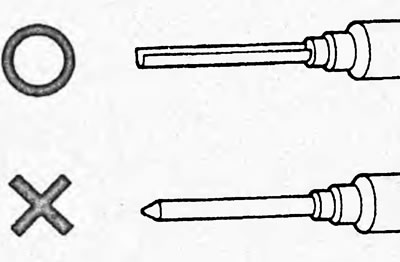
26. Use a "U" shaped probe.
(The text can be found on the website «hondabook.ru»)