
2. Remove the crankshaft pulley.
3. Remove the timing belt (see Audio system).
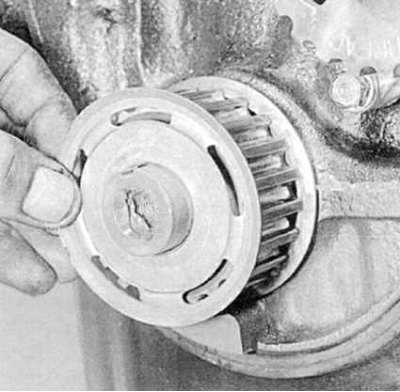
4a. Remove the outer crankshaft belt guide.
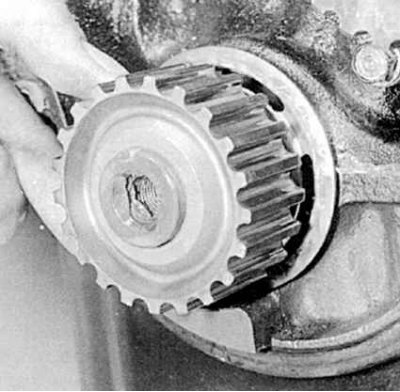
4b. Remove the crankshaft timing gear.
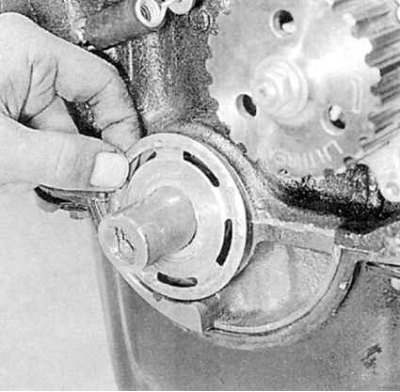
4c. On models not equipped with a crankshaft fluctuation sensor, remove the inner belt guide (see accompanying illustration).
Note: If the engine is equipped with a crankshaft fluctuation sensor, the inner guide will be built into the gear.
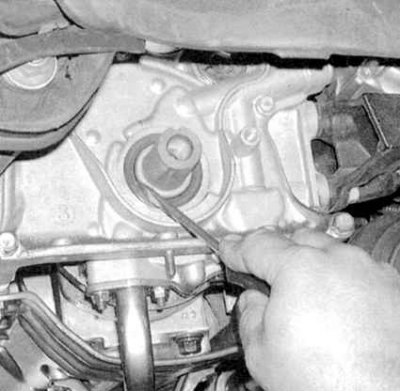
5. Carefully pry the old seal out of its socket using a special tool or a large screwdriver (see accompanying illustration). Try not to leave scratches or burrs on the surface of the shaft journal or oil pump housing – the presence of such defects will lead to rapid failure of the new seal. 6. Clean the inner surfaces of the seat for the seal. Lubricate the outer edge of the new seal with clean engine oil or universal grease. Using a socket head of the appropriate size or a piece of pipe of the appropriate diameter as a mandrel, seat the new seal in its seat. The mandrel should rest only on the hard outer edge of the end surface of the seal. After seating the seal, make sure that the spacer spring has not jumped out of its groove.
7. Install the inner timing belt guide, crankshaft sprocket, then the outer guide. Then install the timing belt (see Audio system).
8. Lubricate the crankshaft pulley hub with engine oil or multi-purpose grease, then seat the pulley on the shaft journal. Further installation is carried out in the reverse order of dismantling the components.
9. Start the engine and check it for signs of oil leaks.