


Brake system of the car Honda HR-V 1

Location of brake system components
Note: Left hand drive model shown; the arrangement on the right-hand drive model is symmetrical. 1. MAIN CYLINDER Removal/Installation ( see below ) Disassembling the master cylinder ( see below ) Assembling the master...
Note: Left hand drive model shown; the arrangement on the right-hand drive model is symmetrical. 1. MAIN CYLINDER Removal/Installation ( see below ) Disassembling the master cylinder ( see below ) Assembling the master...

Rubber parts of the brake system and brake booster
Brake booster (A) Check the brake operation by pressing the brake pedal. If the brakes do not operate properly, check the brake booster. If the brake booster does not operate properly or shows signs of leakage, replace...
Brake booster (A) Check the brake operation by pressing the brake pedal. If the brakes do not operate properly, check the brake booster. If the brake booster does not operate properly or shows signs of leakage, replace...
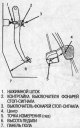
Brake pedal — check
Pedal height 1. Disconnect the brake light switch connector, loosen the brake light switch lock nut and turn it away until it no longer contacts the brake pedal. 2. Turn back the mat and measure the pedal height from...
Pedal height 1. Disconnect the brake light switch connector, loosen the brake light switch lock nut and turn it away until it no longer contacts the brake pedal. 2. Turn back the mat and measure the pedal height from...

Parking brake — checking and adjusting
Examination 1. Tighten the parking brake lever with a force of 196 N (20 kgf) and fully apply the parking brake. The stroke of the parking brake lever should be the specified number of clicks. Number of clicks before...
Examination 1. Tighten the parking brake lever with a force of 196 N (20 kgf) and fully apply the parking brake. The stroke of the parking brake lever should be the specified number of clicks. Number of clicks before...

Bleeding the brake system
Note: Do not reuse drained brake fluid. Use only clean Genuine Honda brake fluid or equivalent DOT3 or DOT4 brake fluid. Do not allow dirt or other foreign material to enter the brake fluid. Do not spill brake fluid on...
Note: Do not reuse drained brake fluid. Use only clean Genuine Honda brake fluid or equivalent DOT3 or DOT4 brake fluid. Do not allow dirt or other foreign material to enter the brake fluid. Do not spill brake fluid on...

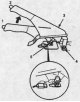
Testing the Parking Brake Switch
1. Remove the rear console and disconnect the connector from the switch. 2. Check if there is continuity between the positive terminal and ground: When the lever is tightened (at the top), there should be conductivity....
1. Remove the rear console and disconnect the connector from the switch. 2. Check if there is continuity between the positive terminal and ground: When the lever is tightened (at the top), there should be conductivity....

Testing the brake fluid level sensor
1. Remove the lid from the tank. Make sure the float moves up and down freely; otherwise, replace the tank cap assembly. 2. Check if there is conductivity between the terminals in the lower and upper positions of the...
1. Remove the lid from the tank. Make sure the float moves up and down freely; otherwise, replace the tank cap assembly. 2. Check if there is conductivity between the terminals in the lower and upper positions of the...

Front Brake Pads — Checking and Replacing
Warning! Frequent inhalation of dust from brake pad surfaces, regardless of the material composition, may pose a health hazard. Do not inhale dust. Do not clean brake surfaces with compressed air or a brush. Use a...
Warning! Frequent inhalation of dust from brake pad surfaces, regardless of the material composition, may pose a health hazard. Do not inhale dust. Do not clean brake surfaces with compressed air or a brush. Use a...

Front Brake Disc — Checking Runout
1. Slightly loosen the front wheel nuts, then raise the vehicle and secure it on safety stands. Remove the front wheels. 2. Remove the brake pads ( see above ). 3. Check the disc surface for damage and cracks. Clean the...
1. Slightly loosen the front wheel nuts, then raise the vehicle and secure it on safety stands. Remove the front wheels. 2. Remove the brake pads ( see above ). 3. Check the disc surface for damage and cracks. Clean the...

Checking the thickness and parallelism of the disc
1. Slightly loosen the front wheel nuts, then raise the vehicle and secure it on safety stands. Remove the front wheels. 2. Remove the brake pads ( see above ). 3. Using a micrometer, measure the disc thickness at eight...
1. Slightly loosen the front wheel nuts, then raise the vehicle and secure it on safety stands. Remove the front wheels. 2. Remove the brake pads ( see above ). 3. Using a micrometer, measure the disc thickness at eight...

Front Brake Caliper — Disassembly and Assembly
1. INNER GASKET B 2. INNER GASKET A 3. WEAR INDICATOR. Install the inner pad with the wear indicator facing up. 4. OUTER BRAKE PAD GASKET 5. FINGER B 6. FINGER ANTHROAT 7. PIN BOOT. Replace 8. BOLTS WITH SHELL 12 mm,...
1. INNER GASKET B 2. INNER GASKET A 3. WEAR INDICATOR. Install the inner pad with the wear indicator facing up. 4. OUTER BRAKE PAD GASKET 5. FINGER B 6. FINGER ANTHROAT 7. PIN BOOT. Replace 8. BOLTS WITH SHELL 12 mm,...

Master cylinder, brake booster — removal and installation
1. BRAKE FLUID LEVEL SENSOR CONNECTORS 2. From the master cylinder side 3. ROD SEAL. Replace 4. From the brake booster side 5. VACUUM HOSE 6. LOCK PIN. Replace 7. PIN WITH HEAD AND HOLE FOR COTTAGE PIN 8. SPLINTER 9. 13...
1. BRAKE FLUID LEVEL SENSOR CONNECTORS 2. From the master cylinder side 3. ROD SEAL. Replace 4. From the brake booster side 5. VACUUM HOSE 6. LOCK PIN. Replace 7. PIN WITH HEAD AND HOLE FOR COTTAGE PIN 8. SPLINTER 9. 13...

Master cylinder, brake booster — disassembly
1. Remove the master cylinder ( see above ). 2. Remove the piston rod seal from the brake booster side. 3. Remove the ring clamp by pressing down the secondary piston (figure in the middle column in the center). 4....
1. Remove the master cylinder ( see above ). 2. Remove the piston rod seal from the brake booster side. 3. Remove the ring clamp by pressing down the secondary piston (figure in the middle column in the center). 4....

Master Cylinder, Brake Booster — Assembly
Note: When replacing the primary, secondary piston or master cylinder body, check and adjust the push rod clearance ( see below ). Clean all components in brake fluid and dry in open air; blow out all channels with...
Note: When replacing the primary, secondary piston or master cylinder body, check and adjust the push rod clearance ( see below ). Clean all components in brake fluid and dry in open air; blow out all channels with...

Adjusting the clearance of the push rod
Note: If necessary, the clearance between the push rod and piston must be checked and adjusted before installing the master cylinder. 1. Attach the special tool to the master cylinder body; turn the adjusting nut to...
Note: If necessary, the clearance between the push rod and piston must be checked and adjusted before installing the master cylinder. 1. Attach the special tool to the master cylinder body; turn the adjusting nut to...

Master cylinder, brake booster — check
Leak test 1. Connect a vacuum gauge between the brake booster and the check valve. 2. Start the engine, adjust the engine speed with the accelerator pedal so that the vacuum gauge reading is 40.0-66.7 kPa (300-500...
Leak test 1. Connect a vacuum gauge between the brake booster and the check valve. 2. Start the engine, adjust the engine speed with the accelerator pedal so that the vacuum gauge reading is 40.0-66.7 kPa (300-500...

Rear wheel drum brakes
1. 9 Nm (0.9 kgf/m) 2. SLAVE CYLINDER. Check for leakage. Disassembly / Inspection ( see below ) 3. CLAMP. Replace 4. WAVE WASHER 5. PARKING BRAKE LEVER Has marks on the left and right. 6. UPPER RETURN SPRING, Check for...
1. 9 Nm (0.9 kgf/m) 2. SLAVE CYLINDER. Check for leakage. Disassembly / Inspection ( see below ) 3. CLAMP. Replace 4. WAVE WASHER 5. PARKING BRAKE LEVER Has marks on the left and right. 6. UPPER RETURN SPRING, Check for...

Checking drum brakes
1. Check the slave cylinder for leaks. 2. Check the brake shoe friction linings for cracks, oil, wear or contamination. 3. Measure the thickness of the brake pad friction linings. Thickness of brake pad friction...
1. Check the slave cylinder for leaks. 2. Check the brake shoe friction linings for cracks, oil, wear or contamination. 3. Measure the thickness of the brake pad friction linings. Thickness of brake pad friction...

Replacing drum brake shoes
Disassembly 1. Remove the tension pins by pressing on the retainer springs and turning them. 2. Lower the brake shoe assembly and remove the lower return spring. Note: Do not damage the dust cover on the slave cylinder....
Disassembly 1. Remove the tension pins by pressing on the retainer springs and turning them. 2. Lower the brake shoe assembly and remove the lower return spring. Note: Do not damage the dust cover on the slave cylinder....

Slave cylinder — disassembly and inspection
Note: Do not spill brake fluid on your car as it may damage the paintwork; if liquid does spill, wash it off immediately with water. Clean all components in brake fluid and dry in open air; blow out all channels with...
Note: Do not spill brake fluid on your car as it may damage the paintwork; if liquid does spill, wash it off immediately with water. Clean all components in brake fluid and dry in open air; blow out all channels with...

Brake Hoses and Tubes — Checking and Tightening Torques
1. Check brake hoses for damage, wear, leaks, interference and kinking. 2. Check the brake pipes for damage, rust, and leaks. Also check if the pipes are bent. 3. Check for leaks at the joints of hoses and tubes or at...
1. Check brake hoses for damage, wear, leaks, interference and kinking. 2. Check the brake pipes for damage, rust, and leaks. Also check if the pipes are bent. 3. Check for leaks at the joints of hoses and tubes or at...

Replacing brake hoses
Note: Before assembly, make sure that the components are free of dust and other foreign substances. Replace parts with new ones when instructed to do so. Do not spill brake fluid on your car as it may damage the...
Note: Before assembly, make sure that the components are free of dust and other foreign substances. Replace parts with new ones when instructed to do so. Do not spill brake fluid on your car as it may damage the...

Parking Brake Cable — Checking and Replacing
Note: Parking brake cables must not be bent or deformed. Otherwise, it will cause harsh operation and premature failure of the cable. 1. PARKING BRAKE LEVER. Check for smooth operation 2. PARKING BRAKE CABLE. Check for...
Note: Parking brake cables must not be bent or deformed. Otherwise, it will cause harsh operation and premature failure of the cable. 1. PARKING BRAKE LEVER. Check for smooth operation 2. PARKING BRAKE CABLE. Check for...

Location of ABS system components
1. MODULATOR ASSEMBLY (CONTROL UNIT / ABS MODULATOR UNIT) 2. FUSE/RELAY BOX UNDER THE HOOD 3. RIGHT REAR WHEEL SENSOR 4. LEFT REAR WHEEL SENSOR 5. FUSE/RELAY BOX UNDER DASHBOARD 6. LEFT FRONT WHEEL SENSOR 7. DIAGNOSTIC...
1. MODULATOR ASSEMBLY (CONTROL UNIT / ABS MODULATOR UNIT) 2. FUSE/RELAY BOX UNDER THE HOOD 3. RIGHT REAR WHEEL SENSOR 4. LEFT REAR WHEEL SENSOR 5. FUSE/RELAY BOX UNDER DASHBOARD 6. LEFT FRONT WHEEL SENSOR 7. DIAGNOSTIC...

Characteristics and design of the ABS system
When you press the brake pedal while driving, the wheels may lock before the car stops. If the front wheels lock, the car's maneuverability is reduced; if the rear wheels lock, the car's stability is reduced. In both...
When you press the brake pedal while driving, the wheels may lock before the car stops. If the front wheels lock, the car's maneuverability is reduced; if the rear wheels lock, the car's stability is reduced. In both...


ABS control unit pin location
ABS control unit connector Female connector on harness side *1: When measuring voltage, short jumper terminal No.15 of the ABS control unit connector to body ground.
ABS control unit connector Female connector on harness side *1: When measuring voltage, short jumper terminal No.15 of the ABS control unit connector to body ground.

ABS troubleshooting precautions
ABS indicator 1. If the system is normal, the ABS indicator goes out two seconds after the ignition key is turned to the ON (II) position without starting the engine, then comes on again and goes out two seconds later....
ABS indicator 1. If the system is normal, the ABS indicator goes out two seconds after the ignition key is turned to the ON (II) position without starting the engine, then comes on again and goes out two seconds later....

ABS Diagnostic Trouble Codes (DTCs)
Diagnostic Trouble Code (DTC) Indication Note: This operation can also be performed using the Honda PGM Tester. 1. Connect a jumper to the diagnostic connector (2-pin) located on the center console on the passenger...
Diagnostic Trouble Code (DTC) Indication Note: This operation can also be performed using the Honda PGM Tester. 1. Connect a jumper to the diagnostic connector (2-pin) located on the center console on the passenger...

ABS Modulator Assembly — Removal and Installation
1. CONNECTOR LOCKER 2. ABS CONTROL UNIT CONNECTOR 1. To the secondary piston side of the master cylinder 2. To the right rear wheel slave cylinder 3. To the primary piston side of the master cylinder 4. ABS CONTROL UNIT...
1. CONNECTOR LOCKER 2. ABS CONTROL UNIT CONNECTOR 1. To the secondary piston side of the master cylinder 2. To the right rear wheel slave cylinder 3. To the primary piston side of the master cylinder 4. ABS CONTROL UNIT...

Pulse generators and wheel sensors
Examination 1. Check the pulse generators on the front and rear wheels for chips or damage to the teeth. 2. Measure the air gap between the wheel sensor and the pulse generator around the entire circumference while...
Examination 1. Check the pulse generators on the front and rear wheels for chips or damage to the teeth. 2. Measure the air gap between the wheel sensor and the pulse generator around the entire circumference while...

This section is available on: russian, bulgarian, belarusian, ukrainian, serbian, croatian, romanian, polish, slovak, hungarian
Link in different formats to this section
TEXTHTMLBB Code
- General information
- User manual
- Maintenance
- Power unit
- Engine repair
- Lubrication system
- Cooling system
- Fuel injection and control
- Power and exhaust system
- Engine electrical equipment
- Transmission
- Clutch
- Mechanical gearbox
- Automatic gearbox
- Rear differential
- Drive shafts and cardan
- Chassis and running gear
- Steering
- Car suspension
- Brake system
- Body and interior
- Exterior (external elements)
- Interior (internal elements)
- Doors, locks and windows
- Electrical equipment
- Equipment and devices
- Lighting system
- Electrical circuits