
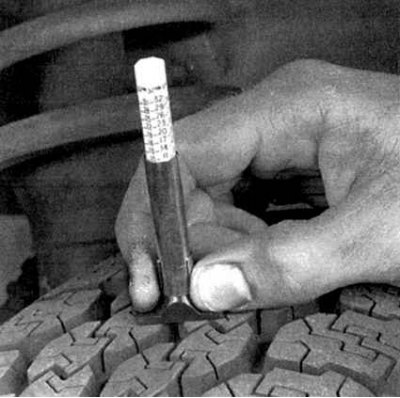
1. The minimum permissible tread depth is 1.6 mm. You can assess the degree of tread wear using a special inexpensive device (see accompanying illustration) – ask in car accessories stores.
2. Pay attention to any signs of uneven tread wear. Local tread defects such as cupping, flattening, etc. usually result from incorrect front wheel alignment or wheel balancing. To identify and eliminate faults, the car should be taken to a specialized auto repair shop or service station.
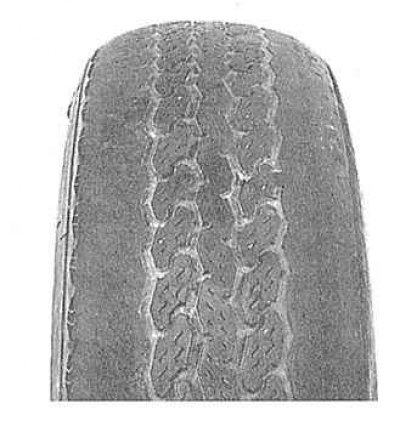
Insufficient tire inflation pressure
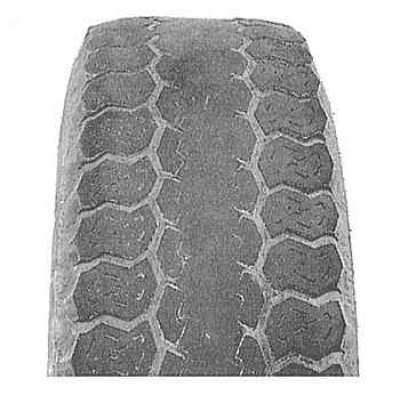
Tire inflation pressure too high
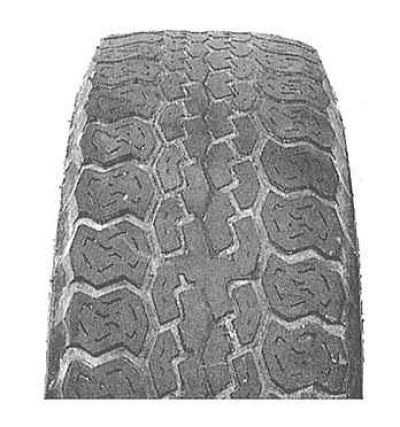
Flaky tread wear caused by wheel misalignment
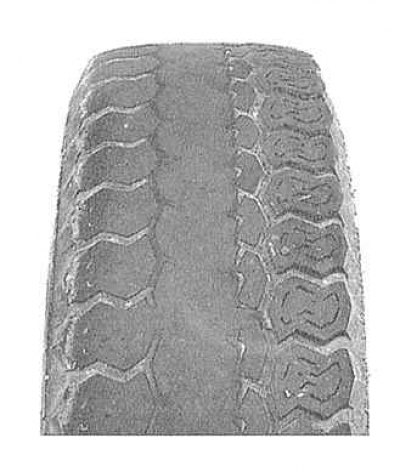
The toe-in adjustment is out of adjustment or the wheel camber is too great
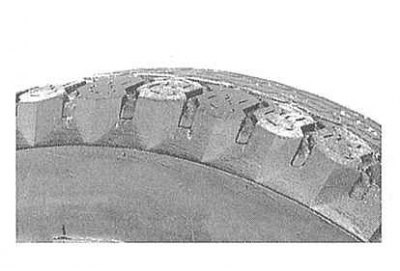
Cup-shaped defects
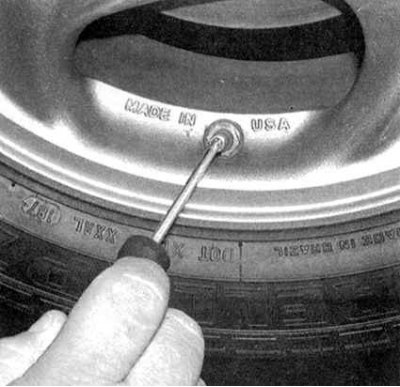
3a. Carefully inspect the tires of all wheels for cuts, punctures, and foreign objects stuck in the grooves of the tread pattern. Sometimes a punctured tire continues to hold air inside for some time because the object that punctured the tire continues to remain stuck in it. A slow deflating tire may be caused by a defective tire inflation valve nipple - check the condition of the nipple (see accompanying illustration).
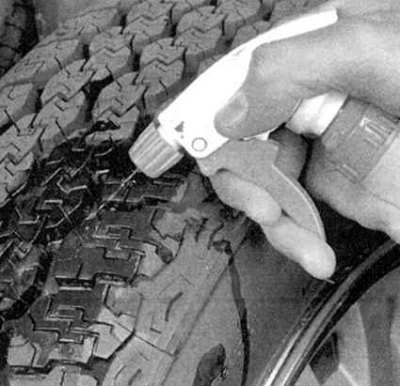
3b. Carefully check the tread for any objects stuck in it or for leaks in the seal of the repair "plugs" used to repair small punctures in the tire. You can easily verify the presence of a puncture by wetting the suspected area of the tire surface with a solution of soapy water (see accompanying illustration) – if there is a puncture, the water will start to bubble. Small punctures are easily repaired in tire shops.
4. Carefully inspect the inner walls of the tires of all four wheels for any signs of brake fluid leakage. If any are found, immediately check the condition of the corresponding brake mechanisms and the hydraulic lines connected to them.
5. Maintaining the required tire inflation pressure will significantly extend the service life of the wheels, and will also provide maximum comfort when driving and will not reduce the car's controllability. Remember that it is almost impossible to correctly determine the tire pressure by eye, especially when it comes to radial tires. It is necessary to always have a suitable pressure gauge at hand - the readings of the compressor inflation gauges at gas stations and service stations should not be trusted.
6. Check the tire inflation pressure when the wheels are cold – this means that the car has driven no more than one mile in the last three hours. Remember that an increase in pressure by 0.3÷0.6 kgf/cm² as a result of the wheel warming up is quite normal.
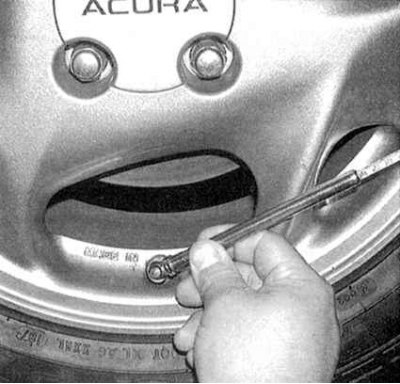
7. Remove the protective cap from the tire inflation valve and press the pressure gauge nozzle firmly against the valve outlet, squeezing the nipple stem (see accompanying illustration). Read the reading and compare it with the standard data; adjust the pressure if necessary.
8. Don't forget to screw the valve cap back on to prevent moisture and dirt from getting into the valve. Check the pressure in all wheels, including the spare.
Note: The inflation pressure of a compact type spare tire is usually significantly higher than that of a regular tire.