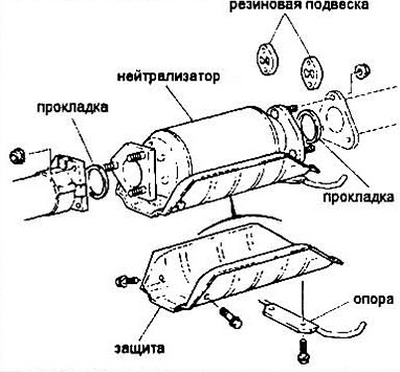
Attention: inspection and repair of the exhaust system is carried out only on a cold engine.
1. The exhaust system consists of an exhaust manifold, a catalytic converter, a muffler, and pipelines and supporting brackets. The system is attached to the car body through elastic rubber elements. The breakage of these elements leads to increased noise and vibration inside the cabin.
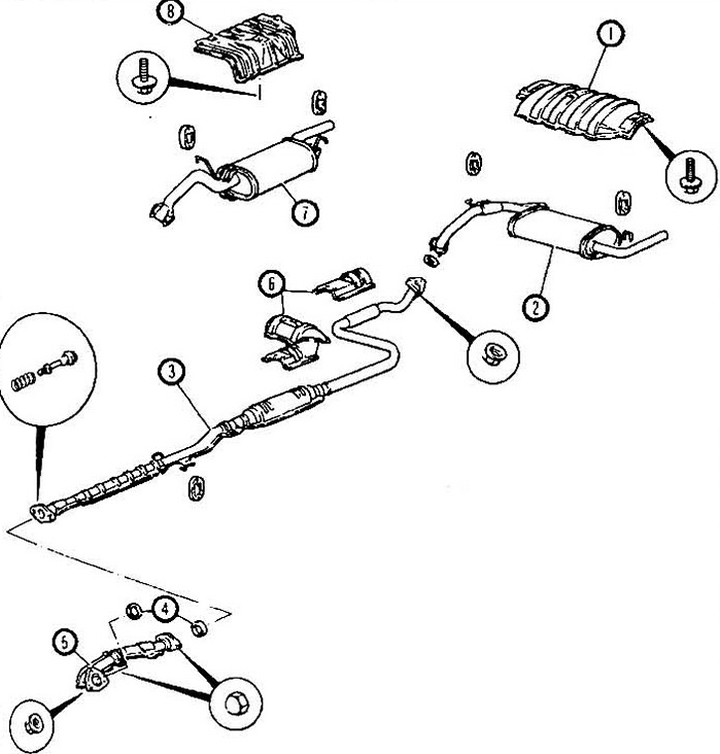
Fig. 17.1a Typical exhaust system (excluding CRX and Si models):
1 - fuel tank thermal protection;
2 - muffler;
3 - pipe;
4 - gasket;
5 - intake pipe;
6 - thermal protection;
7 - muffler;
8 - modification of thermal protection of the tank of Sedan and Shuttle models.
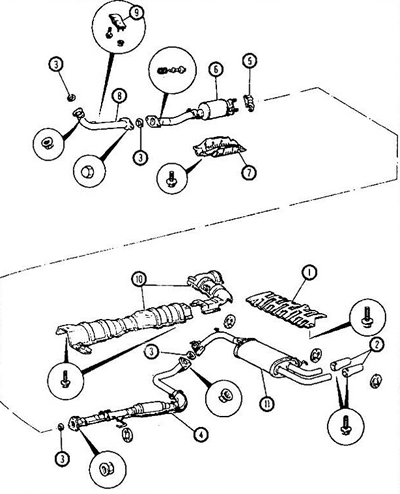
Fig. 17.16 Typical exhaust systems for CRX and Si models:
1 - tank thermal protection;
2 - tail pipes;
3 - gasket;
4 - pipeline;
5 - upper cover of the neutralizer;
6 - Neutralizer;
7 - lower cover of the neutralizer;
8 - intake pipe;
9 - bracket for the inlet pipe;
10 - protection,
11 - muffler.
Silencer and pipes
2. Periodically inspect the exhaust system. Replace damaged and heavily rusted parts in a timely manner.
3. Follow the following sequence of work:
- a) Remove the exhaust system components from the back to the front;
- b) to make it easier to loosen threaded connections, lubricate them with oil;
- c) when installing the system, use new gaskets,
- d) apply non-stick paste to the threads;
- d) Do not allow the exhaust system elements to come into contact with the vehicle body.
Exhaust gas neutralizer
Warning: The neutralizer is very hot during operation. Make sure it has cooled down completely before starting work.
4. Periodically inspect the thermal protection for cracks, cavities and loose fastenings.
5. Remove the protection and inspect the neutralizer housing for cracks. If the neutralizer is damaged, replace it.