
2. Set the car to the parking brake and block the rear wheels.
3. Raise the front of the vehicle and support it securely on stands.
4. Remove the engine splash shield, if equipped.
5. Drain the oil and remove the oil filter (see Chapter 1). Remove the dipstick. On 4WD models, drain the transmission fluid.
6. Disconnect the exhaust pipe from the engine and its clamp (behind the engine) and remove the pipe..
Note: On 4WD models, remove the drive shaft (see Chapter 8).
7. Place a jack under the engine and lift it up so that the lower support can be disconnected. Next, you need to loosen the lower support (see Section 17) and remove the cross member under the oil pan.
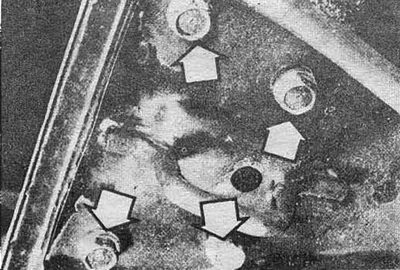
Fig. 13.7a Bolts for fastening the front end of the central cross member (arrow)
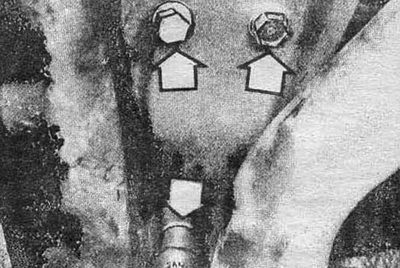
Fig. 13.7b Bolts for fastening the rear end of the central cross member
8. On 4WD models, remove the left housing and pinion gear from the transmission housing. On all models, remove the engine-to-transmission shield.
9. Loosen the bolts and remove the oil pan.
10. Clean the pan and block from the remains of the old gasket. Wash the surfaces.
11. Clean the threaded holes in the block.
12. Check the oil pan flange for flatness, especially in the bolt installation area.
13. Check for cracks in the oil pump intake pipe. If this unit needs to be removed, see Section 14.
14. Apply sealant to the corners of the oil pan.
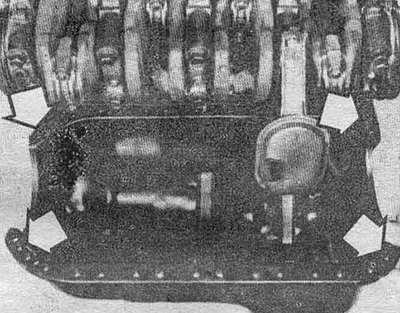
Fig. 13.14 Places where sealant is applied to the oil pan (arrows)
15. Install a new gasket. Install the oil pan. The tightening order of the bolts is shown in Fig. 13.15, and the tightening force is in the specification. We recommend tightening the bolts in three to four steps.
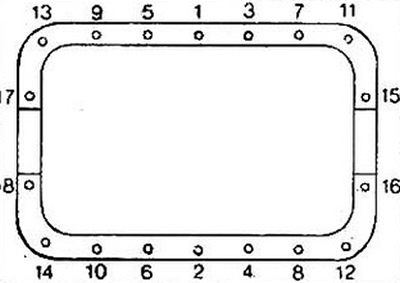
Fig. 13.15 Oil pan mounting bolt tightening sequence
16. Assemble in the reverse order of disassembly. Don't forget to install a new oil filter and fill the engine with oil.
17. Start the engine and check for oil pressure and leaks.