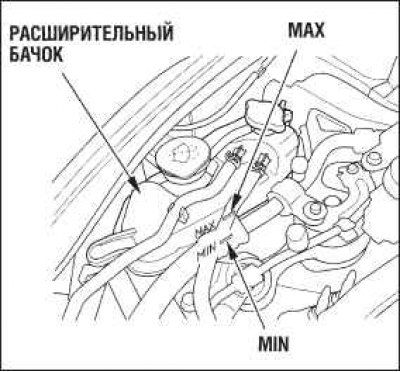
If the coolant level has dropped to the "MIN" mark or below, add coolant and bring its level up to the upper "MAX" mark. Check for signs of coolant leakage from the engine cooling system.
Use only Honda All Seas "ON" Antifreeze/Coolant Type 2 all-season coolant. This coolant is a mixture of equal proportions of antifreeze and water. It is forbidden to add undiluted antifreeze or plain water to the cooling system.
An unsuitable antifreeze can cause corrosion damage to numerous cooling system components that are made of aluminum alloy. Some brands of antifreeze found on the market, despite the manufacturers' claims that these products are neutral to aluminum, do not provide adequate anti-corrosion protection for aluminum components.
Warning! It is dangerous to remove the expansion tank cap while the engine is still hot. This may result in severe burns from hot coolant splashes or steam.
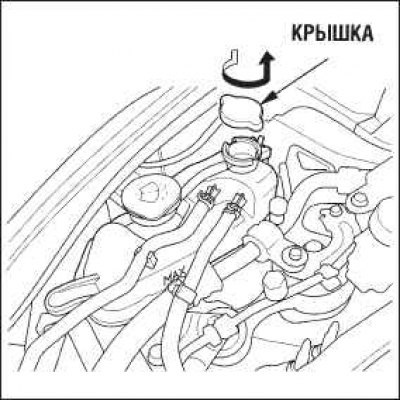
For safety reasons, do not remove the expansion tank cap until the engine and radiator have cooled down.
Make sure the engine and radiator are cool.
Turn the expansion tank cap counterclockwise by 1/8 of a turn. This will reduce the pressure in the engine cooling system to atmospheric pressure.
Press the cap from above and turn it counterclockwise. Then remove the cap from the expansion tank.
The coolant level in the radiator should be level with the "MAX" mark on the tank wall. If necessary, add coolant to the radiator.
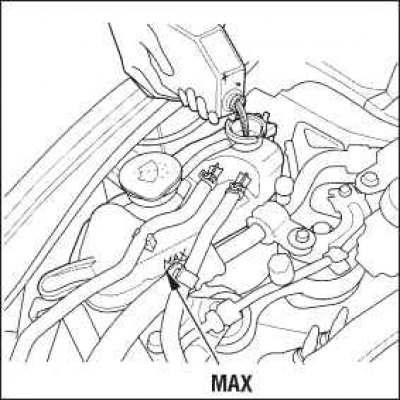
Add coolant slowly and carefully, being careful not to spill it. Wipe off any spilled coolant immediately, as it may damage components in the engine compartment
Replace the expansion tank cap. Turn it clockwise until it stops.
Do not add any additional corrosion inhibitors or other additives to the coolant. These products may react with the coolant or be aggressive towards the materials of the engine parts or radiator.
[Based on materials from the website Hondabook.ru]