
2. Check that the battery terminals are securely connected and that there is no corrosion on them.
3. Check fuses and fuse links.
4. Check the drive belt of the attachments.
5. Inspect the wires going to the generator, check the reliability of their connection, the condition of the wiring, and the presence of extraneous noise coming from the generator when the engine is running.
6. Checking the electrical circuit of the generator and voltage regulator.
a) Make sure the battery is fully charged.
b) Connect the ammeter (0 - 400 A) and voltmeter (0 - 20 V) as shown in the figure.
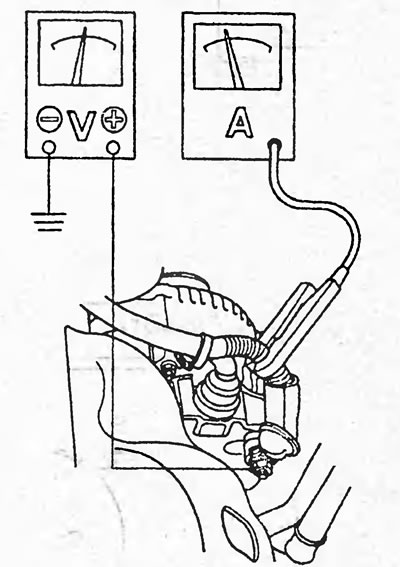
D15B, D17A.
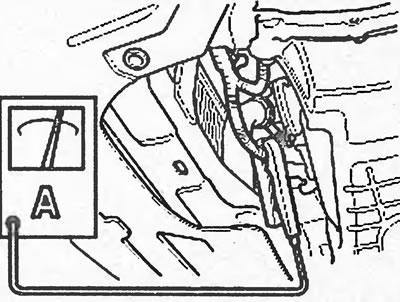
K20A.
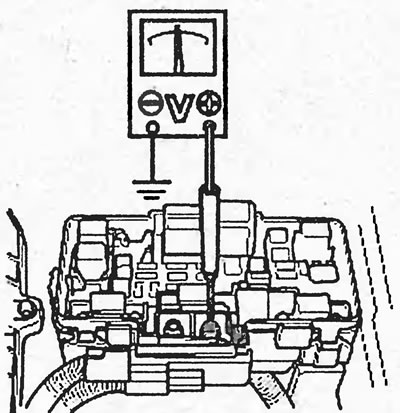
K20A.
c) Start the engine. Increase the speed to 3000 rpm (no load), wait until the cooling fan turns on, then set the idle speed.
d) Increase the engine speed to 2000 rpm and leave the engine running.
d) Turn on the headlights and measure the voltage at the generator terminal.
Voltage - 13.9-15.1 V
If the voltage differs from the specified value, repair the generator.
e) Measure the current at a voltage of 13.5 V.
Note: Set the correct voltage including fan motors, wipers, etc.
Current strength not less than 60 A
If the ammeter readings differ from the specified value, repair the generator.
[The article was taken from the website www.hondabook.ru]