
Contents: Examination ⇊ Replacement ⇊
The PSP switch is used on models manufactured for the US market and is a normally closed switch. The switch is included in the hydraulic line and is located near the rack and pinion housing. When the steering wheel is turned sharply, (for example, when parking or making sharp turns) the pressure in the power steering system increases significantly and the PSP switch-sensor, opening, informs the ECM/PCM about this, which accordingly increases the idle speed, compensating for the increasing load on the engine. If the switch-sensor malfunctions, the OBD self-diagnostic system enters the corresponding fault code into the processor memory.
Examination
1. If the engine stalls when making maneuvers while parking the car, check the proper functioning of the PSP switch sensor. A faulty switch sensor can also lead to constantly increased engine speed.
2. Disconnect the electrical wiring from the sensor switch.
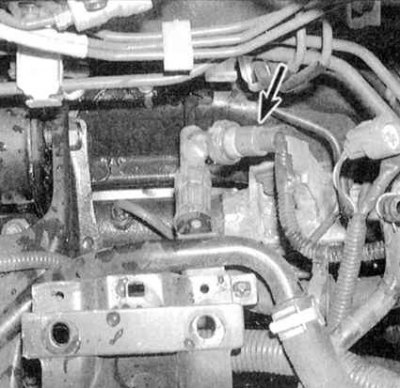
3. Connect an ohmmeter to the sensor terminals (see accompanying illustration).
5. Start the engine at idle speed.
6. Bring the front wheels of the car into a straight-ahead position and read the ohmmeter reading, which in this case should be close to zero.
7. Rotate the steering wheel in any direction and observe the meter readings. When the steering wheel approaches any of the extreme positions, the PSP switch sensor should open, which is confirmed by an infinite reading on the ohmmeter.
8. If the test results are negative, replace the switch sensor. If the switch sensor is OK, check the engine idle speed settings.
Replacement
1. Disconnect both wires from the battery.
Caution! The negative cable should always be disconnected first and reconnected last. If the car stereo system is equipped with a security code, make sure you have the correct combination to activate the system before disconnecting the battery!
2. If necessary, jack up the front of the car and place it on supports.
3. Disconnect the electrical wiring from the sensor-switch and unscrew the latter from its nipple connection.
4. Install a replacement sensor-switch in place of the one that came out and lower the car to the ground.
5. Remove air locks from the hydraulic circuit of the power steering system (see Chapter Suspension and steering). If necessary, adjust the fluid level (see Chapter Routine maintenance).
Refer to the original source on the website HONDABOOK.ru