
2. Install the main bearing caps and tighten them to specification.
3. The most common hone is one with spring-loaded bars. In addition to the hone, you will need some kerosene, rags and an electric drill. The honing process is as follows:
- a) mount the hone on the drill, compress the bars and insert the hone into the cylinder;
- b) Lightly lubricate the cylinder walls with kerosene, turn on the drill and move the hone up and down until a regular intersecting pattern is formed on the walls. Ideally, the lines should intersect at an angle of 60 degrees. Make sure that during the honing process the walls are not wetted more than necessary.
- c) do not remove the hone from the cylinder when the drill is turned on. Moreover, make several strokes of the hone when the drill is turned off and only then remove it.
- d) Repeat the procedure on other cylinders.
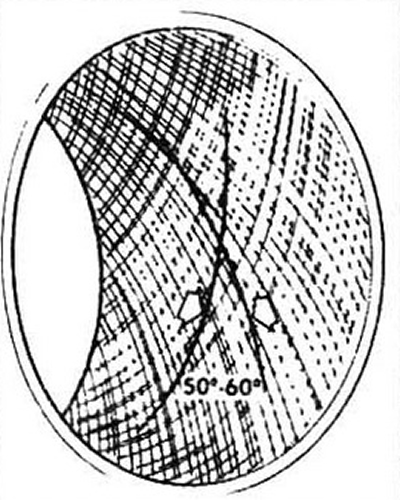
Fig. 16.3 Ideally, the hone lines should intersect at an angle of 50-60 degrees
4. After honing, be sure to restore the chamfer on the upper part of the cylinder wall to avoid breakage of the piston rings during assembly. Work carefully with a file, do not damage the walls.
5. Thoroughly rinse the block from abrasive.
6. Dry the block and lubricate the surfaces with a thin layer of oil.
The original text of the article is located on the website www.hondabook.ru