
2. The method for measuring the gaps in the ring lock is described below.
3. Insert the ring into the cylinder and push it with the piston to the position corresponding to the ring stop at the bottom dead center.
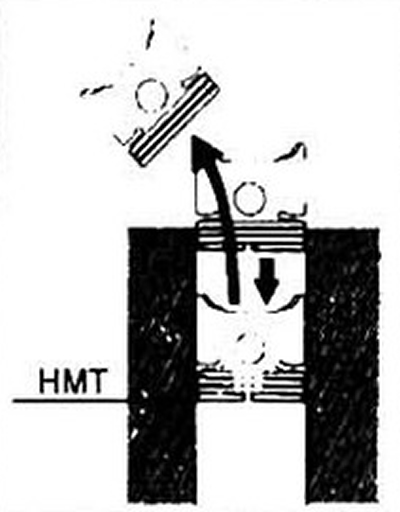
Fig. 21.3 To check the gap in the ring lock, push it with the piston to the BDC position
4. Use a flat feeler gauge to measure the gap in the lock. The feeler gauge should slide when applying a small amount of force. Compare the measurement results with the specification data.
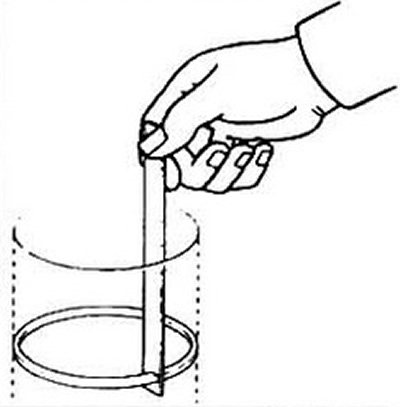
Fig. 21.4 Measuring the gap in the lock
5. A small gap in the lock can lead to ring breakage during normal engine operation. You can increase the gap using a file. Fix the file in a vice, press it and file the ring with slow movements.
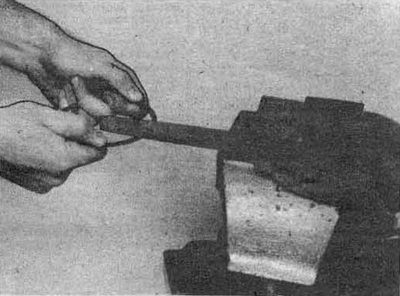
Fig. 21.5 Correcting a small gap. Use a file with a single-sided cut
6. Remember that the critical gap in the lock is 1 mm.
7. Repeat steps 2-6 for all rings.
8. Install the rings in their places on the corresponding pistons.
9. The first thing to install is the oil scraper ring. It usually consists of three components. Install the expander (see fig. 21.9a) into the groove, if the ring design uses a rotation lock. Insert it into the hole in the piston groove, then install the guide. When assembling the oil scraper ring, do not use a ring puller, work with your hands. Press the guide tightly to the groove and rotate it until it is fully seated, do the same with the upper guide.
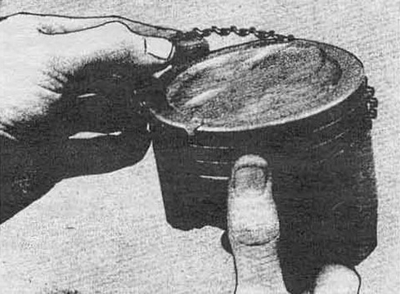
Fig. 21.9a Installing the oil scraper ring expander
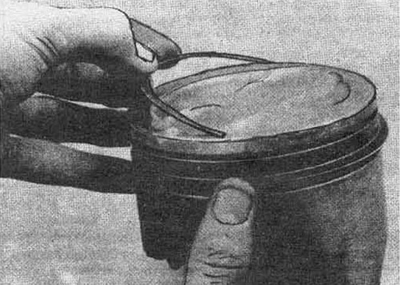
Fig. 21.9b Do not use a ring puller to install the oil scraper guide rings
10. Check the ease of rotation of both guides in the piston groove.
11. Install the second ring on the piston, then the first. Do not mix them up: they have different sections. The orientation of the rings is indicated on their side surface.
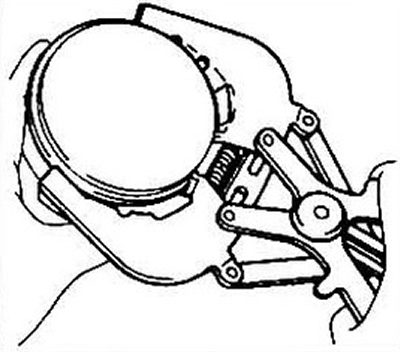
Fig. 21.11 Installing compression rings with a puller
The text was taken from the website Hondabook.ru