
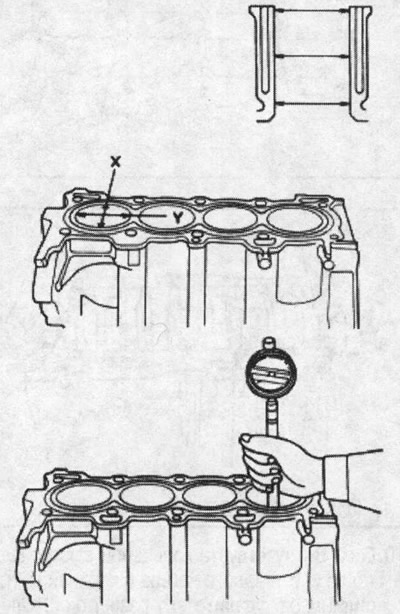
Cylinder diameter:
- Standard (new): 75.00-75.02 mm
- Limit: 75.07 mm
Increased repair size:
- by 0.25: 75.25-75.27 mm
- by 0.50: 75.50-75.52 mm
Cylinder taper:
- Limit: (difference between first and third measurement): 0.05 mm
If the measurements in any cylinder exceed the oversize, replace the cylinder block.
In case of block boring, see the section "Checking the clearance between the piston and the cylinder wall" above.
Note: Cylinders with scoring or scratches should be honed. Maximum metal thickness removed during boring: 0.5 mm.
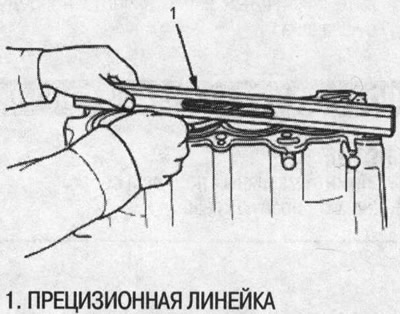
2. Check the surface of the block connector for warping.
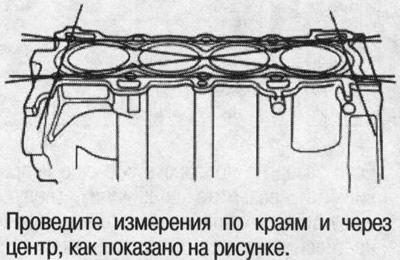
Warping of the cylinder block joint surface:
- Standard (new): 0.07 mm
- Limit: 0.10 mm
Cylinder wall honing
1. Measure the cylinder bore as above. If the block is to be reused, hone the cylinder walls and remeasure the cylinder bore.
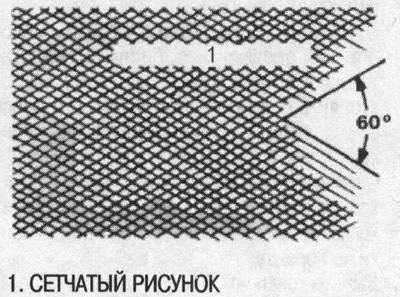
2. Hone using oil and fine (#400) abrasive material so that the grid pattern lines intersect at a 60° angle.
Note:
- Use only a hard hone with fine (#400) abrasive such as Sunnen, Ammco or equivalent.
- Do not use worn or broken tools.
3. After honing, thoroughly clean the cylinder block of metal particles. Wash the cylinders with hot soapy water, then dry and immediately lubricate with oil to prevent rust.
Note: Do not use solvents, they will only smear the particles on the cylinder walls.
4. If there are still burrs or scratches on the cylinder walls after honing, reboring of the cylinder block is required.
Note: Minor vertical nicks and scratches are acceptable provided they do not catch a fingernail and do not run the entire length of the cylinder.
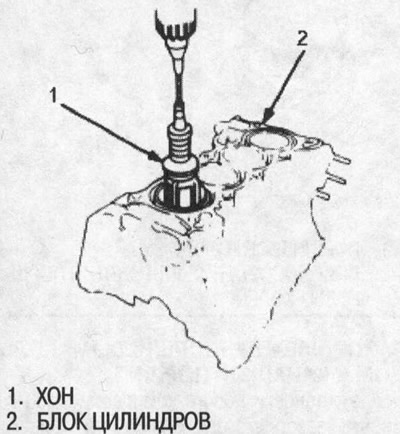
Note:
- After honing, rinse cylinders thoroughly with hot soapy water.
- Only those cylinders that have burrs or scratches on their walls require honing.