
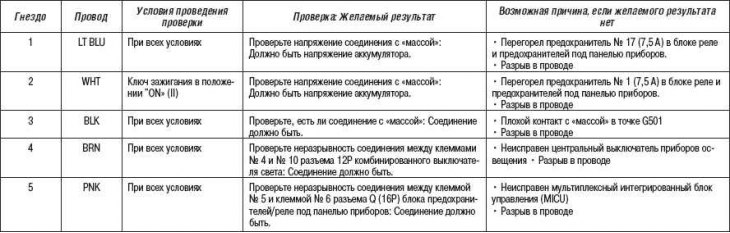
Attention! When the main light switch is switched on, a high voltage (25,000 V) briefly occurs in the gas-filled high-intensity (HID) lamp holder, which can cause severe electric shock or even death if the following safety rules are not followed.
Caution: Never turn on the combination light switch until the HID bulbs are installed in their sockets and the headlamp assembly is complete.
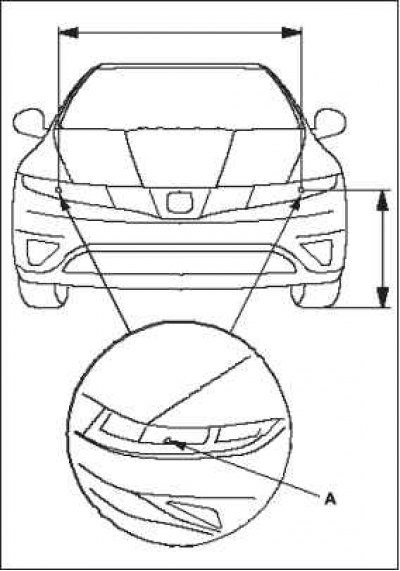 |
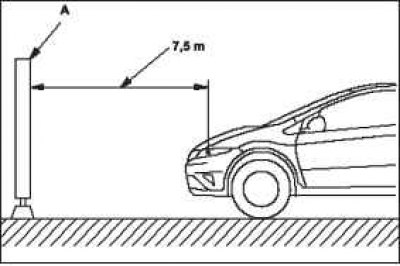 |
To avoid electric shock, do not work on headlight assemblies in damp conditions, in rain or snow, near a sprinkler system, or when your hands are wet. Do not touch the bulbs with bare hands and do not allow oil or grease to come into contact with the glass surface of the bulb. Do not disassemble the inverter and igniter assemblies. Do not attempt to connect a gas-filled bulb to any power source other than your vehicle's battery.
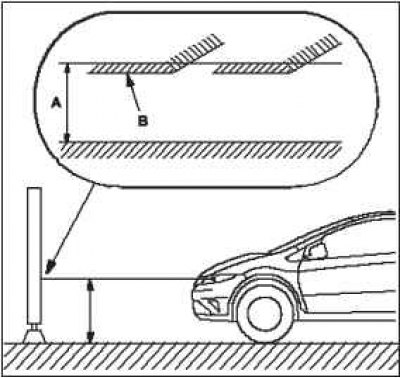 |
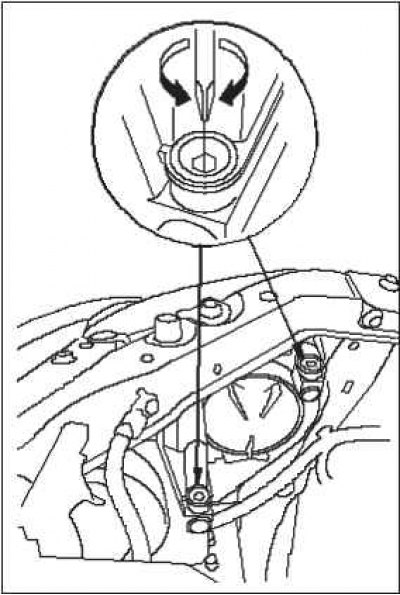 |
1. Check fuses #16 (15A), #17 (15A), and #21 (30A) in the under-dash fuse/relay box.
Are the fuses OK?
- YES - go to step 2.
- NO - Replace the fuse and retest.
2. Select "HEADLIGHT COMMAND" in the check menu "FUNCTIONAL TESTS" using HDS, then turn the headlights forcibly.
Did the headlights come on?
- YES - Go to MICU Input Tests, then check terminals S5 and S11.
- NO - go to step 3.
3. Turn the ignition key to the "OFF" position.
4. Disconnect the negative cable from the battery, then disconnect the positive cable.
5. Remove the HID bulb.
6. Check the luminous part of the bulb.
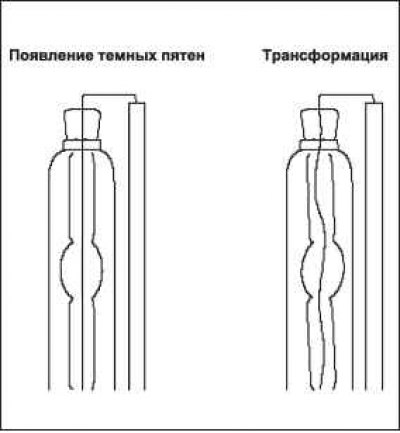
Are there any dark spots or changes in shape?
- YES - Replace the HID bulb and retest.
- NO - go to step 7.
7. Replace the right and left HID bulbs. Do they function differently?
- YES - Replace the HID bulb and retest.
- NO - go to step 8.
8. Install the HID bulb and socket. Is the installation OK?
- YES - proceed to step 9.
- NO - Replace the lamp socket and retest.
9. Check contact part A of the bulb socket.
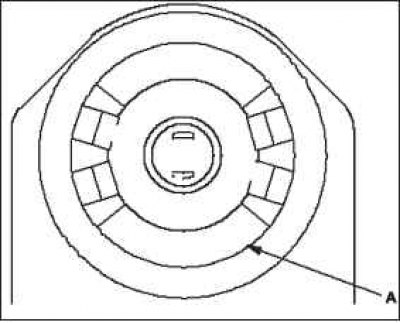
Is the contact part OK?
- YES - go to step 10.
- NO - Replace the lamp socket and retest.
10. Disconnect the 2P connector of the HID unit.
11. Turn on the main combination light switch.
12. Measure the voltage between terminal No.2 of the 2P HID connector and the body ground.
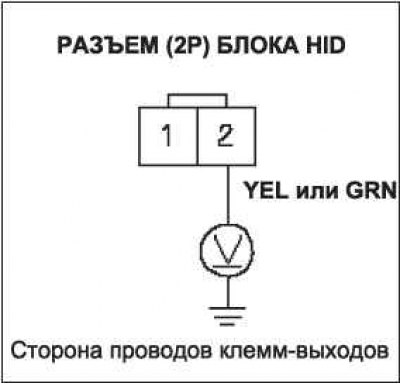
Is there voltage on the battery?
- YES - go to step 13.
- NO - go to step 14.
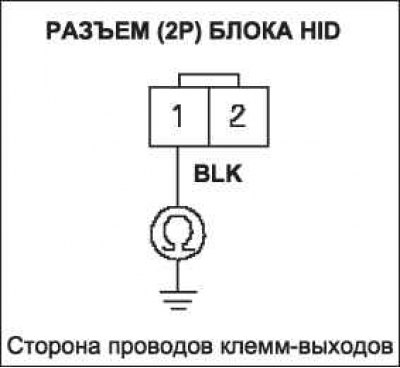
13. Check the connection between terminal No.1 of the 2P HID connector and the body ground.
Is the connection continuous?
- YES - HID unit is faulty.
- NO - Repair the open in the wire between the HID unit and the body ground. If the wire is OK, check for a good ground connection at G201 or G301.
14. Measure the voltage between terminal No.17 of connector G (21P) or terminal No.4 of connector F (34P) of the under-dash fuse/relay box and body ground.
Is there battery voltage?
- YES - Repair open in the wire between the HID unit and under-dash fuse/relay box G (21P) or F (34P).
- NO - The MICU is faulty. Replace the fuse and relay box located under the instrument panel.