
1. Checking the condition of the cooling system components should be done after the power unit has completely cooled down (not less than three hours after the engine has been stopped).
2. Remove the radiator cap by first turning it to the left until it stops. If you hear a hissing sound, indicating excess pressure in the system, wait until it stops, then press the cap down with your palm and continue turning it to the left until it is completely released. Thoroughly rinse the cap inside and out with clean water. Also rinse the radiator filler neck. All traces of corrosion must be completely removed from the surfaces being cleaned. The coolant in the system should be relatively transparent. If the liquid is rust-colored, the system must be flushed and filled with a fresh mixture (see Cooling system maintenance (emptying, flushing and filling) (every 48,000 km or once every 24 months)). If the fluid level does not reach the top, add a little more of the mixture of the required composition to the radiator (see Checking fluid levels (every 400 km or weekly)).
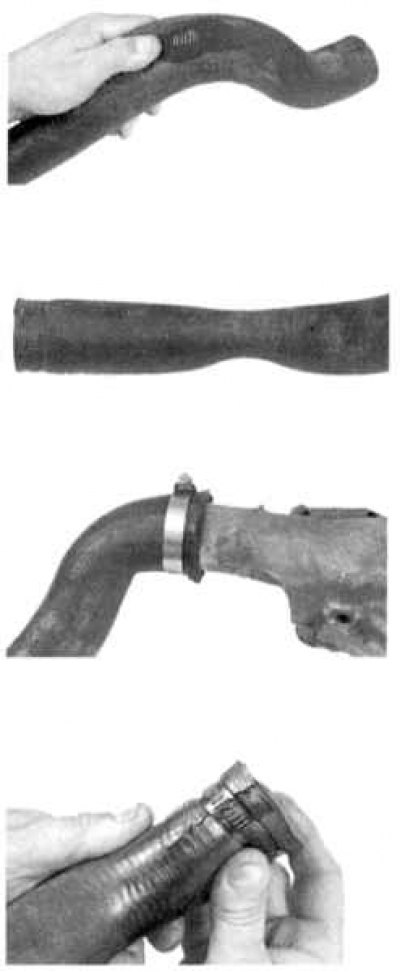
3. Carefully inspect the upper and lower radiator hoses along with the smaller diameter cabin heating hoses located between the power unit and the engine compartment bulkhead. Check the hoses along their entire length and replace any defective components if cracks, bulges or signs of material aging are detected. Small cracks are usually easier to see when squeezing the hose (see accompanying illustration). Regardless of condition, hoses should be changed approximately every two years.
4. Check that all hoses are securely fastened to their fittings/pipes. Coolant leaks usually appear as rusty or white streaks on surfaces surrounding the source. If the hoses are secured to the fittings/pipes with twist-type clamps, it would be useful to replace them with more reliable worm or screw-type clamps.
5. Using compressed air or a soft brush, remove old leaves, insect remains and other debris from the gaps between the radiator heat exchanger plates. Try not to damage the soft heat exchanger plates or cut your fingers on their sharp edges.
6. Every other check, and at the first sign of a malfunction in the cooling system, perform a pressure test of the radiator cap. If you do not have the appropriate equipment at hand, contact a service station for assistance.