
Contents: Cleaning ⇊ Inspection ⇊
When cleaning the cylinder head and valve train parts, carefully inspect them to decide on the scope of service work.
Note: If the engine has been overheated, there is a high probability of warping the head (see step 12).
Cleaning
2. Remove all traces of old gasket and seals from all mating surfaces. Do not scratch the surfaces.
3. Clean all coolant passages.
4. Use a stiff brush to clean all openings from deposits.
5. Use taps to clean all threaded holes from corrosion and dirt. Blow out the holes with compressed air.
6. Rinse the head with solvent and dry it.
7. Wash and blow out the rocker arms with compressed air (try not to confuse them).
8. Wash and dry the valve springs, spring seats, crackers and plates. Do not mix parts belonging to different valves.
9. Clean the valves from carbon deposits.
Inspection
Cylinder head
10. Inspect the head for cracks indicating coolant leaks and other damage. If cracks are found and they cannot be repaired, replace the head.
11. Using a parallel bar and flat feeler gauges, measure the head warpage. If the warpage exceeds the limit, the head requires mechanical processing.
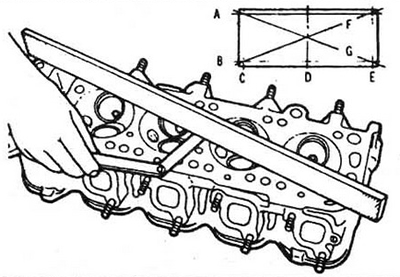
Fig. 9.11 Checking head warpage using a plane-parallel bar and feeler gauge
12. Inspect the valve seats in each combustion chamber. If they are worn, cracked or burnt, they require repair.
13. Measure the clearance in the valve stem/guide pair by rocking the valve and the indicator head. The valve should move away from the seat by about 1.5 mm. The total indicator reading when rocking the stem should be divided by two to obtain the actual clearance value. If the measurement results are in doubt, repeat the measurements using another method.
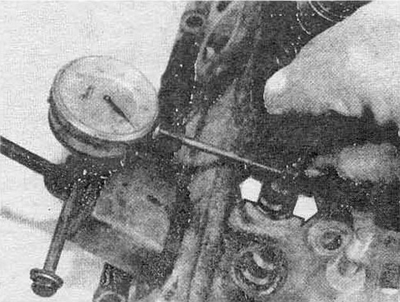
Fig. 9.13 Measuring the gap in the guide using an indicator. The arrows show the direction of the stem swing
Valves
14. Carefully inspect the valve bevel for wear, deformation, pitting and burn-through areas. Inspect the stem: are there any abrasions, nicks or cracks on it, determine the presence of bends by rotating the valve. There should be no excessive wear or pitting on the end of the stem. The presence of any of the listed defects indicates the need to restore the valve.
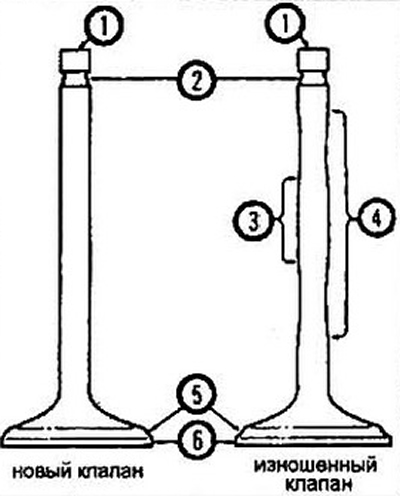
Fig. 9.14 Valve stem wear measurement locations:
1 - end of the stem;
2 - cracker grooves;
3 - zone of least wear;
4 - zone of greatest wear;
5 - valve chamfer;
6 - plate.
15. Measure the valve disc edge thickness. If the edge thickness is less than the limit, the valve must be replaced.
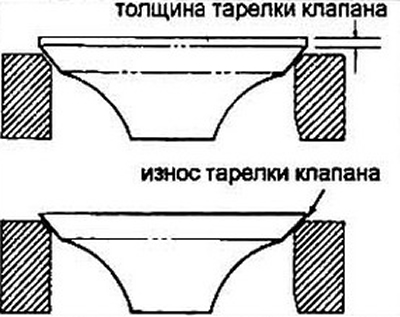
Fig. 9.15 The valve plate thickness must not be less than the specification. Otherwise, the valve must be replaced
Valve parts
16. Check the valve springs for wear and pitting. Measure the free length of the spring and compare it with the maximum. Springs with a length shorter than the maximum cannot be reinstalled. In addition to measuring the free length, springs must be rejected based on their stiffness (work on a special device).
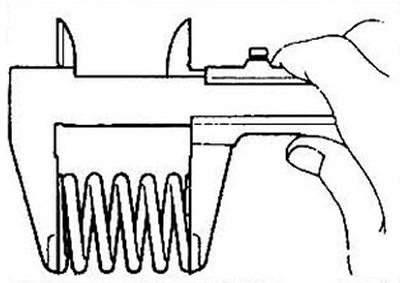
Fig. 9.16 Measuring the free length of a spring
17. Place the spring on a flat surface and check that it is perpendicular. If the spring is bent, replace it.
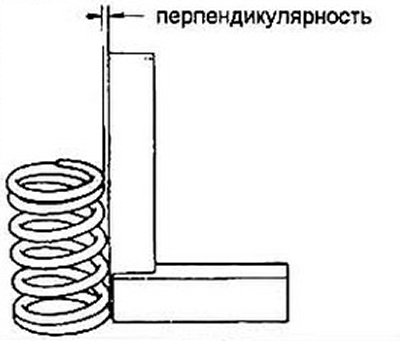
Fig. 9.17 Measuring the perpendicularity of the ends and the spring axis
18. Inspect the plates and crackers. If there is any doubt about the suitability of these parts, replace them.
Rocker arms
19. Check the contact surfaces of the rocker arms for pitting, wear, scoring, chips and unevenness. Check the condition of the threads of the adjusting screws. Inspect each rocker arm for looseness;your cracks.
20. Check the condition of the threaded holes of the rocker arm axle stand bolts.
All details
21. Any damaged or worn parts must be replaced with new ones.
22. If the inspection results show a general poor condition of the valve mechanism, and the wear of its parts is beyond acceptable limits, which is the reason for engine repair, refer to section 10 for recommendations.
The text was taken from the website: HONDABOOK.ru