
2. Using a small wire brush, clean carbon deposits from the combustion chambers and valve passages.
3. Inspect the cylinder head for cracks in the exhaust ports, combustion chambers or external cracks.
4. Clean the valve guides thoroughly using a suitable wire brush on the bore.
Excessive clearance between the valve stem and the valve bore walls will cause excessive oil consumption and may also cause valve failure. Insufficient clearance will cause the valve to stick and cause noise when the valves operate.
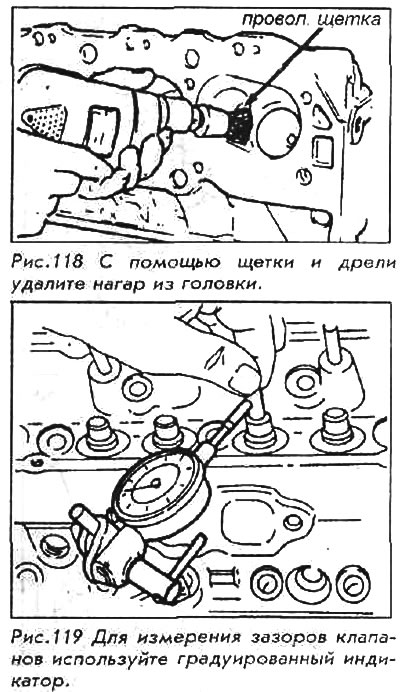
5. Measure the clearance between the valve stem and the channel walls as follows:
- a. Attach the dial indicator to the edge of the cylinder head.
- b. Position the indicator so that movement of the valve stem from side to side (across the cylinder head) will cause the indicator stem to move straight. The indicator stem should touch the side of the valve stem just above the valve guide.
- c. Pull out the valve until the valve head is 1.6 mm from the valve seat.
- d. Move the valve stem from side to side using light pressure to obtain a clearance reading. If the clearance exceeds specifications, the valve guides will need to be widened or replaced.
6. Inspect the rocker arm posts for wear or damage.
7. Install a micrometer into the valve guide and check the valve seat for concentricity.
Surface treatment
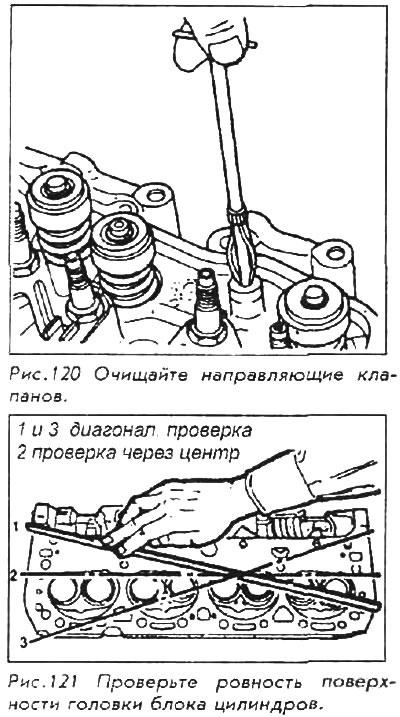
1. Using a rectangle, check the cylinder for deformation.
2. If the deformation exceeds 0.05 mm, the cylinder head must be replaced. Surface treatment can be carried out, but the total reduction in head thickness should not exceed - 0.05 mm. Since almost any deformation exceeds this value, surface treatment is generally not recommended by Honda.
Full text available on the portal: hondabook.ru