Contents: Removal ⇊ Installation ⇊
Warning: Do not allow antifreeze to come into contact with skin or painted surfaces. Immediately rinse with water any areas where antifreeze comes into contact with skin; do not store antifreeze in open containers. Antifreeze has a sweet taste that may attract children or animals. Toxic. Fire hazard.
Wait until the engine has cooled down completely before starting work.
Removal
1. Disconnect the negative cable from the battery.
2. Drain the coolant (see Chapter 1). If the antifreeze is new or in good condition, it can be reused.
3. Cut the wire hose clamps and remove the radiator hoses. If they are stuck, gently pry the hoses with a suitable tool and twist the hose to release it. Do not damage the radiator hoses. If the hoses are old or cracked, replace them.
4. Remove the distributor cap (see Chapter 1).
5. Disconnect the fan motor plug (see fig. 4.6)
6. Remove the hood latch mounting bolts and move it to the side.
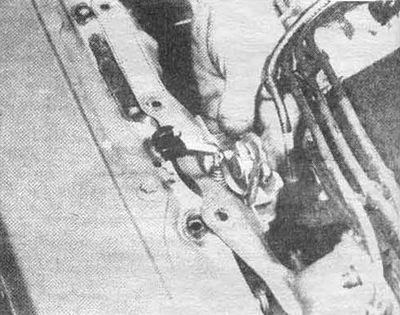
Fig. 5.6 Removing the hood latch
7. Remove the two radiator-to-body mounting bolts and the bolt holding the left-hand hood latch.
8. Remove the bolts that support the vertical brace located at the front of the radiator. The lower brace bolts are removed from the vehicle side.
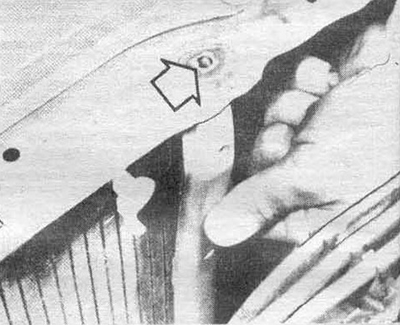
Fig. 5.8a Fastening the vertical brace on top of the engine compartment
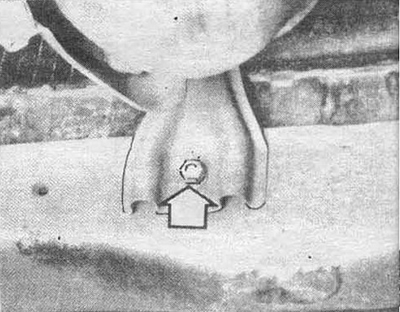
Fig. 5.86 Fastening the vertical brace to the bottom of the vehicle
9. Remove the fan (see Section 4).
10. If the vehicle is equipped with an automatic transmission, disconnect the transmission oil cooler lines and place a tray underneath to save the transmission oil.
11. Plug the connection points of the gearbox radiator pipes.
12. Carefully remove the radiator.
13. Check the removed radiator for leaks and damage.
14. Clean the radiator surfaces with compressed air and a soft brush. Do not bend the cooling fins.
15. Check the radiator mounting locations and make sure there are no obstacles to installation and the integrity of the rubber cushions.
Installation
16. The radiator is installed in the reverse order.
17. Fill the system with a mixture of antifreeze and water. If necessary, contact the Chapter 1.
18. Start the engine and check for leaks. After reaching normal operating temperature, check that the upper radiator tank is hot. Check the coolant level. Top up if necessary.
19. On a car with an automatic transmission, check the oil level (see Chapter 1).