
HondaBook.ru
Auto companies Volkswagen Auto companies Ford Auto companies Lada Auto companies Skoda Auto companies BMW Auto companies Mazda Auto companies Peugeot
English Русский
Български
Беларускі
Український
Српски
Hrvatski
Română
Polski
Slovenský
Magyar
Bookmark Contacts Sitemap   


Accord Civic Fit / Jazz CR-V HR-V Others Articles
Civic 3 and 4 (1983-1991) Civic 5 and 6 (1991-2000) Civic 6 (1995-2000) Civic 7 (2000-2005) Civic 8 (2005-2011)

Rear shock absorbers — removal and installation (Honda Civic 3)

  • Main
  • Honda Civic
  • 3 (1983-1991)
  • Chassis and running gear
  • Car suspension
  • Rear shock absorbers — removal and installation
0
Contents: Models produced between 1984 and 1987 ⇊ Models produced since 1988. ⇊
1. Loosen the rear wheel nuts, lift the car and place it on stands. Remove the wheels.

Models produced between 1984 and 1987


2. Place the jack under the rear axle beam (see fig. 14.2) and lift the axle.
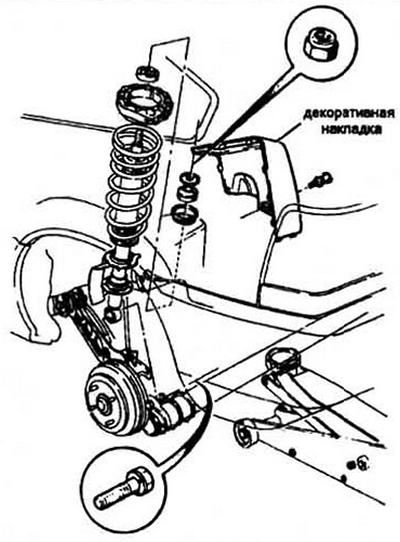
Fig. 14.2 Assembling the rear pillar (models…

Fig. 14.2 Assembling the rear pillar (models 1984-1987)


3. Remove the decorative trim and protective cap from the vehicle interior.

4. Remove the upper mounting nut. Use a hex key to prevent the shock absorber rod from rotating. Remove the washer and rubber cushion.
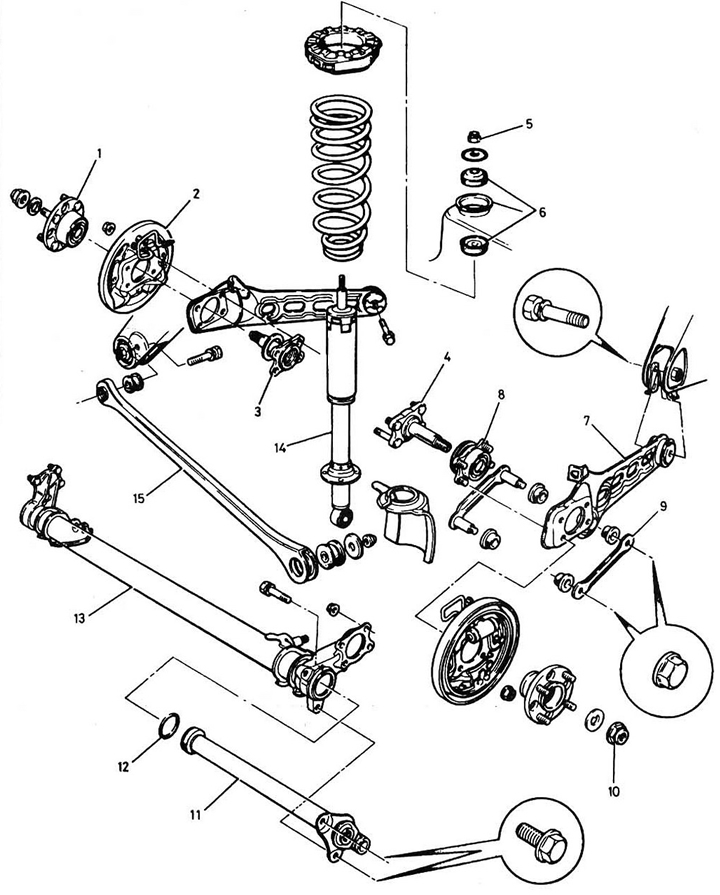
Fig. 14.4 Rear suspension assembly (models…

Fig. 14.4 Rear suspension assembly (models 1984-1987.) 1 - hub; 2 - brake support shield; 3 - trunnion; 4 - trunnion; 5 - upper shock absorber mounting nut; 6 - rubber cushion; 7 - guide lever; 8 - bearing unit; 9 - lever; 10 - hub nut; 11 - stabilizer; 12 - stabilizer oil seal; 13 - rear axle beam; 14 - shock absorber; 15 - Panhard rod.


5. Slowly lower the jack until the load is removed from the springs.

6. Remove the lower strut mounting bolt, lower the jack completely and remove the shock absorber

7. Inspect the shock absorber, see section 3. Remember the relative position of the parts

8. Installation is performed in the reverse order of removal. The springs are installed with the smaller diameter coils facing down. Tighten the fasteners with the force specified in the specification. Perform the final tightening with the vehicle standing on the ground.

Models produced since 1988.


9. Remove the decorative trim from the vehicle interior to gain access to the upper shock absorber mounting nut.

10. Remove the nut cap.

11. Unscrew the nut.

12. From underneath the vehicle, unscrew the bolt securing the strut to the lower arm.
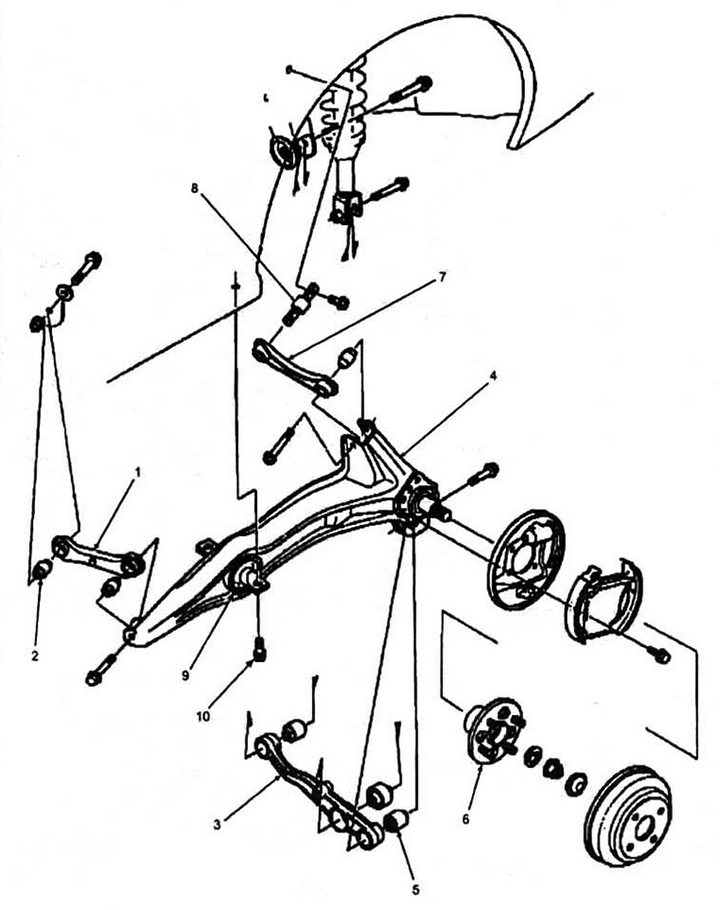
Fig. 14.12 Rear suspension (models since 1988.) 1…

Fig. 14.12 Rear suspension (models since 1988.) 1 - compensation lever; 2, 5 - silent block; 3 - lower arm; 4 - trailing arm suspension (guide); 6 - hub; 7 - upper arm; 8 - Upper arm bushing; 9 - guide lever bushing; 10 - bushing mounting bolt.


13. Pull back the lower arm and remove the shock absorber

14. Installation is carried out in the reverse order of removal. Tighten the fasteners to the torque specified in specifications.

The article was copied from the website: HondaBook
This article is available at: russian, bulgarian, belarusian, ukrainian, serbian, croatian, romanian, polish, slovak, hungarian
This information has been verified: Yaroslav Shiryaev
Share with friends:
◀ Previous
Civic 3 and 4: Car suspension
Next ▶

Ball joints — replacement
Upper Control Arm (1988 and later models) — Removal and Installation
Lower arm (models produced since 1988) — removal and installation
Jet thrust (models produced since 1988) — removal and installation
Front stabilizer and bushings — removal and installation
Rear hub — removal and installation
Guide Arm (1984 to 1987 Models) — Removal and Installation
Panhard Rod (1984-1987 Models) — Removal and Installation
Rear Axle Beam (1984-1987 Models) — Removal and Installation
Wheel Pin (1984-1987 Models) — Removal and Installation
See also other articles from Honda manuals:
Checking shock absorbers Honda Accord 3 (1985-1989)
Checking the rear shock absorber Honda Fit 1 (2001-2008)
Disposal of shock absorbers Honda CR-V 2 (2002-2006, petrol)
Disposal of shock absorbers Honda HR-V 1 (1998-2006, petrol)
Rear shock absorbers Honda Avancier 1 (1999-2003, petrol)
Link in different formats to this article
Comments and feedback from visitors
No comments yet


How much will 24 + 25 ?


Civic 8 (2005-2011) 
  • General information
  • Technical data
  • Governing bodies
  • Driving and maintenance
  • Power unit
  • Gasoline engines (L13A)
  • Gasoline engines (R18A)
  • Diesel engines (N22A)
  • Cooling and lubrication (L13A)
  • Cooling and lubrication (R18A)
  • Cooling and lubrication (N22A)
  • Injection system (gasoline)
  • Injection system (diesel)
  • Toxicity reduction system
  • Troubleshooting
  • Transmission
  • Clutch and drive shafts
  • Mechanical gearbox
  • Chassis and running gear
  • Suspension and wheels
  • Steering
  • Brake system
  • Body and interior
  • Exterior (external elements)
  • Doors, locks and windows
  • Electrical equipment
  • Equipment and devices
  • Headlights and lighting
  • Power devices
  • Electrical circuits
Civic 7 (2000-2005) 
  • General information
  • User manual
  • Maintenance
  • Power unit
  • Engines D15B and D17A
  • K20A Engines
  • Overhaul engine
  • Cooling system
  • Lubrication system
  • Fuel injection system
  • Toxicity reduction system
  • Engine electrical equipment
  • Transmission
  • Clutch
  • Manual gearbox
  • Automatic gearbox
  • Variator (CVT)
  • Drive shafts
  • Chassis and running gear
  • Car suspension
  • Steering
  • Brake system
  • Body and interior
  • Exterior (external elements)
  • Interior (internal elements)
  • Doors, locks and windows
  • Heater and air conditioner
  • Manual air conditioner
  • Automatic air conditioner
  • Security system
  • Electrical equipment
  • Equipment and devices
  • Headlights and lighting
  • Windscreen wipers
  • Audio system
  • Electrical diagrams
Civic 6 (1995-2000) 
  • General information
  • Introduction to guide
  • User manual
  • Maintenance
  • Power unit
  • Engine in car (Civic)
  • Engine in car (Integra)
  • Engine overhaul
  • Cooling and heating
  • Power and exhaust systems
  • Engine electrical equipment
  • Engine management systems
  • Transmission
  • Manual gearbox
  • Automatic transmission (AT/CVT)
  • Clutch and drive shafts
  • Chassis and running gear
  • Brake system
  • Car suspension
  • Steering
  • Body and interior
  • Exterior (external elements)
  • Interior (internal elements)
  • Doors, locks and windows
  • Electrical equipment
  • Equipment and devices
  • Electrical circuits
Civic 5 and 6 (1991-2000) 
  • Power unit
  • SOHC engines
  • DOHC engines
  • Engine overhaul
  • Cooling and lubrication system
  • Intake and exhaust system
  • Fuel injection system (SOHC)
  • Fuel injection system (DOHC)
  • Carburetor
  • Transmission
  • Clutch
  • Manual gearbox S4C
  • Manual gearbox S40
  • Automatic gearbox
  • Drive shafts
  • Chassis and running gear
  • Car suspension
  • Steering
  • Brake system
  • Body and interior
  • Body elements
  • Heater and air conditioner
  • Electrical equipment
  • Power devices
  • Equipment and instruments
  • Electrical circuits
Civic 3 and 4 (1983-1991) 
  • General information
  • Maintenance
  • Power unit
  • Engine in a car
  • Engine overhaul
  • Cooling system
  • Power and exhaust system
  • Engine electrical equipment
  • Emission control system
  • Transmission
  • Mechanical gearbox
  • Automatic gearbox
  • Clutch and drive shafts
  • Four-wheel drive
  • Chassis and running gear
  • Brake system
  • Car suspension
  • Steering
  • Body and interior
  • Body elements
  • Electrical equipment
  • Equipment and devices
  • Electrical circuits
HondaBook.ru © 2018–2026 • Mobile version • Sitemap: EN BG BY UA RS HR RO PL SK HU • Feedback • Driver Information • Search system • Bookmark
Accord 3 (1985-1989) • Accord 6 (1997-2002) • Civic 3 and 4 (1983-1991) • Civic 5 and 6 (1991-2000) • Civic 6 (1995-2000) • Civic 7 (2000-2005) • Civic 8 (2005-2011) • Fit 1 (2001-2008) • CR-V 1 (1995-2001) • CR-V 2 (2002-2006) • HR-V 1 (1998-2006) • Avancier 1 (1999-2003) •
 
This website uses cookies to ensure proper functioning. By clicking "OK," you agree.