


Repair of petrol engines of the car Honda HR-V 1
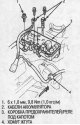
Removal the engine
Note: To avoid damaging the paintwork, cover the fenders with protective cloth. To avoid damaging the wiring, disconnect it carefully by grasping the connector. To avoid incorrect connections, label all wiring and...
Note: To avoid damaging the paintwork, cover the fenders with protective cloth. To avoid damaging the wiring, disconnect it carefully by grasping the connector. To avoid incorrect connections, label all wiring and...
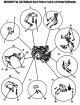
Engine installation
1. rear stiffener; 2. 10x1.25 mm, 44 nm (4.5 kgf/m); 3. 8x1.25 mm, 24 nm (2.4 kgf/m); 4. rear stiffener; 5. 8x1.25 mm, 24 nm (2.4 kgf/m); 6. 10x1.25 mm, 44 nm (4.5 kgf/m); 7. power steering pump bracket; 8. 10x1.25 mm,...
1. rear stiffener; 2. 10x1.25 mm, 44 nm (4.5 kgf/m); 3. 8x1.25 mm, 24 nm (2.4 kgf/m); 4. rear stiffener; 5. 8x1.25 mm, 24 nm (2.4 kgf/m); 6. 10x1.25 mm, 44 nm (4.5 kgf/m); 7. power steering pump bracket; 8. 10x1.25 mm,...

Adjusting valve clearances
Note: Valve adjustment should only be performed when the cylinder head temperature is below 38°C. After completing the adjustment, loosen the crankshaft pulley bolt, then tighten it again to 20 Nm (2.0 kgf/m) and turn...
Note: Valve adjustment should only be performed when the cylinder head temperature is below 38°C. After completing the adjustment, loosen the crankshaft pulley bolt, then tighten it again to 20 Nm (2.0 kgf/m) and turn...

Crankshaft Pulley — Replacement
1. Remove oil from pulleys, crankshaft, bolt and washer. Clean and lubricate as shown in the figure. 1. pulley bolt; 2. crankshaft pulley; 3. Timing belt drive pulley; 4. crankshaft; 5. timing belt guide plate; 6....
1. Remove oil from pulleys, crankshaft, bolt and washer. Clean and lubricate as shown in the figure. 1. pulley bolt; 2. crankshaft pulley; 3. Timing belt drive pulley; 4. crankshaft; 5. timing belt guide plate; 6....
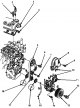
Timing belt — design description
1. WASHER, Replace if damaged or out of order. 2. 6x1.0 mm, 9.8 Nm (1.0 kgf/m) 3. CYLINDER HEAD COVER, when installing see below . 4. CYLINDER HEAD COVER GASKET Replace if there are signs of leakage, if it is damaged or...
1. WASHER, Replace if damaged or out of order. 2. 6x1.0 mm, 9.8 Nm (1.0 kgf/m) 3. CYLINDER HEAD COVER, when installing see below . 4. CYLINDER HEAD COVER GASKET Replace if there are signs of leakage, if it is damaged or...
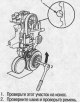
Timing Belt — Check
1. Disconnect the breather hose, then remove the air cleaner housing. 2. Remove the cylinder head cover. When installing the cylinder head cover, see item. " Installation ". 3. Remove the top cover. 4. Check the timing...
1. Disconnect the breather hose, then remove the air cleaner housing. 2. Remove the cylinder head cover. When installing the cylinder head cover, see item. " Installation ". 3. Remove the top cover. 4. Check the timing...

Timing Belt — Tension Adjustment
Note: Adjust the timing belt tension on a cold engine. The tensioner is spring loaded and tightens the belt automatically after the next adjustment is completed. Turn the crankshaft counterclockwise when viewed from the...
Note: Adjust the timing belt tension on a cold engine. The tensioner is spring loaded and tightens the belt automatically after the next adjustment is completed. Turn the crankshaft counterclockwise when viewed from the...
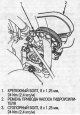
Timing Belt — Removal
Note: Before removing the belt, turn the crankshaft pulley so that the piston of cylinder No.1 is at top dead center (TDC). Before installing the timing belt, check the water pump. 1. Remove the mudguard. 2. Remove air...
Note: Before removing the belt, turn the crankshaft pulley so that the piston of cylinder No.1 is at top dead center (TDC). Before installing the timing belt, check the water pump. 1. Remove the mudguard. 2. Remove air...

Timing Belt — Installation
The timing belt is installed in the reverse order of removal; below are only the key points of this procedure. 1. Turn the timing belt drive pulley so that the piston of cylinder No.1 is at top dead center. Align the...
The timing belt is installed in the reverse order of removal; below are only the key points of this procedure. 1. Turn the timing belt drive pulley so that the piston of cylinder No.1 is at top dead center. Align the...

Replacing the intake manifold
1. 6x1.0 mm, 9.8 Nm (1.1 kgf/m) 2. 8x1.25 mm, 22 Nm (2.2 kgf/m) 3. GASKET. Replace. 4. GASKET. Replace. 5. INTAKE MANIFOLD BRACKET 6. 8x1.25 mm, 24 Nm (2.4 kgf/m) 7. 8x1.25 mm, 24 Nm (2.4 kgf/m) 8. INTAKE MANIFOLD....
1. 6x1.0 mm, 9.8 Nm (1.1 kgf/m) 2. 8x1.25 mm, 22 Nm (2.2 kgf/m) 3. GASKET. Replace. 4. GASKET. Replace. 5. INTAKE MANIFOLD BRACKET 6. 8x1.25 mm, 24 Nm (2.4 kgf/m) 7. 8x1.25 mm, 24 Nm (2.4 kgf/m) 8. INTAKE MANIFOLD....

Replacing the exhaust manifold
1. 8x1.25 mm, 22 Nm (2.2 kgf/m) 2. COVER 3. OUTLET MANIFOLD 4. GASKET. Replace. 5. SELF-LOCKING NUT, 8x1.25 mm, 31 Nm (3.2 kgf/m). Replace. 6. EXHAUST MANIFOLD BRACKET 7. 10x1.25 mm, 44 Nm (4.5 kgf/m) 8. HEATED OXYGEN...
1. 8x1.25 mm, 22 Nm (2.2 kgf/m) 2. COVER 3. OUTLET MANIFOLD 4. GASKET. Replace. 5. SELF-LOCKING NUT, 8x1.25 mm, 31 Nm (3.2 kgf/m). Replace. 6. EXHAUST MANIFOLD BRACKET 7. 10x1.25 mm, 44 Nm (4.5 kgf/m) 8. HEATED OXYGEN...
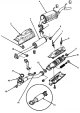
Replacing the exhaust pipe and muffler
1. 6x1.0 mm, 9.8 Nm (1.0 kgf/m) 2. HEAT SHIELD 3. EXHAUST PIPE B 4. SILENCER 5. GASKET. Replace. 6. SELF-LOCKING NUT, 10x1.25 mm, 54 Nm (5.5 kgf/m). Replace. 7. EXHAUST GAS TEMPERATURE (EGT) SENSOR (except KU models) 8....
1. 6x1.0 mm, 9.8 Nm (1.0 kgf/m) 2. HEAT SHIELD 3. EXHAUST PIPE B 4. SILENCER 5. GASKET. Replace. 6. SELF-LOCKING NUT, 10x1.25 mm, 54 Nm (5.5 kgf/m). Replace. 7. EXHAUST GAS TEMPERATURE (EGT) SENSOR (except KU models) 8....
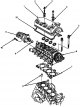
Cylinder head — design description
Note: To avoid damaging the cylinder head, wait until the engine coolant temperature drops to 38°C before removing it. When handling the metal gasket, do not bend it or damage the contact surface. When assembling,...
Note: To avoid damaging the cylinder head, wait until the engine coolant temperature drops to 38°C before removing it. When handling the metal gasket, do not bend it or damage the contact surface. When assembling,...
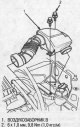
Cylinder head — removal
This procedure does not require engine removal. Note: To avoid damaging the paintwork, cover the fenders with protective cloth. To avoid damaging the wiring, disconnect it carefully by grasping the connector. To avoid...
This procedure does not require engine removal. Note: To avoid damaging the paintwork, cover the fenders with protective cloth. To avoid damaging the wiring, disconnect it carefully by grasping the connector. To avoid...

Valve Rocker Arms — Removal
1. Loosen the adjusting screws. 2. Remove the camshaft bracket bolts, then remove the rocker arms as an assembly. Note: To avoid damaging the valves or rocker arm assemblies, loosen the camshaft bracket bolts in a...
1. Loosen the adjusting screws. 2. Remove the camshaft bracket bolts, then remove the rocker arms as an assembly. Note: To avoid damaging the valves or rocker arm assemblies, loosen the camshaft bracket bolts in a...

Valve rocker arms — disassembly and assembly
1. The letter "B" is stamped on the valve rocker arm 2. INLET VALVE ROCKER ARM B (4 places) 3. INTAKE VALVE ROCKER ARM AXLE 4. INLET VALVE ROCKER ARM A (4 seats) 5. The letter "A" is stamped on the valve rocker arm 6....
1. The letter "B" is stamped on the valve rocker arm 2. INLET VALVE ROCKER ARM B (4 places) 3. INTAKE VALVE ROCKER ARM AXLE 4. INLET VALVE ROCKER ARM A (4 seats) 5. The letter "A" is stamped on the valve rocker arm 6....

Valve Rocker Arms and Axles — Checking Clearances
Measure the rocker arm axes for both intake and exhaust valves. 1. Measure the axle diameter at the location where the first rocker arm is installed. 2. Set the bore gauge to zero on the axle diameter. 3. Measure the...
Measure the rocker arm axes for both intake and exhaust valves. 1. Measure the axle diameter at the location where the first rocker arm is installed. 2. Set the bore gauge to zero on the axle diameter. 3. Measure the...

Camshaft — Check
Note: Do not turn the camshaft during inspection. Remove the rocker arms and valve rocker shafts. 1. Place the camshaft and brackets on the cylinder head and tighten the bolts to the specified torque. 2. Move the...
Note: Do not turn the camshaft during inspection. Remove the rocker arms and valve rocker shafts. 1. Place the camshaft and brackets on the cylinder head and tighten the bolts to the specified torque. 2. Move the...

Valves, springs and seals — removal
Note: Mark the valves and valve springs as you remove them so that all components can be installed in their original positions. 1. Before installing the valve spring compressor, lightly tap the valve head with a socket...
Note: Mark the valves and valve springs as you remove them so that all components can be installed in their original positions. 1. Before installing the valve spring compressor, lightly tap the valve head with a socket...

Valve guides — check
Valve stroke Measure the clearance between the valve stem and the valve guide using a dial indicator by rocking the valve in the guide. If the measurement exceeds the permissible limit, repeat the measurement using a...
Valve stroke Measure the clearance between the valve stem and the valve guide using a dial indicator by rocking the valve in the guide. If the measurement exceeds the permissible limit, repeat the measurement using a...
Cylinder head — warpage check
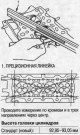
Note: If the oil gap between the camshaft and brackets ( see above ) more than permissible, the cylinder head cannot be reground. If the oil clearance between the camshaft and brackets is within tolerance, check the...
Note: If the oil gap between the camshaft and brackets ( see above ) more than permissible, the cylinder head cannot be reground. If the oil clearance between the camshaft and brackets is within tolerance, check the...

Valve seats — restoration
1. Restore the valve seats in the cylinder head using a cutter. Note: If the guide bushings are worn ( see above ), replace them ( see below ) before machining the valve seats. 2. Carefully file the seat at a 45°...
1. Restore the valve seats in the cylinder head using a cutter. Note: If the guide bushings are worn ( see above ), replace them ( see below ) before machining the valve seats. 2. Carefully file the seat at a 45°...

Valve guides — replacement
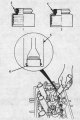
Note: For best results, heat the cylinder head to 150°C before removing or installing the guides. Some guides may require a nail gun to remove. 1. Knock out the valve guide from the bottom of the cylinder head. 2. Drive...
Note: For best results, heat the cylinder head to 150°C before removing or installing the guides. Some guides may require a nail gun to remove. 1. Knock out the valve guide from the bottom of the cylinder head. 2. Drive...
Valves, Springs and Seats — Installation
1. Insert the valves into the guide bushings; apply engine oil to valve stems before installation. Note: Make sure the valves move freely in the guide. 2. Install the spring seats into the cylinder head. 3. Install the...
1. Insert the valves into the guide bushings; apply engine oil to valve stems before installation. Note: Make sure the valves move freely in the guide. 2. Install the spring seats into the cylinder head. 3. Install the...

Camshaft, rocker arms, oil seal and camshaft pulley
Installation Note: When tightening the rocker arm mounting bolts, make sure that all rocker arms are aligned with the valves. Before installation, loosen the valve locknuts and unscrew the adjusting screws. To prevent...
Installation Note: When tightening the rocker arm mounting bolts, make sure that all rocker arms are aligned with the valves. Before installation, loosen the valve locknuts and unscrew the adjusting screws. To prevent...

Cylinder head — installation
Installation of the cylinder head is performed in the reverse order of removal. Note: Always install a new cylinder head gasket. The contact surfaces of the cylinder head and block must be clean. The "UP" mark on the...
Installation of the cylinder head is performed in the reverse order of removal. Note: Always install a new cylinder head gasket. The contact surfaces of the cylinder head and block must be clean. The "UP" mark on the...
Cylinder block and piston group
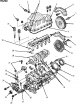
Note: Before installing the right cover and oil pump housing, apply sealant to their contact surfaces. Use sealant P/N 08С70 - К0234М, 08С70 - К0334М or 08С70 - X0331S. When assembling, lubricate all internal parts with...
Note: Before installing the right cover and oil pump housing, apply sealant to their contact surfaces. Use sealant P/N 08С70 - К0234М, 08С70 - К0334М or 08С70 - X0331S. When assembling, lubricate all internal parts with...

Flywheel and drive disk — replacement
Manual transmission (MT) Remove the six flywheel bolts, then separate the flywheel from the crankshaft flange. After installation, tighten the bolts in a cross pattern. 1. GEAR HOLDER, 07LAB-PV00100 2. CYLINDER BLOCK 3....
Manual transmission (MT) Remove the six flywheel bolts, then separate the flywheel from the crankshaft flange. After installation, tighten the bolts in a cross pattern. 1. GEAR HOLDER, 07LAB-PV00100 2. CYLINDER BLOCK 3....

Piston and connecting rod — design description
Note: New connecting rod bearings must be selected according to the identification marks applied to the connecting rod and crankshaft ( see below ). When assembling, lubricate all internal parts with engine oil. 1....
Note: New connecting rod bearings must be selected according to the identification marks applied to the connecting rod and crankshaft ( see below ). When assembling, lubricate all internal parts with engine oil. 1....

Connecting rod and crankshaft — axial play
Connecting rod axial play: Standard (new): 0.15-0.30 mm Revision: 0.40 mm If the clearance is greater than the permissible limit, install a new connecting rod. If the play is still significant, replace the crankshaft (...
Connecting rod axial play: Standard (new): 0.15-0.30 mm Revision: 0.40 mm If the clearance is greater than the permissible limit, install a new connecting rod. If the play is still significant, replace the crankshaft (...

Main bearings — clearance
1. To check the oil clearance between the main bearing and the journal, remove the main bearing caps and shells. 2. Clean the main journals and bearings with a clean cloth. 3. Place a piece of calibrated Plastigage wire...
1. To check the oil clearance between the main bearing and the journal, remove the main bearing caps and shells. 2. Clean the main journals and bearings with a clean cloth. 3. Place a piece of calibrated Plastigage wire...

Main bearings — selection
Location of main journal markings (numbers) Bearing markings The color marking is located on the edge of the bearing. Location of crankshaft markings on the cylinder block Note: If the markings cannot be read due to...
Location of main journal markings (numbers) Bearing markings The color marking is located on the edge of the bearing. Location of crankshaft markings on the cylinder block Note: If the markings cannot be read due to...

Connecting rod bearings — clearance
1. Remove the connecting rod cap and bearing shell. 2. Wipe the connecting rod journal on the crankshaft and the bearing shell with a clean cloth. 3. Place a piece of calibrated Plastigage wire across the crankpins. 4....
1. Remove the connecting rod cap and bearing shell. 2. Wipe the connecting rod journal on the crankshaft and the bearing shell with a clean cloth. 3. Place a piece of calibrated Plastigage wire across the crankpins. 4....

Pistons and Crankshaft — Removal
1. Remove the oil pan assembly. 2. Remove the right cover. 3. Remove the coarse oil filter. 4. Remove the oil pump. 5. Loosen the bolts. To avoid warping, loosen the bolts sequentially 1/3 of a turn at a time; repeat...
1. Remove the oil pan assembly. 2. Remove the right cover. 3. Remove the coarse oil filter. 4. Remove the oil pump. 5. Loosen the bolts. To avoid warping, loosen the bolts sequentially 1/3 of a turn at a time; repeat...

Crankshaft — Check
Clean the oil passages on the crankshaft using pipe cleaner and a suitable brush. Check the keyway and threads. Verification Measure the runout of all main journals and ensure that the crankshaft is not bent. The...
Clean the oil passages on the crankshaft using pipe cleaner and a suitable brush. Check the keyway and threads. Verification Measure the runout of all main journals and ensure that the crankshaft is not bent. The...
Pistons — Check
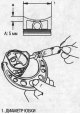
1. Check the pistons for deformation or cracks. Note: If the cylinder has been rebored, a piston of increased repair size should be installed. 2. Measure the piston diameter at point A from the bottom of the skirt....
1. Check the pistons for deformation or cracks. Note: If the cylinder has been rebored, a piston of increased repair size should be installed. 2. Measure the piston diameter at point A from the bottom of the skirt....
Cylinder Block — Checking and Honing
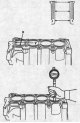
1. Measure wear and taper in X and Y directions at three points in each cylinder as shown in the figure. Cylinder diameter: Standard (new): 75.00-75.02 mm Limit: 75.07 mm Increased repair size: by 0.25: 75.25-75.27 mm...
1. Measure wear and taper in X and Y directions at three points in each cylinder as shown in the figure. Cylinder diameter: Standard (new): 75.00-75.02 mm Limit: 75.07 mm Increased repair size: by 0.25: 75.25-75.27 mm...

Piston pins — removal
Note: Remove the piston pins using the special tool kit (P/N 07PAF-0010000). Use the guide bushing with the required number. 1. Assemble the special tool as shown in the figure. 2. Install the piston on the special tool...
Note: Remove the piston pins using the special tool kit (P/N 07PAF-0010000). Use the guide bushing with the required number. 1. Assemble the special tool as shown in the figure. 2. Install the piston on the special tool...

Connecting rods — selection
Depending on the diameter of the big head, all connecting rods are divided into four groups according to the tolerance limit (from 0 to +0.024 mm in increments of 0.006 mm). This limit is indicated by a stamped number...
Depending on the diameter of the big head, all connecting rods are divided into four groups according to the tolerance limit (from 0 to +0.024 mm in increments of 0.006 mm). This limit is indicated by a stamped number...

Piston pins — installation and inspection
Installation Note: Install the piston pins using the special tool kit (P/N 07PAF-0010000) and a hydraulic press. Use the guide bushing with the required number. 1. The arrow should point towards the engine timing belt,...
Installation Note: Install the piston pins using the special tool kit (P/N 07PAF-0010000) and a hydraulic press. Use the guide bushing with the required number. 1. The arrow should point towards the engine timing belt,...

Piston rings — checking and replacing
Gap in the lock 1. Push the new ring into the cylinder using a piston to a depth of 15-20 mm from the bottom. 2. Measure the gap in the piston ring lock using a feeler gauge: If the gap is too small, make sure these...
Gap in the lock 1. Push the new ring into the cylinder using a piston to a depth of 15-20 mm from the bottom. 2. Measure the gap in the piston ring lock using a feeler gauge: If the gap is too small, make sure these...

Crankshaft oil seal — installation
The surface under the oil seal on the cylinder block must be dry. Apply a thin layer of oil to the crankshaft and to the edge of the oil seal. 1. Press the crankshaft oil seal into the right cover. Note: Press in the...
The surface under the oil seal on the cylinder block must be dry. Apply a thin layer of oil to the crankshaft and to the edge of the oil seal. 1. Press the crankshaft oil seal into the right cover. Note: Press in the...

Pistons — installation
Before installing the pistons, apply a thin layer of motor oil to the ring grooves and cylinder walls. 1. If the crankshaft is already installed: Set the crankshaft to the BDC position for each cylinder. Remove the...
Before installing the pistons, apply a thin layer of motor oil to the ring grooves and cylinder walls. 1. If the crankshaft is already installed: Set the crankshaft to the BDC position for each cylinder. Remove the...

Crankshaft — installation
Before installing the crankshaft, apply engine oil to the main and connecting rod bearings. 1. Insert thrust washers onto journal No.4 of the cylinder block. 2. Insert the bearing shells into the cylinder block bed and...
Before installing the crankshaft, apply engine oil to the main and connecting rod bearings. 1. Insert thrust washers onto journal No.4 of the cylinder block. 2. Insert the bearing shells into the cylinder block bed and...

Oil pan — installation
Models for Europe, Australia and South Africa: Note: Use sealant P/N 08C70-K0234M, 08C70-K0334M or 08C70-X0331S. Before applying sealant, ensure that the contact surfaces are clean and dry. Apply the sealant evenly,...
Models for Europe, Australia and South Africa: Note: Use sealant P/N 08C70-K0234M, 08C70-K0334M or 08C70-X0331S. Before applying sealant, ensure that the contact surfaces are clean and dry. Apply the sealant evenly,...


This section is available on: russian, bulgarian, belarusian, ukrainian, serbian, croatian, romanian, polish, slovak, hungarian
Link in different formats to this section
TEXTHTMLBB Code
- General information
- User manual
- Maintenance
- Power unit
- Engine repair
- Lubrication system
- Cooling system
- Fuel injection and control
- Power and exhaust system
- Engine electrical equipment
- Transmission
- Clutch
- Mechanical gearbox
- Automatic gearbox
- Rear differential
- Drive shafts and cardan
- Chassis and running gear
- Steering
- Car suspension
- Brake system
- Body and interior
- Exterior (external elements)
- Interior (internal elements)
- Doors, locks and windows
- Electrical equipment
- Equipment and devices
- Lighting system
- Electrical circuits