
Contents: Examination ⇊ Replacement ⇊
Examination
Solenoid valve for lock control
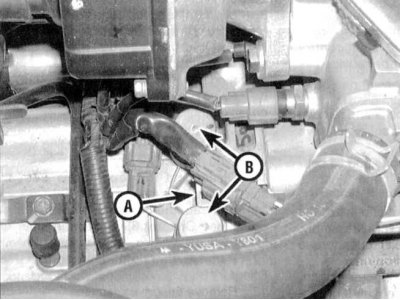
1. Disconnect the electrical connector of the lock-up control solenoid valve assembly (see accompanying illustration).
2. Measure the resistance between each of the connector terminals (from the valve side) and mass. Compare the measurement results with the requirements Specifications. Replace the valve assembly if necessary.
3. Connect each terminal of the connector to the positive battery terminal one by one, and you should hear a distinct audible click as each valve operates. If you do not hear a click, take the vehicle to a service station for a full diagnosis of the ECM and solenoid circuits.
Shift Lock Control Solenoid Valve
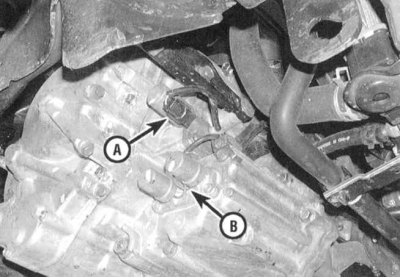
1. Disconnect the shift lock control solenoid electrical connector (see accompanying illustration).
2. Measure the resistance between each of the connector terminals (from the valve side) and mass. Compare the measurement results with the requirements Specifications. Replace the valve assembly if necessary.
3. Connect each terminal of the connector to the positive battery terminal one by one, and you should hear a distinct audible click as each valve operates. If you do not hear a click, take the vehicle to a service station for a full diagnosis of the ECM and solenoid circuits.
4. Connect each terminal of the connector to the positive battery terminal one by one, and you should hear a distinct audible click as each valve operates. If you do not hear a click, take the vehicle to a service station for a full diagnosis of the ECM and solenoid circuits.
Replacement
Note: It is not possible to replace just one of the solenoid valves individually. The entire valve assembly must be replaced (lock-up control valve and shift lock control valve).
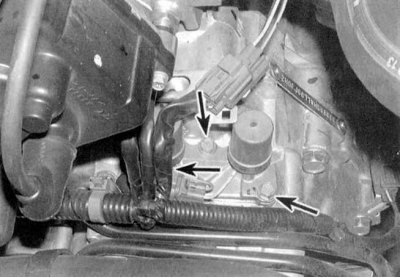
1. Loosen the mounting bolts and remove the valve assembly (see accompanying illustration).
2. Thoroughly wipe the mating surfaces and clean the oil passages.
3. Replace the sealing gasket and install the new valve assembly in its original place. Tighten the mounting bolts to the required force.
4. Check the electrical connector for signs of contamination and oxidation, clean and reconnect if necessary.
5. Check the proper functioning of the control solenoid valves (see above).