Note: Never reuse drained brake fluid. Use only clean genuine Honda DOT 3 or DOT 4 Brake Fluid from a sealed container. Using brake fluid other than that specified by Honda may cause corrosion and reduce the overall life of the system.
Make sure that no dirt or other foreign particles enter the brake fluid.
Do not spill brake fluid on the car body - this may cause destruction of the paintwork. If brake fluid gets on the paintwork, wash it off immediately with water.
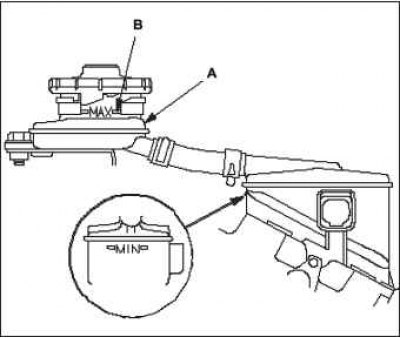
The brake fluid level in the master cylinder reservoir should be at the "MAX" mark at the beginning of bleeding the system, brake fluid should be added to the reservoir after bleeding each brake mechanism. Add the required amount of fluid.
1. Make sure that the brake fluid level in reservoir A corresponds to the upper "MAX" level mark - line B.
2. Ask someone to gently press the brake pedal several times, then hold the pedal down.
3. Start bleeding from the front brake system on the driver's side.
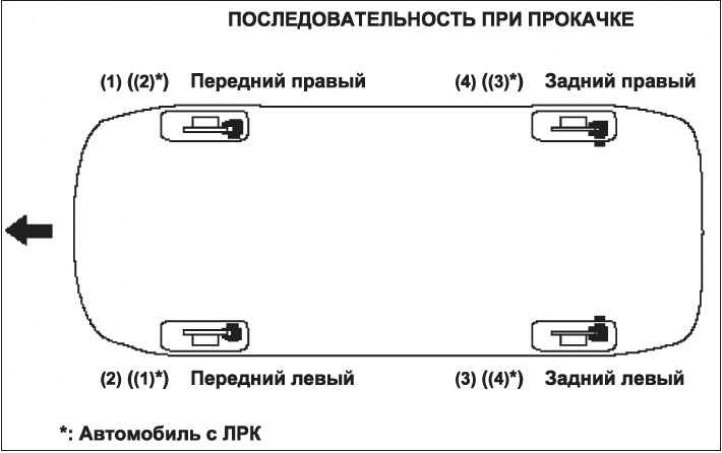
Note: Bleed the calipers in the sequence shown.
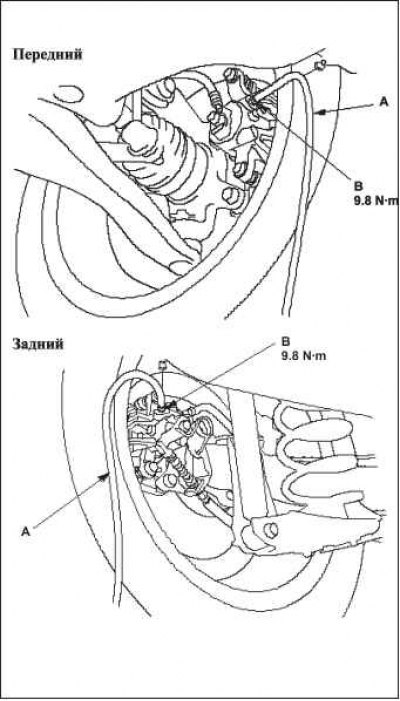
4. Attach a piece of transparent tube A to the bleed nipple B, then loosen the nipple to allow air to escape from the system. Then tighten the bleed nipple securely.
5. At the end of the work, do not forget to add brake fluid to the master cylinder reservoir up to the "MAX" mark.
6. Repeat the procedure for the entire brake system until all air bubbles are removed from the fluid.