
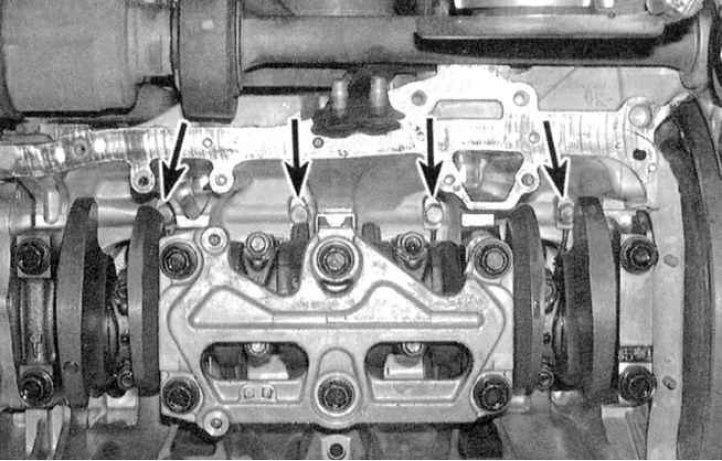
2. On Integra models equipped with the VTEC system, unbolt and remove the oil sprayers from the block (see accompanying illustration). The diameter of the spray nozzle is 1.27 mm and a 1 mm drill should be easily inserted into it. Insert the drill shank into the spray inlet and press the control ball with it. The ball should move freely and when released, return to its original position due to the force developed by the spring. If signs of weakening of the spring are detected, supply compressed air to the inlet. The ball, overcoming the force developed by the spring, should move away from the seat at a pressure of at least 1.96 kgf/cm², otherwise the spray must be replaced.
3. Scrape off all traces of the old gasket material from the mating surface of the block - try not to leave any burrs.
4. Remove all covers and threaded plugs of oil galleries from the block. The plugs are usually tightened very tightly, so it is quite possible that they will have to be drilled out and then the thread in the hole restored. When assembling the block, the plugs should be replaced with new ones.
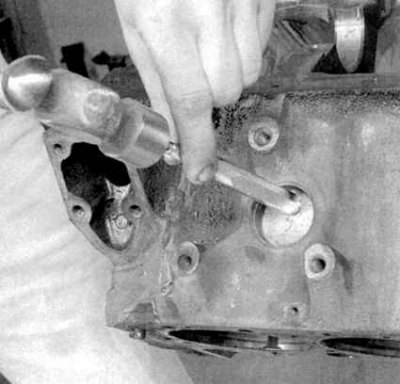
5a. Now you need to remove the water jacket release plugs from the block. Using a hammer and a blunt punch, turn one end of the plug inside the block, then grab the opposite edge that has been turned out with pliers...

5b....remove the plug from the engine (see accompanying illustrations).
Note: Be careful not to accidentally drive the plug into the engine. Remove all plugs.
6. If the engine is heavily externally contaminated, it should be taken to a car service workshop for steam cleaning or heat treatment.
7. After returning the block from the workshop, thoroughly clean all its oil holes and galleries again - special cylindrical brushes of a special shape are produced for this purpose (ask in car accessories stores). Rinse the cavities and channels with warm water - continue rinsing until clean water starts to flow out of the opposite side of the block. Dry the block thoroughly, then lightly lubricate all machined surfaces with liquid oil to protect them from corrosion. If you have access to a source of compressed air, use it to speed up the drying process of the block and blow out hard-to-reach cavities and channels.
Attention! When working with compressed air, do not forget to wear protective glasses!
8. If the block is heavily soiled or slagged, use a brush cleaning with hot water and soap. Do not try to save time by neglecting the cleaning of the block. Regardless of the method chosen, make sure that hard-to-reach cavities, channels and holes are thoroughly cleaned. Finally, dry the block and lubricate the machined surfaces with liquid oil to protect them from corrosion.
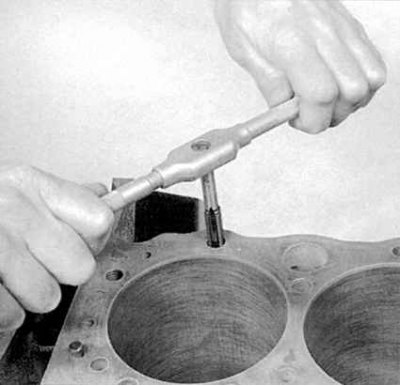
9. Tap all bolt holes in the block with a tap of the appropriate size (see accompanying illustration) to ensure that the torque wrench indicator readings correspond to the actual tightening forces applied to the fasteners when assembling the engine. If possible, then blow out the holes with compressed air to remove any small debris or shavings. Once the holes are finished, run a die over the threaded portion of the bolts. 10. Replace the main bearing caps, hand tightening their fasteners.
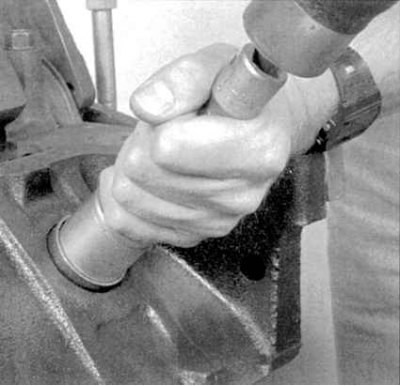
11. Lubricate the mating surfaces of the new release plugs with a sealant (such as Permatex No.1) and seat them perpendicularly into the engine. Special devices are available for seating the release plugs, any of which can be successfully replaced with a suitable size replacement socket head (see accompanying illustration). The head should fit into the plug tightly enough. 12. Lubricate the threads of the new plugs with non-hardening sealant and seal the holes in the oil galleries with them. Make sure the plugs are tightened securely.
13. If you are not going to start assembling the engine immediately, place the block in a large plastic bag to protect it from contamination.
[The original can be found on the resource «HondaBook.ru»]