
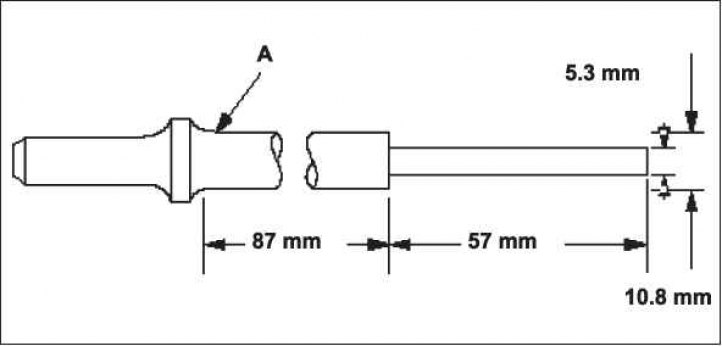
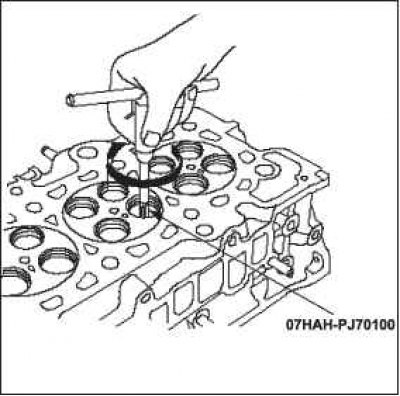
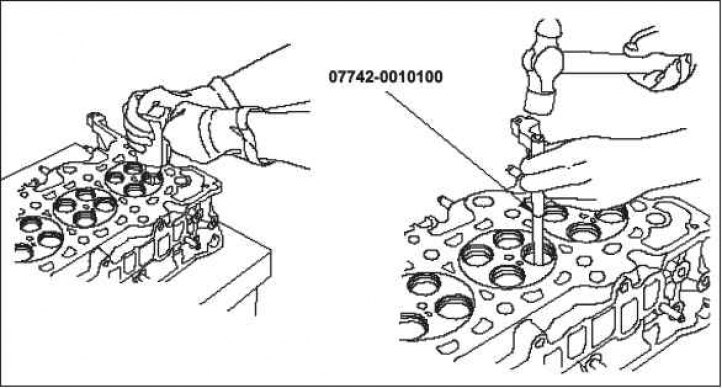
2. As shown in the figure below, use a commercially available air hammer driven valve guide rod A modified to fit the valve guide diameter. In most cases, the same procedure can be accomplished with a special tool and a regular hammer.
3. Select repair bushings of the required sizes and cool them in the freezer of a household refrigerator for about one hour.
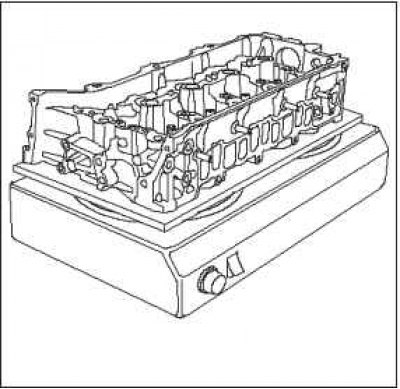
4. Use a hotplate or oven to heat the cylinder head evenly to 150°C. Monitor the temperature with a kitchen thermometer. Do not heat the cylinder head more than 150°C; excessive heat may cause the valve seats to loosen.
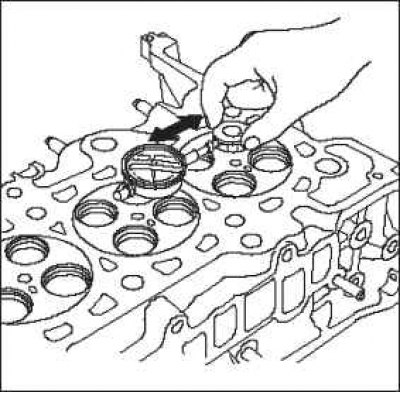
5. From the camshaft side, use a guide rod and a nail gun to push the valve guide approximately 2mm towards the combustion chamber. This will knock out some of the carbon deposits and make removal easier. Keep the nail gun aligned with the valve guide to avoid breaking the guide rod.
6. Turn the head over and pull the guide rod outward, in the direction of the cylinder head camshaft.
7. If the valve guide does not move, drill it out with an 8 mm drill and try again. Drill out valve guides only as a last resort; you can damage the cylinder head if the valve guide breaks.
8. Remove new bushing(s) from freezer one at a time as needed for installation.
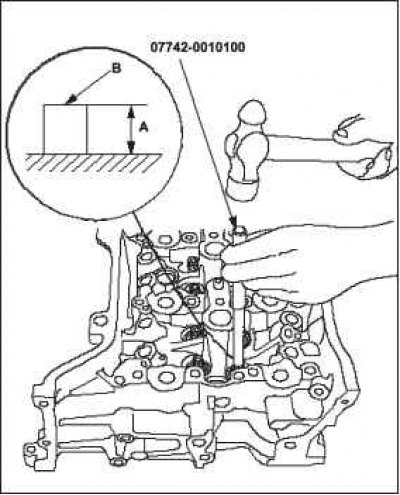
9. Apply a thin coat of clean engine oil to the outside surface of the new valve guide. Install the valve guides from the camshaft side of the cylinder head; use a special device to install the guide rod to the specified height A of the valve guide sleeve B. If you need to install all 16 valve guide bushings, you may need to reheat the cylinder head.
Installation height of valve guide bushings: 14.5-15.5 mm.
10. Lubricate the surfaces of the reamer and valve guide bushing with cutting fluid.
11. Rotate the reamer clockwise until it reaches the full length of the valve guide bore.
12. Continue rotating the reamer clockwise as you remove it from the hole.
13. Thoroughly wash the guide bushing with solvent and water to remove any chips left over from reaming.
14. Check the clearances between the bushing and the valve. Make sure that the valves slide in the intake and exhaust valve guides without pressure.
 |
 |
15. Check the valve seating surface, if necessary, ream the valve seats using a seat reaming tool.