
On models produced from 1984 to 1987, independent front wheel suspension with struts and torsion shafts is used (see fig. 5.3).
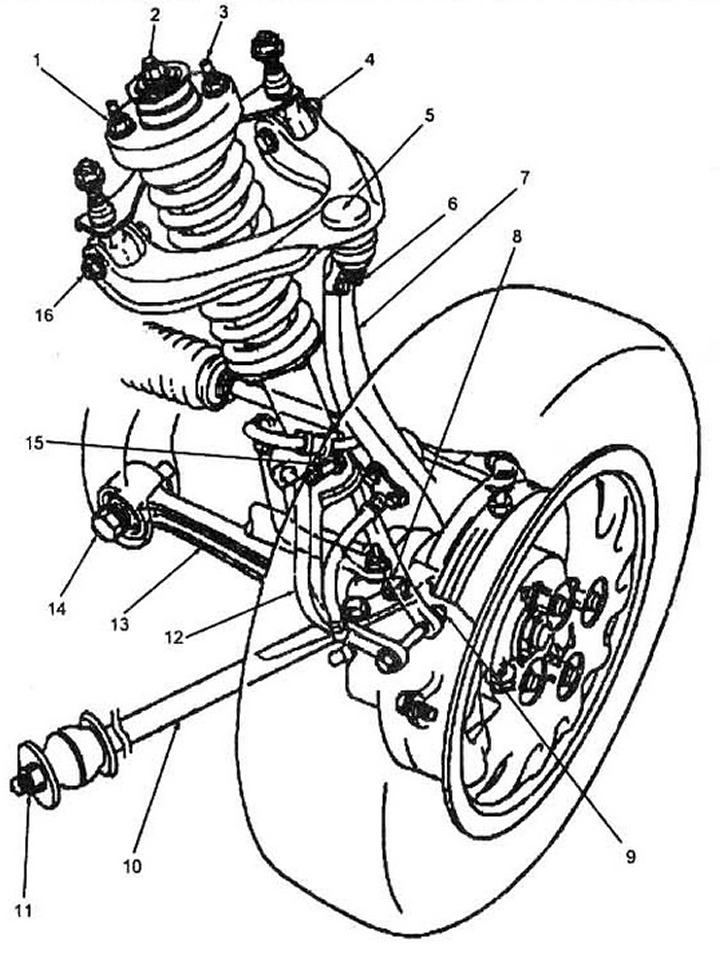
Fig. 1.5a Front suspension since 1988:
1, 3 - shock absorber mounting nuts;
2 - shock absorber spring mounting nut;
4 - upper arm mounting bolt;
5 - ball joint;
6 - ball joint protection mounting bolt;
7 - steering knuckle;
8 - bolt for fastening the reaction rod to the lever;
9 - bolt securing the shock absorber fork to the lower arm;
10 - jet thrust;
11 - nut for fastening the jet rod to the crossmember;
12 - shock absorber fork;
13 - lower arm;
14 - lower arm mounting bolt;
15 - shock absorber fork tightening bolt;
16 - upper arm mounting bolt.
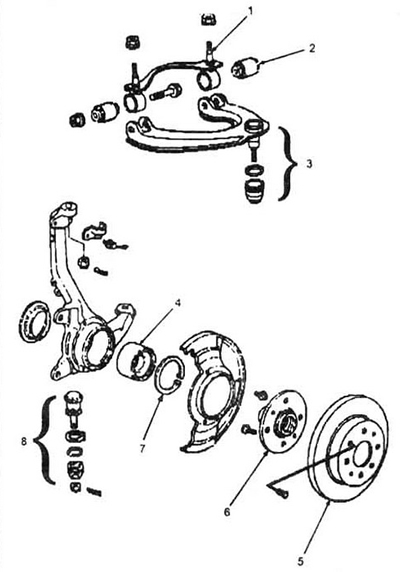
Fig. 1.5b Front suspension elements (models since 1988.):
1 - Upper arm mount;
2 - silent block;
3 - upper ball joint;
4 - hub bearing;
5 - brake disc;
6 - hub;
7 - retaining ring (75 mm);
8 - lower ball joint.
The rear suspension of 1984 to 1987 4x2 vehicles uses guide arms. It includes an axle beam with a transverse Panhard rod and longitudinal guide arms. The strut is attached to the body and the extension of the suspension trunnions. The stabilizer is installed inside the axle beam (see fig. 14.4).
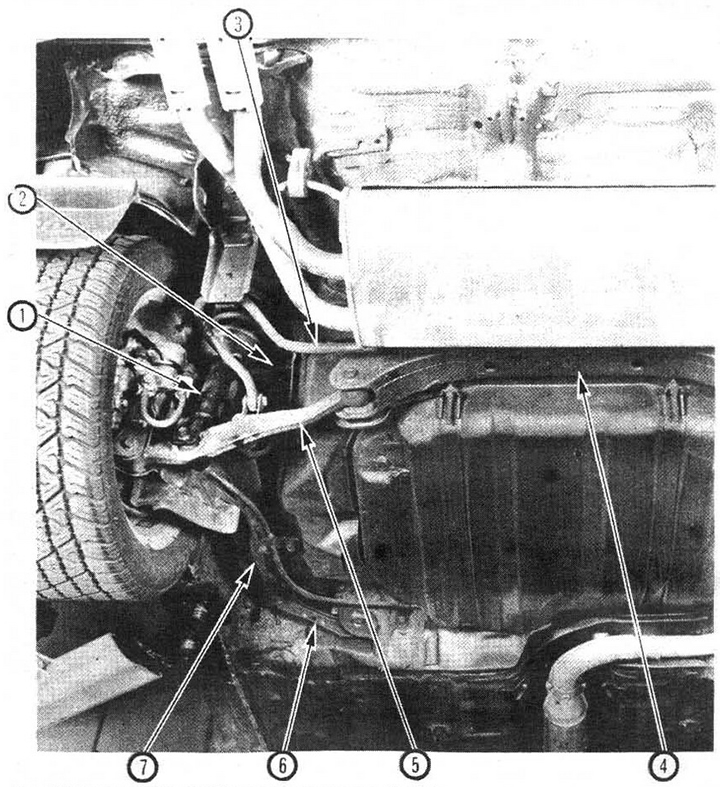
Fig. 1.6 Rear suspension since 1988:
1 - shock absorber;
2 - upper arm;
3 - stabilizer;
4 - crossbar;
5 - compensation lever;
7 - guide lever.
The rear suspension of all-wheel drive vehicles produced from 1985 to 1987 has a pair of shock absorbers and springs. Attached to the axle are a Panhard rod, upper and lower control arms.
In the front suspension on models produced since 1988 (see fig. 1.5) shock absorber-spring struts are used. The upper end of the steering knuckle is located on the upper arm. The inner end of the upper arm is attached to the body. Rear suspension of cars produced since 1988 (see fig. 1.6) completely independent. The upper end of the rack is attached to the body, the lower end to the lower arm. The guide arm is attached to the body and connected to the compensating arm
All models are equipped with a rack and pinion steering mechanism with or without hydraulic power assistance.
Steering and suspension fasteners are exposed to harsh conditions, making them extremely difficult to remove. Therefore, to avoid damage to fasteners or suspension components, take the time to "soak" threaded connections before repairs.
[Original material on the website: HondaBook]