HondaBook.ru
Auto companies Volkswagen Auto companies Ford Auto companies Lada Auto companies Skoda Auto companies BMW Auto companies Mazda Auto companies Peugeot
English Русский
Български
Беларускі
Український
Српски
Hrvatski
Română
Polski
Slovenský
Magyar
Bookmark Contacts Sitemap   


Accord Civic Fit / Jazz CR-V HR-V Others Articles
Civic 3 and 4 (1983-1991) Civic 5 and 6 (1991-2000) Civic 6 (1995-2000) Civic 7 (2000-2005) Civic 8 (2005-2011)

Checking and replacing the crankcase ventilation valve (Honda Civic 6)

  • Main
  • Honda Civic
  • 6 (1995-2000)
  • General information
  • Maintenance
  • Checking and replacing the crankcase ventilation valve
0
(PCV) (every 48,000 km or once every 24 months)

The PCV system ensures that crankcase gases are discharged through a special valve via a hose back into the intake manifold, from where they enter the combustion chambers and are burned during normal engine operation. The system consists of a hose running from the cylinder head cover to the intake manifold and a fresh air supply hose laid between the air cleaner and the cylinder head cover.

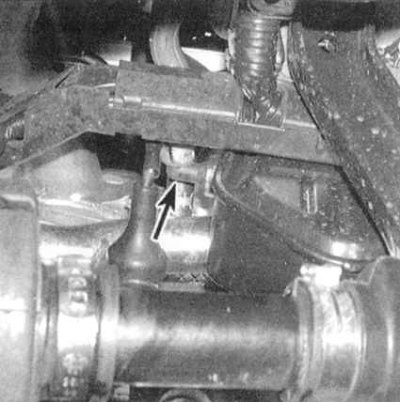
The PCV valve with a hose attached to it is located in the intake manifold under the fuel line, or is located at the rear of the engine, depending on the model (see illustrations below).
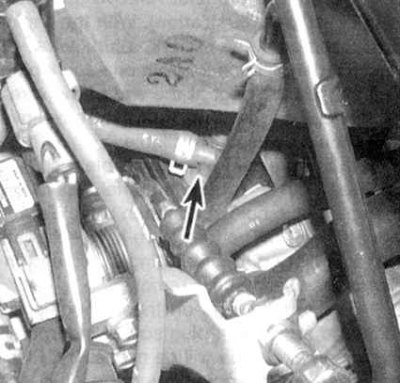
The PCV valve with a hose attached to it is…

1. With the engine idling and at normal operating temperature, pull the valve and remove it, along with the attached hose, from the intake manifold or hose.
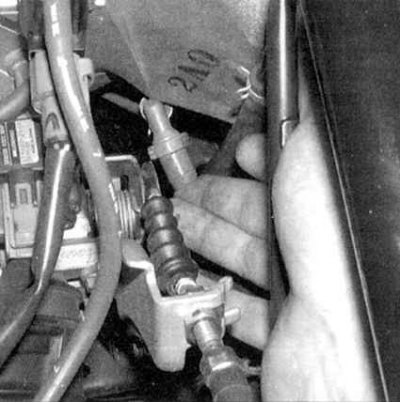


1. With the engine idling and at normal operating…


2. Place your finger against the hole in the PCV valve or hose (see accompanying illustration) – a vacuum should be felt, otherwise check the patency of the hose, the fitting on the intake manifold and the valve itself. Replace the defective components. 3. Turn off the engine and shake the PCV valve – it should rattle slightly, otherwise replace it.

4. To replace the PCV valve, disconnect it from the vacuum hose, remembering the connection direction.

5. When purchasing a new valve, make sure that it matches the size of your car's engine. The best way is to directly compare the new valve with the old one removed from the engine.

6. Connect the replacement PCV valve to the vacuum hose, making sure they are securely connected.

7. Check the condition of the hoses and rubber bushings. Replace any defective components.

8. Firmly seat the valve in its original place. For more detailed information on the operation of the PCV system, see Chapter Engine management systems of this Guide.
This article is available at: russian, bulgarian, belarusian, ukrainian, serbian, croatian, romanian, polish, slovak, hungarian
This information has been verified: Timofey Goryachev
Share with friends:
◀ Previous
Civic 6: Maintenance
Next ▶

Checking the condition and replacing the spark plug wires, cover and…
Checking the condition and replacing spark plugs
Checking the condition of the exhaust system components
Inspection of suspension and steering components, check of drive shaft…
Checking the transmission oil level of the manual transmission (every 24,000 km…
Replacement of fuel filter (every 48,000 km or every 24 months)
Checking and adjusting idle speed (every 48,000 km or every 24 months)
Cooling system maintenance (every 48,000 km or every 24 months)
Brake fluid replacement (every 48,000 km or every 24 months)
Automatic transmission fluid change (every 48,000 km or every 24 months)
See also other articles from Honda manuals:
Crankcase ventilation valve (PCV valve) Honda Accord 3 (1985-1989)
Checking the crankcase ventilation system Honda Fit 1 (2001-2008)
Crankcase ventilation valve — inspection, removal and installation Honda CR-V 1 (1995-2001, petrol)
Valve Rocker Arms and Axles — Checking Clearances Honda HR-V 1 (1998-2006, petrol)
Checking the crankcase ventilation system Honda Avancier 1 (1999-2003, petrol)
Link in different formats to this article
Comments and feedback from visitors
No comments yet


How much will 39 + 48 ?


Civic 8 (2005-2011) 
  • General information
  • Technical data
  • Governing bodies
  • Driving and maintenance
  • Power unit
  • Gasoline engines (L13A)
  • Gasoline engines (R18A)
  • Diesel engines (N22A)
  • Cooling and lubrication (L13A)
  • Cooling and lubrication (R18A)
  • Cooling and lubrication (N22A)
  • Injection system (gasoline)
  • Injection system (diesel)
  • Toxicity reduction system
  • Troubleshooting
  • Transmission
  • Clutch and drive shafts
  • Mechanical gearbox
  • Chassis and running gear
  • Suspension and wheels
  • Steering
  • Brake system
  • Body and interior
  • Exterior (external elements)
  • Doors, locks and windows
  • Electrical equipment
  • Equipment and devices
  • Headlights and lighting
  • Power devices
  • Electrical circuits
Civic 7 (2000-2005) 
  • General information
  • User manual
  • Maintenance
  • Power unit
  • Engines D15B and D17A
  • K20A Engines
  • Overhaul engine
  • Cooling system
  • Lubrication system
  • Fuel injection system
  • Toxicity reduction system
  • Engine electrical equipment
  • Transmission
  • Clutch
  • Manual gearbox
  • Automatic gearbox
  • Variator (CVT)
  • Drive shafts
  • Chassis and running gear
  • Car suspension
  • Steering
  • Brake system
  • Body and interior
  • Exterior (external elements)
  • Interior (internal elements)
  • Doors, locks and windows
  • Heater and air conditioner
  • Manual air conditioner
  • Automatic air conditioner
  • Security system
  • Electrical equipment
  • Equipment and devices
  • Headlights and lighting
  • Windscreen wipers
  • Audio system
  • Electrical diagrams
Civic 6 (1995-2000) 
  • General information
  • Introduction to guide
  • User manual
  • Maintenance
  • Power unit
  • Engine in car (Civic)
  • Engine in car (Integra)
  • Engine overhaul
  • Cooling and heating
  • Power and exhaust systems
  • Engine electrical equipment
  • Engine management systems
  • Transmission
  • Manual gearbox
  • Automatic transmission (AT/CVT)
  • Clutch and drive shafts
  • Chassis and running gear
  • Brake system
  • Car suspension
  • Steering
  • Body and interior
  • Exterior (external elements)
  • Interior (internal elements)
  • Doors, locks and windows
  • Electrical equipment
  • Equipment and devices
  • Electrical circuits
Civic 5 and 6 (1991-2000) 
  • Power unit
  • SOHC engines
  • DOHC engines
  • Engine overhaul
  • Cooling and lubrication system
  • Intake and exhaust system
  • Fuel injection system (SOHC)
  • Fuel injection system (DOHC)
  • Carburetor
  • Transmission
  • Clutch
  • Manual gearbox S4C
  • Manual gearbox S40
  • Automatic gearbox
  • Drive shafts
  • Chassis and running gear
  • Car suspension
  • Steering
  • Brake system
  • Body and interior
  • Body elements
  • Heater and air conditioner
  • Electrical equipment
  • Power devices
  • Equipment and instruments
  • Electrical circuits
Civic 3 and 4 (1983-1991) 
  • General information
  • Maintenance
  • Power unit
  • Engine in a car
  • Engine overhaul
  • Cooling system
  • Power and exhaust system
  • Engine electrical equipment
  • Emission control system
  • Transmission
  • Mechanical gearbox
  • Automatic gearbox
  • Clutch and drive shafts
  • Four-wheel drive
  • Chassis and running gear
  • Brake system
  • Car suspension
  • Steering
  • Body and interior
  • Body elements
  • Electrical equipment
  • Equipment and devices
  • Electrical circuits
HondaBook.ru © 2018–2026 • Mobile version • Sitemap: EN BG BY UA RS HR RO PL SK HU • Feedback • Driver Information • Search system • Bookmark
Accord 3 (1985-1989) • Accord 6 (1997-2002) • Civic 3 and 4 (1983-1991) • Civic 5 and 6 (1991-2000) • Civic 6 (1995-2000) • Civic 7 (2000-2005) • Civic 8 (2005-2011) • Fit 1 (2001-2008) • CR-V 1 (1995-2001) • CR-V 2 (2002-2006) • HR-V 1 (1998-2006) • Avancier 1 (1999-2003) •
 
This website uses cookies to ensure proper functioning. By clicking "OK," you agree.