
Valve stem seals seal the valve stem against leaking oil that circulates around the camshaft and rocker arms. Any oil that is forced downwards by inertia will enter the cylinder and be immediately burned. Also, leaky valve stem seals allow some gas to escape from the cylinder, causing the valve cover gasket and camshaft seals to leak due to the excess pressure that is created.
The valve stem seals are the first thing to inspect if there is excessive oil consumption. They can be replaced without removing the cylinder head from the car, although care should be taken when doing so.
Removal and installation
Carrying out on a car
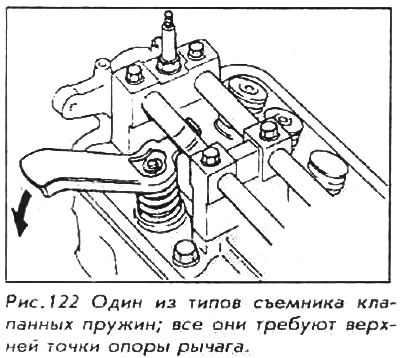
1. Work is performed on a cold engine with the ignition off. Remove the valve mechanism cover.
2. Remove the rocker arm assembly and axle(s). Do not loosen or remove the camshaft strut bolts.
3. Temporarily install the old rocker shaft, which will serve as a support for the spring compressor. The shaft should be free of valves, springs, etc. Do not use the rocker shaft for this purpose; it will almost certainly become damaged or bent.
4. Turn the crankshaft pulley to bring cylinders No.1 and 4 to TDC.
5. Install the spring compressor on any valve for cylinder 1 or 4; do not compress the spring.
6. Screw the nipple of the compressed air source into the spark plug hole of the cylinder whose oil deflector cap is to be replaced and supply compressed air; the valves will be held in place by compressed air.
CAUTION: The idea behind using a compressed air source is to keep the valve from falling into the cylinder while removing the spring and valve keepers. If a minimal air leak is noticed while using the tool, recheck the piston position before continuing.
7. Cover any oil passages in the head with a rag. Compress the spring with a tool. Use a magnetic probe to remove the valve keepers or locks from the top of the valve stem.
8. Remove the retainer or top washer, and remove the valve spring(s). Keep the springs in their correct orientation; they must be reinstalled exactly as they were, not twisted.
9. Remove the valve stem seal with your fingers or a special tool.
10. Install a new valve stem seal onto the stem. All exhaust valves use seals with black springs and intake valves use seals with white springs. Sealing Seals. Not interchangeable.
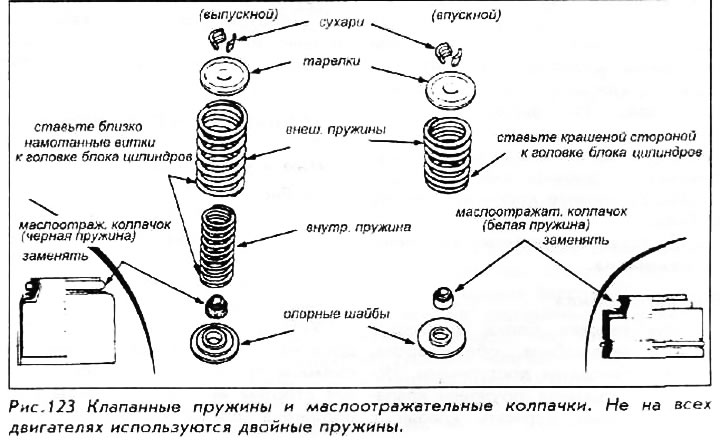
11. Install the valve spring(s). The painted end or the end with the coils close together faces down. Install the retainer or top washer.
12. Install the compressor tool. Compress the spring and seat the crackers on the stem. Make sure they are correctly positioned on the valve stem.
13. Remove the spring compressor and rag from the oil channels.
14. Repeat Steps 6-13 for each additional valve or cylinder. If you are working the valves for cylinders 2 or 3, be sure to crank the engine to bring those cylinders to TDC. It is recommended that you replace all the valve stem seals, not just one or two.
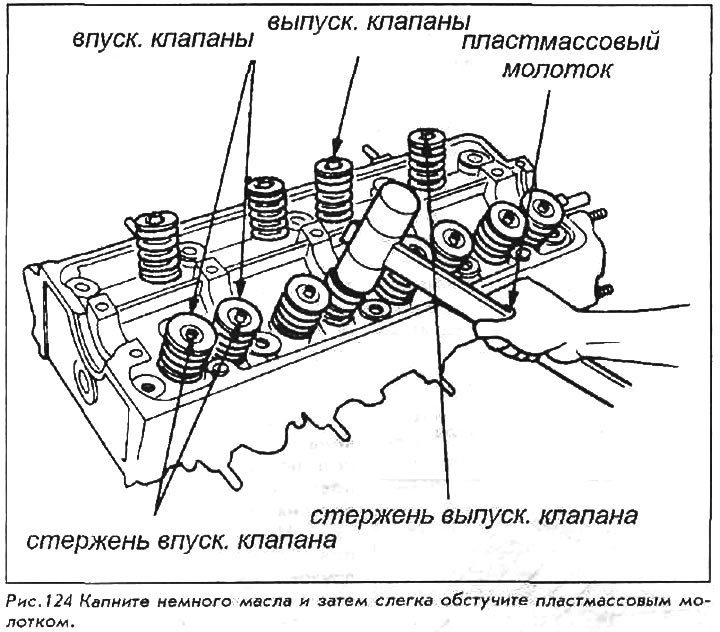
15. When all the valve stem seals have been replaced, remove the puller and axle(s). Using only a small plastic or rubber mallet, tap the top of each valve two or three times. This is to ensure that the keepers and valve are seated correctly; if the crackers are not installed correctly, they will fly out.
16. Install the rocker arms and axle assembly.
17. Install the valve cover.
Outside the car
Once the cylinder head is removed from the car, both sides of the head are accessible. Use a valve spring puller that can grip the valve from both sides. This tool resembles a very large C-clamp that goes around the head and rests against the face of the valve.
Compress the spring and remove the valve keepers. Do not lose them. Remove the spring retainers, springs and valve stem seals. In most cases, each valve must be removed for inspection or replacement.
Once the valve is reinstalled, place the new valve stem seal on the stem, making sure it sits firmly against the lower spring retaining washers. Install the spring and retainer. Compress the spring and install the keepers. Once all the valve keepers have been replaced, use a rubber or plastic hammer to tap the top of each valve two or three times. This will properly seat the valve and keepers.
The original can be found on the resource HONDABOOK