


Vehicle Maintenance Honda Accord 6

Maintenance Specifications
Recommended lubricants and fluids Note: The lubricants and fluids listed below are those recommended by the vehicle manufacturer at the time of writing. For more current information, contact your authorized Honda...
Recommended lubricants and fluids Note: The lubricants and fluids listed below are those recommended by the vehicle manufacturer at the time of writing. For more current information, contact your authorized Honda...

View of the engine compartment of the car
Top view of engine compartment of 4-cylinder models (typical) 1 - Fuse box mounting; 2 - Master cylinder reservoir; 3 - Engine oil filler cap; 4 - Engine oil level dipstick; 5 - Power steering system (PAS) reservoir; 6...
Top view of engine compartment of 4-cylinder models (typical) 1 - Fuse box mounting; 2 - Master cylinder reservoir; 3 - Engine oil filler cap; 4 - Engine oil level dipstick; 5 - Power steering system (PAS) reservoir; 6...

Maintenance intervals
The intervals for routine vehicle maintenance specified in this Section are designed for the independent performance of all necessary procedures by the vehicle owner. The duration of the intervals was determined based...
The intervals for routine vehicle maintenance specified in this Section are designed for the independent performance of all necessary procedures by the vehicle owner. The duration of the intervals was determined based...
General information about settings and adjustments
The term "settings" in this Manual does not mean a separate procedure for adjusting any of the parameters of the vehicle's systems, but a whole range of adjustments that allow you to achieve maximum engine efficiency....
The term "settings" in this Manual does not mean a separate procedure for adjusting any of the parameters of the vehicle's systems, but a whole range of adjustments that allow you to achieve maximum engine efficiency....

Checking fluid levels
(every 400 km [250 miles] or weekly) Various fluids act as working fluids in lubrication, cooling, heating and air conditioning, braking, windshield washing, etc. systems. Since all fluids are subject to liquefaction...
(every 400 km [250 miles] or weekly) Various fluids act as working fluids in lubrication, cooling, heating and air conditioning, braking, windshield washing, etc. systems. Since all fluids are subject to liquefaction...

Checking the condition of the tires and their inflation pressure
(every 400 km [250 miles] or weekly) Insufficient tire inflation pressure Cup-shaped defects The following are possible reasons for the formation of cup-shaped defects: The tires are underinflated or there is a...
(every 400 km [250 miles] or weekly) Insufficient tire inflation pressure Cup-shaped defects The following are possible reasons for the formation of cup-shaped defects: The tires are underinflated or there is a...

Checking the power steering fluid level
(every 4800 km [3000 miles] or every three months) Unlike a conventional steering gear, a power steering transmission uses a working fluid that will need to be replaced over time. On 4-cylinder models, the steering pump...
(every 4800 km [3000 miles] or every three months) Unlike a conventional steering gear, a power steering transmission uses a working fluid that will need to be replaced over time. On 4-cylinder models, the steering pump...

Checking the Automatic Transmission Fluid (ATF) Level
(every 4800 km [3000 miles] or every three months) Correct ATF level is one of the critical operating parameters of models equipped with AT. A low ATF level can lead to slippage of the rotation converter, while an...
(every 4800 km [3000 miles] or every three months) Correct ATF level is one of the critical operating parameters of models equipped with AT. A low ATF level can lead to slippage of the rotation converter, while an...

Changing engine oil and oil filter
(every 4800 km [3000 miles] or every three months) A set of tools needed to change engine oil and oil filter 1 - Drainage container - should be shallow and wide enough to minimize the chance of oil spilling on the...
(every 4800 km [3000 miles] or every three months) A set of tools needed to change engine oil and oil filter 1 - Drainage container - should be shallow and wide enough to minimize the chance of oil spilling on the...

Checking the condition and replacing the windshield wipers
1. The condition of the windshield wiper assemblies should be checked regularly in accordance with the vehicle's routine maintenance schedule. The wipers are inspected for mechanical damage, signs of loosening of the...
1. The condition of the windshield wiper assemblies should be checked regularly in accordance with the vehicle's routine maintenance schedule. The wipers are inspected for mechanical damage, signs of loosening of the...

Checking, servicing and charging the battery
(every 12,000 km [7,500 miles] or every 6 months) Tools and materials needed for battery maintenance 1 - Face shield/safety glasses - when removing traces of corrosion with a stiff brush, crystallized acid particles can...
(every 12,000 km [7,500 miles] or every 6 months) Tools and materials needed for battery maintenance 1 - Face shield/safety glasses - when removing traces of corrosion with a stiff brush, crystallized acid particles can...
Checking the condition, adjusting the tension force and replacing the drive belts
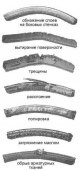
(every 12,000 km [7,500 miles] or every 6 months) Examination 1. Drive belts, or V-belts as they are sometimes called, are located at the front of the powertrain and play a vital role in the operation of the engine and...
(every 12,000 km [7,500 miles] or every 6 months) Examination 1. Drive belts, or V-belts as they are sometimes called, are located at the front of the powertrain and play a vital role in the operation of the engine and...
Checking the condition and replacing the hoses located in the engine compartment
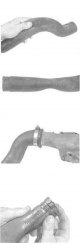
(every 12,000 km [7,500 miles] or every 6 months) Warning! Replacing the A/C refrigeration line hoses should be left to a professional workshop with the necessary equipment and qualifications to safely discharge the...
(every 12,000 km [7,500 miles] or every 6 months) Warning! Replacing the A/C refrigeration line hoses should be left to a professional workshop with the necessary equipment and qualifications to safely discharge the...
Checking the condition of the cooling system components
(every 12,000 km [7,500 miles] or every 6 months) 1. A wide range of engine failures are associated with a malfunction of the cooling system. On models equipped with AT, this system also provides ATF cooling, thereby...
(every 12,000 km [7,500 miles] or every 6 months) 1. A wide range of engine failures are associated with a malfunction of the cooling system. On models equipped with AT, this system also provides ATF cooling, thereby...

Wheel rotation
(every 12,000 km [7,500 miles] or every 6 months) Recommended rotation order for wheels fitted with non-directional tyres 1 - Left front; 2 - Right front; 3 - Left rear; 4 - Right rear Recommended rotation order for...
(every 12,000 km [7,500 miles] or every 6 months) Recommended rotation order for wheels fitted with non-directional tyres 1 - Left front; 2 - Right front; 3 - Left rear; 4 - Right rear Recommended rotation order for...

Checking the brake system
(every 12,000 km [7,500 miles] or every 6 months) Warning! Remember that the dust generated by the brake mechanisms may contain asbestos, which is extremely harmful to human health. Never blow off dust with compressed...
(every 12,000 km [7,500 miles] or every 6 months) Warning! Remember that the dust generated by the brake mechanisms may contain asbestos, which is extremely harmful to human health. Never blow off dust with compressed...
Checking the condition of seat belts
1. Carefully inspect the seat belt components (webbing, buckles, latches, anchors and guide loops) for signs of wear or damage. 2. When the ignition key is turned to the RUN or START position, the control lamp on the...
1. Carefully inspect the seat belt components (webbing, buckles, latches, anchors and guide loops) for signs of wear or damage. 2. When the ignition key is turned to the RUN or START position, the control lamp on the...

Replacing the air cleaner filter element
1. The filter element is replaced regularly in accordance with the vehicle's routine maintenance schedule. During vehicle operation, the filter condition should be checked fairly frequently, especially in very dusty...
1. The filter element is replaced regularly in accordance with the vehicle's routine maintenance schedule. During vehicle operation, the filter condition should be checked fairly frequently, especially in very dusty...

Checking the condition of the power supply system components
Warning! Remember that gasoline is highly flammable! When servicing fuel system components, observe all applicable fire safety precautions. Do not smoke or approach the work area with an open flame or unprotected...
Warning! Remember that gasoline is highly flammable! When servicing fuel system components, observe all applicable fire safety precautions. Do not smoke or approach the work area with an open flame or unprotected...

Checking the transmission oil level of the manual transmission
1. The manual transmission housing is not equipped with a dipstick. The transmission oil level in the gearbox is checked by unscrewing the check/fill plug from the side wall of the manual transmission housing. Jack up...
1. The manual transmission housing is not equipped with a dipstick. The transmission oil level in the gearbox is checked by unscrewing the check/fill plug from the side wall of the manual transmission housing. Jack up...

Inspection of suspension and steering components, checking the condition of the drive shaft protective covers
(every 24,000 km [15,000 miles] or every 12 months) Note: The condition of the suspension and steering components should be checked regularly, as their wear or damage can cause a reduction in the service life of the...
(every 24,000 km [15,000 miles] or every 12 months) Note: The condition of the suspension and steering components should be checked regularly, as their wear or damage can cause a reduction in the service life of the...

Checking the condition of the exhaust system components
1. After the exhaust system has cooled down completely (at least three hours after stopping the engine), carefully inspect all its components, starting from the flange of the inlet pipe to the exhaust manifold and...
1. After the exhaust system has cooled down completely (at least three hours after stopping the engine), carefully inspect all its components, starting from the flange of the inlet pipe to the exhaust manifold and...

Checking the condition and replacing spark plugs
(every 48,000 km [30,000 miles] or every 24 months) Tools needed when replacing spark plugs 1 - Spark plug head - Equipped with a special elastic insert, eliminating the possibility of accidental damage to the porcelain...
(every 48,000 km [30,000 miles] or every 24 months) Tools needed when replacing spark plugs 1 - Spark plug head - Equipped with a special elastic insert, eliminating the possibility of accidental damage to the porcelain...

Checking the condition and replacing the spark plug wires, cover and distributor rotor
(every 48,000 km [30,000 miles] or every 24 months) 1. The condition of the high-voltage wires must be checked every time the spark plugs are replaced. 2. The check begins with an external inspection of the wire...
(every 48,000 km [30,000 miles] or every 24 months) 1. The condition of the high-voltage wires must be checked every time the spark plugs are replaced. 2. The check begins with an external inspection of the wire...

Checking and replacing the PCV valve
(every 48,000 km [30,000 miles] or every 24 months) 1. The PCV system ensures the removal of crankcase gases through a special valve via a hose back into the intake manifold, from where they enter the combustion...
(every 48,000 km [30,000 miles] or every 24 months) 1. The PCV system ensures the removal of crankcase gases through a special valve via a hose back into the intake manifold, from where they enter the combustion...

Checking and adjusting idle speed
Examination 1. Idle speed is the engine speed when the gas pedal is released. This parameter is one of the critical ones, determining both the operation of the engine as a whole and the proper functioning of its various...
Examination 1. Idle speed is the engine speed when the gas pedal is released. This parameter is one of the critical ones, determining both the operation of the engine as a whole and the proper functioning of its various...

Maintenance of the cooling system (emptying, flushing and filling)
(every 48,000 km [30,000 miles] or every 24 months) Warning! Do not allow antifreeze to come into contact with exposed skin or painted surfaces of the vehicle. Wash away accidental splashes immediately with plenty of...
(every 48,000 km [30,000 miles] or every 24 months) Warning! Do not allow antifreeze to come into contact with exposed skin or painted surfaces of the vehicle. Wash away accidental splashes immediately with plenty of...
Replacing brake fluid
Warning! Remember that brake fluid is a chemically aggressive substance and requires special care in handling. Do not allow brake fluid to come into contact with your eyes, exposed skin, or painted surfaces of the...
Warning! Remember that brake fluid is a chemically aggressive substance and requires special care in handling. Do not allow brake fluid to come into contact with your eyes, exposed skin, or painted surfaces of the...

Automatic Transmission Fluid Replacement (AT/CVT)
1. ATF replacement should be performed on a regular basis, in accordance with the vehicle's routine maintenance schedule. 2. Prepare fresh transmission fluid of the appropriate grade. 3. Other necessary tools and...
1. ATF replacement should be performed on a regular basis, in accordance with the vehicle's routine maintenance schedule. 2. Prepare fresh transmission fluid of the appropriate grade. 3. Other necessary tools and...
Replacing manual transmission oil
1. MTF replacement must be carried out in strict accordance with the vehicle's routine maintenance schedule. 2. Prepare a supply of fresh transmission oil of the required grade (see Specifications). 3. Other necessary...
1. MTF replacement must be carried out in strict accordance with the vehicle's routine maintenance schedule. 2. Prepare a supply of fresh transmission oil of the required grade (see Specifications). 3. Other necessary...

Replacing air conditioning system filters
Warning! The models covered by this manual are equipped with a Supplemental Restraint System (SRS), commonly known as the airbag system, as standard equipment. Before performing any work in the area of the directional...
Warning! The models covered by this manual are equipped with a Supplemental Restraint System (SRS), commonly known as the airbag system, as standard equipment. Before performing any work in the area of the directional...

Checking and adjusting valve clearances (if necessary)
Examination The need to adjust valve clearances arises only after replacing or repairing valve mechanism components. The simplest way to check the valves is to listen to the engine with the hood open. The need for...
Examination The need to adjust valve clearances arises only after replacing or repairing valve mechanism components. The simplest way to check the valves is to listen to the engine with the hood open. The need for...

Resetting the Current Service Interval Indicator
The service interval indicator lamp comes on when the vehicle has traveled 9,600 km (6,000 miles) since the last service. The lamp comes on for 2 seconds when the engine is started. When the specified mileage reaches...
The service interval indicator lamp comes on when the vehicle has traveled 9,600 km (6,000 miles) since the last service. The lamp comes on for 2 seconds when the engine is started. When the specified mileage reaches...
This section is available on: russian, bulgarian, belarusian, ukrainian, serbian, croatian, romanian, polish, slovak, hungarian
Link in different formats to this section
TEXTHTMLBB Code
- General information
- Introduction to the guide
- User manual
- Maintenance
- Power unit
- Four-cylinder engines
- Six-cylinder engines
- Engine overhaul
- Cooling system
- Heater and air conditioner
- Power and exhaust systems
- Engine electrical equipment
- Engine management
- Transmission
- Mechanical gearbox
- Automatic gearbox
- Clutch and drive shafts
- Chassis and running gear
- Brake system
- Car suspension
- Steering
- Body and interior
- Exterior (external elements)
- Interior (internal elements)
- Electrical equipment
- Equipment and devices
- Electrical circuits
- General information
- Maintenance
- Power unit
- Engine adjustment
- Engine repair
- Engine electrics
- Emission management
- Engine management (carburetor)
- Electronic injection
- Programmable injection
- Schematic of emission system
- Fuel system
- Feedback management
- Transmission
- Manual gearbox
- Automatic gearbox
- Clutch
- Chassis and running gear
- Front suspension
- Rear suspension
- Steering
- Brake system
- Electrical equipment
- Ventilation and heating
- Air conditioner
- Cruise control system
- Equipment and devices