


Vehicle Maintenance Honda Accord 3
Tools and equipment
Without the proper tools and equipment, it would be impossible to properly service your car. It would also be impossible to catalog every tool you would need to perform all the tasks described in this book. But it is...
Without the proper tools and equipment, it would be impossible to properly service your car. It would also be impossible to catalog every tool you would need to perform all the tasks described in this book. But it is...

Special tools
Special tools are sometimes necessary to perform a particular job or are recommended to make it easier. Their use is kept to a minimum. When a special tool is specified, reference will be made to the number given to it...
Special tools are sometimes necessary to perform a particular job or are recommended to make it easier. Their use is kept to a minimum. When a special tool is specified, reference will be made to the number given to it...

Identification plates
Vehicle identification All 1984-91 Honda vehicles have identification numbers imprinted on a plate mounted on the left side of the instrument panel. The plate is visible through the windshield from the outside. The...
Vehicle identification All 1984-91 Honda vehicles have identification numbers imprinted on a plate mounted on the left side of the instrument panel. The plate is visible through the windshield from the outside. The...

Air cleaner — removal and installation
The air cleaner, located on top of or near the carburetor or throttle valve, should be replaced every 50,000 km or every 24 months, whichever comes first. This is the maximum interval; the filter should be checked...
The air cleaner, located on top of or near the carburetor or throttle valve, should be replaced every 50,000 km or every 24 months, whichever comes first. This is the maximum interval; the filter should be checked...

Fuel filter — removal and installation
All vehicles use a disposable type of fuel filter that cannot be disassembled for cleaning. On 1984-91 models, the filter should be replaced every 100,000 km or 48 months (whichever comes first). But early replacement...
All vehicles use a disposable type of fuel filter that cannot be disassembled for cleaning. On 1984-91 models, the filter should be replaced every 100,000 km or 48 months (whichever comes first). But early replacement...

Crankcase ventilation valve (PCV valve)
The engine is equipped with a PCV (Polymer Crankcase Ventilation) system, which recirculates exhaust gases back into the combustion chamber through the intake manifold and/or air cleaner. Some of the unexhausted gases...
The engine is equipped with a PCV (Polymer Crankcase Ventilation) system, which recirculates exhaust gases back into the combustion chamber through the intake manifold and/or air cleaner. Some of the unexhausted gases...

Battery — General Information
Loose, dirty or corroded battery terminals are a common cause of poor starting. About every 3 months, inspect the terminals. If necessary, disconnect the terminals from the battery and clean them, coating them lightly...
Loose, dirty or corroded battery terminals are a common cause of poor starting. About every 3 months, inspect the terminals. If necessary, disconnect the terminals from the battery and clean them, coating them lightly...

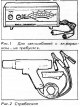
Jump starting a dead car from another car's battery
Precautions when starting: 1. Make sure both batteries have the same voltage. 2. Make sure both batteries have the same polarity (have the same ground terminal). 3. Make sure the cars do not touch. 4. Make sure that the...
Precautions when starting: 1. Make sure both batteries have the same voltage. 2. Make sure both batteries have the same polarity (have the same ground terminal). 3. Make sure the cars do not touch. 4. Make sure that the...
Drive Belts — Checking and Adjusting Tension
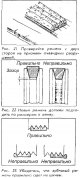
Examination On Accord and Prelude models, check the drive belts at least every 30,000 miles or 24 months. Determine the belt tension at the midpoint between the pulleys by gently pressing on the belt with your thumb....
Examination On Accord and Prelude models, check the drive belts at least every 30,000 miles or 24 months. Determine the belt tension at the midpoint between the pulleys by gently pressing on the belt with your thumb....
Drive belts — removal and installation
When purchasing belts, remember that the critical parameters that determine whether a belt is suitable or not are its length ("diameter"), width, depth, and angle or V-shaped profile. The shape of the belt must exactly...
When purchasing belts, remember that the critical parameters that determine whether a belt is suitable or not are its length ("diameter"), width, depth, and angle or V-shaped profile. The shape of the belt must exactly...
Replacing hoses
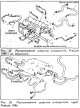
CAUTIONS: Before replacing any radiator/heater hoses, always disconnect the ground cable from the battery or the fan motor wiring connector. Under certain circumstances, the fan may run even with the ignition off!...
CAUTIONS: Before replacing any radiator/heater hoses, always disconnect the ground cable from the battery or the fan motor wiring connector. Under certain circumstances, the fan may run even with the ignition off!...
Air conditioning system — operation and testing
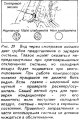
Job Cooling cycle Once the air conditioning system is fully charged and leak-free, it is ready to operate. When operating, the compressor lowers the pressure of the refrigerant and thereby lowers the temperature. This...
Job Cooling cycle Once the air conditioning system is fully charged and leak-free, it is ready to operate. When operating, the compressor lowers the pressure of the refrigerant and thereby lowers the temperature. This...
Air Conditioning System — System Discharge
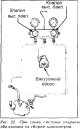
Precautions To safely discharge the air conditioning system, use pressure gauges: 1. With the engine off, connect the pressure gauges to the manifold. 2. Connect the red hose on the supercharger (high pressure side) of...
Precautions To safely discharge the air conditioning system, use pressure gauges: 1. With the engine off, connect the pressure gauges to the manifold. 2. Connect the red hose on the supercharger (high pressure side) of...
Wheels and tires — replacement and wheels
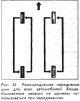
Common sense and good driving skills will help you maximize the life of your tires. Rapid starts, sudden stops, and sharp turns will shorten their life. Always make sure you are not overloading your vehicle and that...
Common sense and good driving skills will help you maximize the life of your tires. Rapid starts, sudden stops, and sharp turns will shorten their life. Always make sure you are not overloading your vehicle and that...

Engine Oil Recommendations
The SAE (Society of Automotive Engineers) grade number indicates the viscosity of the engine oil; The lower the SAE grade number, the lighter (more fluid) the oil. For example, single grade oils start at SAE weight 5,...
The SAE (Society of Automotive Engineers) grade number indicates the viscosity of the engine oil; The lower the SAE grade number, the lighter (more fluid) the oil. For example, single grade oils start at SAE weight 5,...
Fuel recommendations
You must use fuel with the octane rating specified for your Honda. The octane rating indicates the amount of anti-knock composites added to the fuel and also determines the combustion rate of gasoline. The lower the...
You must use fuel with the octane rating specified for your Honda. The octane rating indicates the amount of anti-knock composites added to the fuel and also determines the combustion rate of gasoline. The lower the...
Checking the engine oil level
Checking the OIL level is one of the simplest and most important checks. It should be done OFTEN because low oil can cause the engine to overheat and possibly starve the oil pump of reagent. This means improper...
Checking the OIL level is one of the simplest and most important checks. It should be done OFTEN because low oil can cause the engine to overheat and possibly starve the oil pump of reagent. This means improper...
Changing engine oil and filter
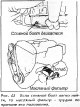
The oil and filter should be changed at least every 7,500 miles, although circumstances often dictate more frequent changes. The type of engine used in the Accordax and Prelude - with the crankshaft on top - is...
The oil and filter should be changed at least every 7,500 miles, although circumstances often dictate more frequent changes. The type of engine used in the Accordax and Prelude - with the crankshaft on top - is...
Manual transmission
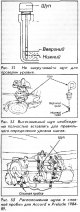
Fluid Recommendations All manual transmissions use machine oil, a non-plastic lubricant, as a lubricant. The oil must meet the same standards as the oil used in the engine, so SG is preferred, with SE or SF acceptable...
Fluid Recommendations All manual transmissions use machine oil, a non-plastic lubricant, as a lubricant. The oil must meet the same standards as the oil used in the engine, so SG is preferred, with SE or SF acceptable...

Automatic transmission
Fluid Recommendations All Honda automatic transmissions use Dexron II automatic transmission fluid. This fluid directly replaces the Dexron fluid that was recommended for older models. Checking the level The fluid...
Fluid Recommendations All Honda automatic transmissions use Dexron II automatic transmission fluid. This fluid directly replaces the Dexron fluid that was recommended for older models. Checking the level The fluid...

Cooling system
Fluid Recommendations Use a quality ethylene glycol-based engine coolant, especially recommended for use in vehicles that have aluminum engine components that come into contact with the coolant. Note that some coolants,...
Fluid Recommendations Use a quality ethylene glycol-based engine coolant, especially recommended for use in vehicles that have aluminum engine components that come into contact with the coolant. Note that some coolants,...

Master brake cylinder
Fluid Recommendations Use only DOT 3 or DOT 4 specified brake fluid from a well-sealed container. If you are unsure of the condition of the fluid (whether it was properly sealed or not), use a new one. It is very...
Fluid Recommendations Use only DOT 3 or DOT 4 specified brake fluid from a well-sealed container. If you are unsure of the condition of the fluid (whether it was properly sealed or not), use a new one. It is very...

Power steering pump
Fluid Recommendations When adding, only Honda power steering fluid may be used. Honda claims that fluids formulated for use in other makes of vehicles are not compatible with the Honda steering system. Using any other...
Fluid Recommendations When adding, only Honda power steering fluid may be used. Honda claims that fluids formulated for use in other makes of vehicles are not compatible with the Honda steering system. Using any other...
Steering without power assistance
Inspection The steering linkage used on Hondas is of the rack and pinion (planet gear) type. This unit is lubricated with grease and therefore does not require periodic level checks. However, inspect the unit and...
Inspection The steering linkage used on Hondas is of the rack and pinion (planet gear) type. This unit is lubricated with grease and therefore does not require periodic level checks. However, inspect the unit and...
Chassis lubrication
All suspension joints on the Hondas covered in this manual are lubricated at all times. However, when inspecting the steering assembly for grease leaks, inspect the suspension and steering joints for leaks and/or breaks...
All suspension joints on the Hondas covered in this manual are lubricated at all times. However, when inspecting the steering assembly for grease leaks, inspect the suspension and steering joints for leaks and/or breaks...
Lubrication of the housing
Lubricate all locks and hinges with a multi-purpose grease every 10,000 km or 6 months. Perform this light maintenance at every oil change. Pay special attention to hinges and latches that are not used often.
Lubricate all locks and hinges with a multi-purpose grease every 10,000 km or 6 months. Perform this light maintenance at every oil change. Pay special attention to hinges and latches that are not used often.
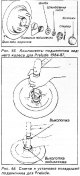
Rear wheel bearings
To check the normal operation of the bearings, lift each wheel. Grab the wheel and shake it to check the behavior of the bearing. Then spin the wheel and check for any roughness. If any "play" of the wheel is felt or...
To check the normal operation of the bearings, lift each wheel. Grab the wheel and shake it to check the behavior of the bearing. Then spin the wheel and check for any roughness. If any "play" of the wheel is felt or...
Tightening torques for threaded connections
Component Tightening Fuel filter - Banjo bolts: 22 Nm - 1990-91 Accord bell: 38 Nm - Service bolts: 9 Nm Oil drain plug: 45 Nm Manual transmission - Filler plug: 45 Nm - Drain plug: 40 Nm Automatic transmission - Drain...
Component Tightening Fuel filter - Banjo bolts: 22 Nm - 1990-91 Accord bell: 38 Nm - Service bolts: 9 Nm Oil drain plug: 45 Nm Manual transmission - Filler plug: 45 Nm - Drain plug: 40 Nm Automatic transmission - Drain...

Maintenance intervals
Vehicles with severe operating conditions (cold weather, frequent starts and stops, frequent towing, reloading) require more frequent maintenance and oil changes (oil should be changed after 5000 km or 3 months)....
Vehicles with severe operating conditions (cold weather, frequent starts and stops, frequent towing, reloading) require more frequent maintenance and oil changes (oil should be changed after 5000 km or 3 months)....
Filling tanks
Year Model Engine capacity cm³ Engine crankcase with filter Fur. box (liter) 5-speed. Automatic transmission (1) Fuel tank (liter) Cooling system. 1984 Accord 1829 1.75 2.37 2.84 59.80 3.03 Prelude 1829 1.75 2.37 2.74...
Year Model Engine capacity cm³ Engine crankcase with filter Fur. box (liter) 5-speed. Automatic transmission (1) Fuel tank (liter) Cooling system. 1984 Accord 1829 1.75 2.37 2.84 59.80 3.03 Prelude 1829 1.75 2.37 2.74...

This section is available on: russian, bulgarian, belarusian, ukrainian, serbian, croatian, romanian, polish, slovak, hungarian
Link in different formats to this section
TEXTHTMLBB Code
- General information
- Introduction to the guide
- User manual
- Maintenance
- Power unit
- Four-cylinder engines
- Six-cylinder engines
- Engine overhaul
- Cooling system
- Heater and air conditioner
- Power and exhaust systems
- Engine electrical equipment
- Engine management
- Transmission
- Mechanical gearbox
- Automatic gearbox
- Clutch and drive shafts
- Chassis and running gear
- Brake system
- Car suspension
- Steering
- Body and interior
- Exterior (external elements)
- Interior (internal elements)
- Electrical equipment
- Equipment and devices
- Electrical circuits
- General information
- Maintenance
- Power unit
- Engine adjustment
- Engine repair
- Engine electrics
- Emission management
- Engine management (carburetor)
- Electronic injection
- Programmable injection
- Schematic of emission system
- Fuel system
- Feedback management
- Transmission
- Manual gearbox
- Automatic gearbox
- Clutch
- Chassis and running gear
- Front suspension
- Rear suspension
- Steering
- Brake system
- Electrical equipment
- Ventilation and heating
- Air conditioner
- Cruise control system
- Equipment and devices