
HondaBook.ru
Auto companies Volkswagen Auto companies Ford Auto companies Lada Auto companies Skoda Auto companies BMW Auto companies Mazda Auto companies Peugeot
English Русский
Български
Беларускі
Український
Српски
Hrvatski
Română
Polski
Slovenský
Magyar
Bookmark Contacts Sitemap   


Accord Civic Fit / Jazz CR-V HR-V Others Articles
CR-V 1 (1995-2001, petrol) CR-V 2 (2002-2006, petrol)

Driving a car (Honda CR-V 2)

  • Main
  • Honda CR-V
  • 2 (2002-2006, petrol)
  • General information
  • User manual
  • Driving a car
0
Contents: Starting the engine ⇊ Parking brake, parking brake…⇊ Releasing the parking brake ⇊ Selector lever, automatic…⇊

Starting the engine


Warning.
  • Do not start the engine when the electrolyte level in the battery is low, as there is a risk of battery damage.
  • Do not run the engine in a garage or other poorly ventilated area. Exhaust gas accumulates in the cabin or room and there is a risk of carbon monoxide poisoning.
  • When starting the engine, press the brake pedal.


1. Make sure the parking brake is applied.
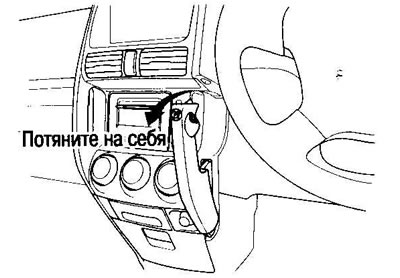
1. Make sure the parking brake is applied.


2. Make sure the selector lever is in the "P" position.
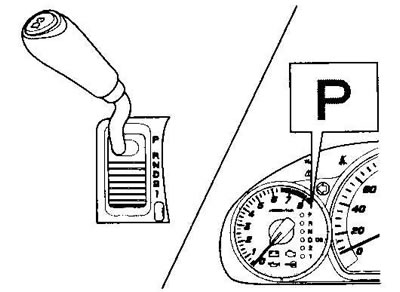
2. Make sure the selector lever is in the «P»…


3. Press the brake pedal fully.

4. Turn the ignition key to position "III" without pressing the gas pedal and start the engine.
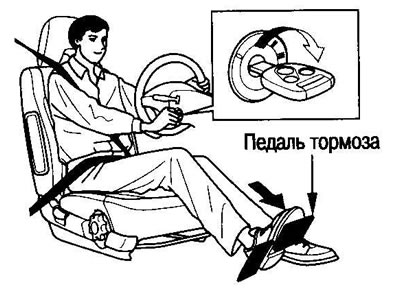


4. Turn the ignition key to position «III»…


After starting the engine, release the ignition key, it will automatically return to position "II".

Note.
  • Starting the engine is made easier if you turn off such powerful consumers of electricity as lighting, air conditioning, and rear window defroster.
  • To avoid discharging the battery, do not allow the starter to run continuously for more than 15 seconds. If the engine does not start within 15 seconds, turn the ignition key to position "I", wait at least 10 seconds, and try to start again.
  • If the engine is warm, it may require additional effort to start it. In this case, it is recommended to start the engine by pressing the accelerator pedal halfway. After the engine starts, release the accelerator pedal.
  • The engine may not start due to strong electromagnetic radiation from objects located near the ignition key.
  • After starting the engine, as a result of the engine management system, its speed increases and then automatically decreases to the optimal level.


Parking brake, parking brake engagement


Without pressing the button, pull the lever towards you with force.
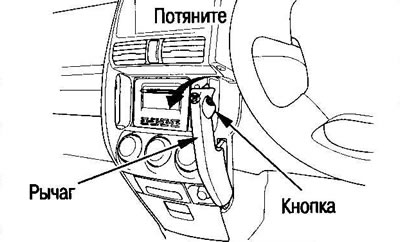
Without pressing the button, pull the lever…


Releasing the parking brake


1. While pressing the button, pull the lever slightly towards you.
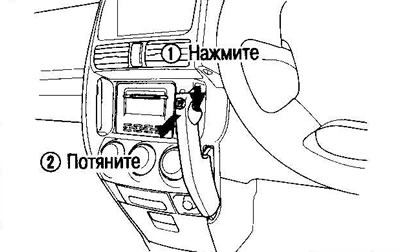
1. While pressing the button, pull the lever…


2. Without releasing the button, release the lever all the way.
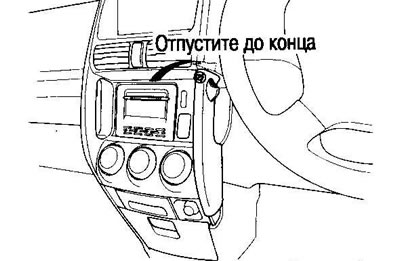
2. Without releasing the button, release the…


Warning! Do not drive with the parking brake applied. In this case, the brake pads quickly heat up and braking efficiency decreases. This can also cause damage to the rear brake.


Selector lever, automatic transmission


The purpose of the different positions of the selector lever: "P" Position when parking and starting the engine.

Note: If the lever is set to a position other than "P", it is impossible to turn the ignition key to position "O" or remove it.


"R" Reverse position. An audible signal sounds in the cabin, reminding the driver that reverse gear is engaged.


"N" Neutral position. In the "N" position, the engine can be started, but for safety reasons, it is recommended to move the lever to the "P" position.

"D" Position for normal movement. Automatic gear shifting occurs in accordance with the driving speed (from 1st to 5th). When switch "D3" is in the ON position, the gears are automatically shifted from (1st to 3rd).

"2" Position used when driving on hilly terrain. Used when it is necessary to take advantage of the engine braking effect. In accordance with the speed of movement, the gearbox automatically switches to first and second gear.

"1" Position used when driving on mountain roads. Used when strong engine braking is required. In this case, only first gear works

Based on materials from the website HondaBook.ru
This article is available at: russian, bulgarian, belarusian, ukrainian, serbian, croatian, romanian, polish, slovak, hungarian
This information has been verified: Mikhail Kopasov
Share with friends:
◀ Previous
CR-V 2: User manual
Next ▶

Switches in the car interior
Control lamps
Instrument cluster indicators
Dashboard
Adjusting the steering column and rear view mirrors
Moving the automatic transmission selector lever
Start of car movement
Supplemental Restraint System (SRS)
Anti-lock braking system (ABS)
Vehicle Stability Assist (VSA) (if equipped)
See also other articles from Honda manuals:
Recommendations for driving in adverse weather conditions Honda Accord 6 (1997-2002)
Driving a car with automatic transmission Honda Civic 7 (2000-2005)
Driving a car with automatic transmission Honda Fit 1 (2001-2008)
Models J4, JS4 with 4 driving wheels (4WD) Honda HR-V 1 (1998-2006, petrol)
Driving cars with automatic transmission Honda Avancier 1 (1999-2003, petrol)
Link in different formats to this article
Comments and feedback from visitors
No comments yet


How much will 24 + 18 ?


CR-V 2 (2002-2006, petrol) 
  • General information
  • User manual
  • Technical data
  • Maintenance
  • Power unit
  • Engine repair
  • Lubrication system
  • Cooling system
  • Exhaust system
  • Fuel system
  • Engine management
  • Engine electrical equipment
  • Transmission
  • Clutch
  • Manual gearbox
  • Automatic gearbox
  • Rear differential
  • Drive shafts
  • Chassis and running gear
  • Steering
  • Front suspension
  • Rear suspension
  • Brake system
  • Body and interior
  • Exterior (external elements)
  • Interior (internal elements)
  • Doors, locks and windows
CR-V 1 (1995-2001, petrol) 
  • General information
  • Maintenance
  • Tips for car owner
  • Power unit
  • Engine repair
  • Engine overhaul
  • Cooling and lubrication system
  • Engine electrical equipment
  • Control system
  • Fuel system
  • Transmission
  • Clutch and drive shafts
  • Car gearbox
  • Chassis and running gear
  • Front suspension
  • Rear suspension
  • Steering
  • Brake system
  • Body and interior
  • Body service
  • Exterior (external elements)
  • Interior (internal elements)
  • Electrical equipment
  • Equipment and devices
  • Electrical circuits
HondaBook.ru © 2018–2026 • Mobile version • Sitemap: EN BG BY UA RS HR RO PL SK HU • Feedback • Driver Information • Search system • Bookmark
Accord 3 (1985-1989) • Accord 6 (1997-2002) • Civic 3 and 4 (1983-1991) • Civic 5 and 6 (1991-2000) • Civic 6 (1995-2000) • Civic 7 (2000-2005) • Civic 8 (2005-2011) • Fit 1 (2001-2008) • CR-V 1 (1995-2001) • CR-V 2 (2002-2006) • HR-V 1 (1998-2006) • Avancier 1 (1999-2003) •
 
This website uses cookies to ensure proper functioning. By clicking "OK," you agree.