
Honda CR-V 1 car engine management system

Crankcase ventilation system
Prevents crankcase gases from entering the atmosphere by burning these gases mixed with air in the engine combustion chambers. The main reasons for system failure are clogged hose or sticking of the ball valve. A faulty...
Prevents crankcase gases from entering the atmosphere by burning these gases mixed with air in the engine combustion chambers. The main reasons for system failure are clogged hose or sticking of the ball valve. A faulty...

Gasoline vapor recovery system
Provides absorption of gasoline vapors in a special tank with an absorber and prevents them from entering the atmosphere. The vehicles in question are equipped with an electromagnetic purge valve for ventilation of the...
Provides absorption of gasoline vapors in a special tank with an absorber and prevents them from entering the atmosphere. The vehicles in question are equipped with an electromagnetic purge valve for ventilation of the...

Recirculation system — general information
Designed to reduce fuel combustion temperature and reduce nitrogen oxide emissions. This is achieved by redirecting part of the exhaust gases into the combustion chamber. The system includes a recirculation valve, which...
Designed to reduce fuel combustion temperature and reduce nitrogen oxide emissions. This is achieved by redirecting part of the exhaust gases into the combustion chamber. The system includes a recirculation valve, which...

Recirculation valve — checking, removal and installation
1. With the engine warmed up and idling, create a vacuum of 8 mm Hg on the valve nipple. If the idle speed drops by 100 rpm when a vacuum is created, and the speed is restored when the vacuum is removed, then the valve...
1. With the engine warmed up and idling, create a vacuum of 8 mm Hg on the valve nipple. If the idle speed drops by 100 rpm when a vacuum is created, and the speed is restored when the vacuum is removed, then the valve...
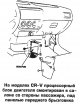
Engine Processor Unit — Removal and Installation
Engine Processor Unit (eCM on vehicles with manual transmission or PCM on vehicles with automatic transmission) provides automatic regulation of operation of all engine systems (including power supply, ignition, etc.)....
Engine Processor Unit (eCM on vehicles with manual transmission or PCM on vehicles with automatic transmission) provides automatic regulation of operation of all engine systems (including power supply, ignition, etc.)....

Exhaust Gas Oxygen Sensor
The sensor monitors the oxygen content in the exhaust gases and generates an output voltage of 0.1 V (high oxygen, lean mixture) up to 0.9 V (low oxygen content, rich mixture). The changing output voltage from the...
The sensor monitors the oxygen content in the exhaust gases and generates an output voltage of 0.1 V (high oxygen, lean mixture) up to 0.9 V (low oxygen content, rich mixture). The changing output voltage from the...

Oxygen sensor — removal and installation
1. Raise the vehicle. 2. Disconnect the connector from the sensor, being careful as the sensor head is fragile. 3. Unscrew the sensor from the exhaust pipe using a special key. 4. Installation is carried out in reverse...
1. Raise the vehicle. 2. Disconnect the connector from the sensor, being careful as the sensor head is fragile. 3. Unscrew the sensor from the exhaust pipe using a special key. 4. Installation is carried out in reverse...

Idle Air Control Valve (IAC valve)
The valve ensures that part of the air flow is redirected around the throttle valve. The valve is controlled by the engine's processor unit. The valve limiter screw sets the minimum air flow corresponding to normal idle...
The valve ensures that part of the air flow is redirected around the throttle valve. The valve is controlled by the engine's processor unit. The valve limiter screw sets the minimum air flow corresponding to normal idle...

Coolant Temperature Sensor (ECT Sensor)
The coolant temperature sensor is a thermistor (a resistor whose resistance value depends on temperature). As the temperature of the sensor decreases, its resistance increases and vice versa. If the sensor is faulty as...
The coolant temperature sensor is a thermistor (a resistor whose resistance value depends on temperature). As the temperature of the sensor decreases, its resistance increases and vice versa. If the sensor is faulty as...

Intake Air Temperature Sensor (IAT Sensor)
The sensor is mounted on the intake manifold. The resistance of the sensor should correspond to the one shown in the graph (photo). To remove the sensor, disconnect the battery from the ground, disconnect the connector...
The sensor is mounted on the intake manifold. The resistance of the sensor should correspond to the one shown in the graph (photo). To remove the sensor, disconnect the battery from the ground, disconnect the connector...

Manifold Absolute Pressure Sensor (MAP sensor)
The MAP sensor provides information to the PCM about engine load (about vacuum in the suction manifold). The signal from the sensor changes from 0.5 to 3 V. The voltage of the signal from the sensor should correspond to...
The MAP sensor provides information to the PCM about engine load (about vacuum in the suction manifold). The signal from the sensor changes from 0.5 to 3 V. The voltage of the signal from the sensor should correspond to...

Throttle Position Sensor (TPS)
The throttle position sensor is located on the end of the throttle shaft. The signal from this sensor is used by the processor unit to adjust the mixture composition and ignition timing. The sensor cannot be adjusted....
The throttle position sensor is located on the end of the throttle shaft. The signal from this sensor is used by the processor unit to adjust the mixture composition and ignition timing. The sensor cannot be adjusted....

Crankshaft Angle Sensor — Checking, Removing and Installing
The sensor determines the engine speed and the crankshaft rotation angle, on the basis of which the ignition timing is determined and adjusted. On Odyssey models, the sensor is also used to detect cylinder misfire. On...
The sensor determines the engine speed and the crankshaft rotation angle, on the basis of which the ignition timing is determined and adjusted. On Odyssey models, the sensor is also used to detect cylinder misfire. On...

Crankshaft Speed Fluctuation Sensor (CKF Sensor)
The CKF sensor is designed to monitor cylinder misfires. The sensor generates a signal if the crankshaft speed fluctuation goes beyond certain limits. The resistance between the sensor terminals should be 1.6-3.2 kOhm....
The CKF sensor is designed to monitor cylinder misfires. The sensor generates a signal if the crankshaft speed fluctuation goes beyond certain limits. The resistance between the sensor terminals should be 1.6-3.2 kOhm....

Knock sensor
A piezoelectric sensor that monitors the occurrence of detonation in engine cylinders. The sensor can only be checked with a scanner. The cause of abnormal operation of the sensor may be incorrect tightening of the...
A piezoelectric sensor that monitors the occurrence of detonation in engine cylinders. The sensor can only be checked with a scanner. The cause of abnormal operation of the sensor may be incorrect tightening of the...

Vehicle Speed Sensor (VSS Sensor)
The sensor generates a signal of the rotation speed of the axle shaft, which is fed to the speedometer and to the PCM unit. Resistance between the terminals of the sensor. should be 190-250 Ohm. To remove the sensor,...
The sensor generates a signal of the rotation speed of the axle shaft, which is fed to the speedometer and to the PCM unit. Resistance between the terminals of the sensor. should be 190-250 Ohm. To remove the sensor,...

Location of emission control and engine management systems
Location of devices and instruments of toxicity reduction and automatic engine control systems (CR-V): 1. Crankshaft rotation sensor (tDC sensor); 2. Coolant temperature sensor; 3. Throttle position sensor; 4. Manifold...
Location of devices and instruments of toxicity reduction and automatic engine control systems (CR-V): 1. Crankshaft rotation sensor (tDC sensor); 2. Coolant temperature sensor; 3. Throttle position sensor; 4. Manifold...
This section is available on: russian, bulgarian, belarusian, ukrainian, serbian, croatian, romanian, polish, slovak, hungarian
Link in different formats to this section
TEXTHTMLBB Code
- General information
- User manual
- Technical data
- Maintenance
- Power unit
- Engine repair
- Lubrication system
- Cooling system
- Exhaust system
- Fuel system
- Engine management
- Engine electrical equipment
- Transmission
- Clutch
- Manual gearbox
- Automatic gearbox
- Rear differential
- Drive shafts
- Chassis and running gear
- Steering
- Front suspension
- Rear suspension
- Brake system
- Body and interior
- Exterior (external elements)
- Interior (internal elements)
- Doors, locks and windows
- General information
- Maintenance
- Tips for car owner
- Power unit
- Engine repair
- Engine overhaul
- Cooling and lubrication system
- Engine electrical equipment
- Control system
- Fuel system
- Transmission
- Clutch and drive shafts
- Car gearbox
- Chassis and running gear
- Front suspension
- Rear suspension
- Steering
- Brake system
- Body and interior
- Body service
- Exterior (external elements)
- Interior (internal elements)
- Electrical equipment
- Equipment and devices
- Electrical circuits